ARCTIC MEAL
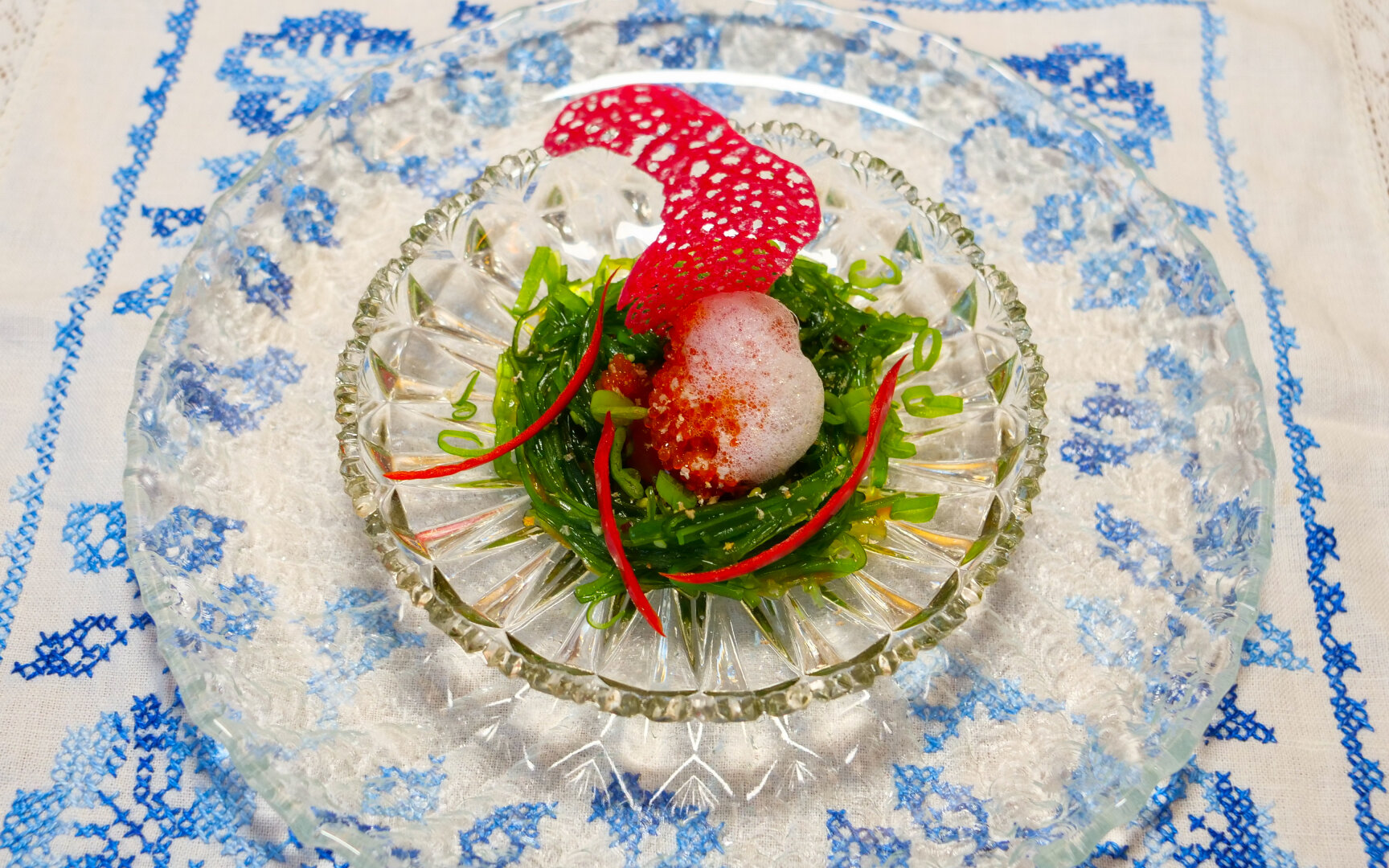
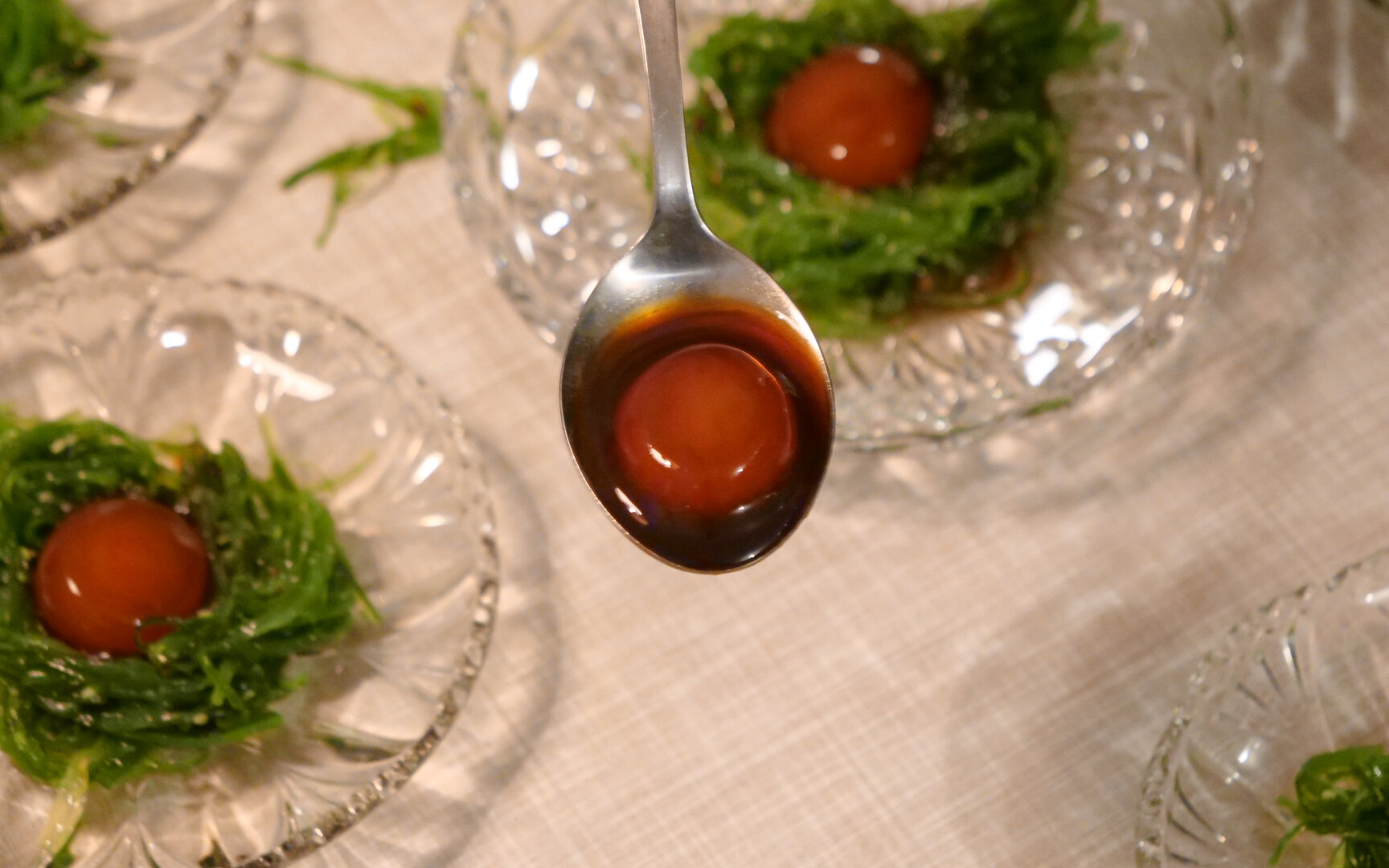
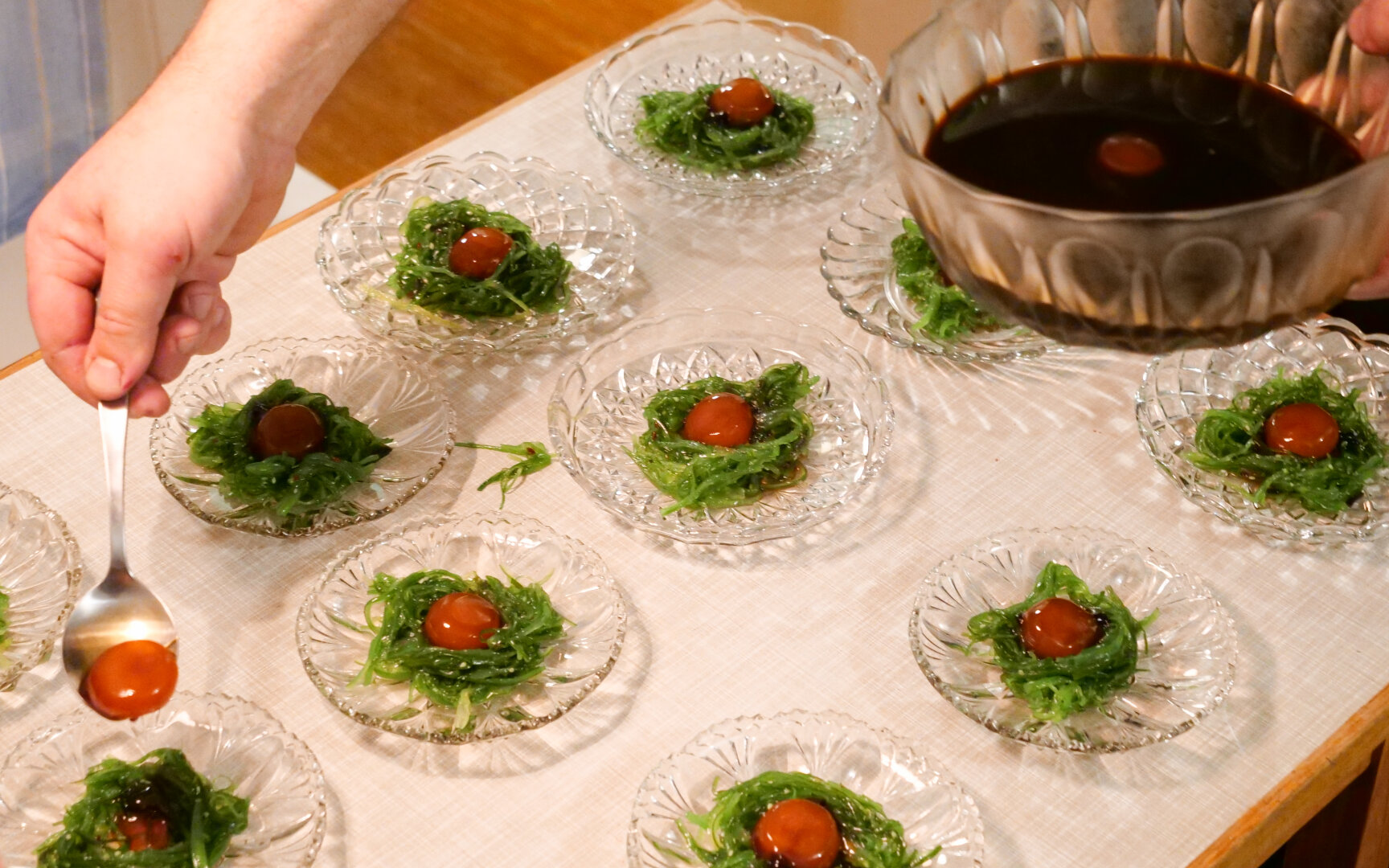
Course 1 // Kelpsalad, kelp kaviar, coral flan, soya aged egg yolk, smoky wasabi foam
For each course of the dinner, we identified a selection of key ingredients that formed the foundation of the dish. Complementary ingredients were then carefully chosen to complete and refine each course.
In northern and Arctic regions, #ALGAE are strongly affected by climate change. Rising sea temperatures, melting sea ice, and ocean acidification alter light conditions, nutrient cycles, and habitats. Ice-dependent microalgae lose their living space as sea ice retreats, while COLD-WATER #KELP FORESTS are stressed by warming and increased storm activity.
ARCTIC COLD-WATER #CORALS are affected by the climate crisis through a combination of environmental and human-driven changes. Rising ocean temperatures disrupt the narrow thermal tolerance of these corals, negatively affecting their growth and reproduction. At the same time, ocean acidification, which is particularly pronounced in cold waters, hampers the formation of their calcium carbonate skeletons and weakens existing reef structures.
WHEAT farming in northern regions is threatened by the climate crisis mainly through more frequent extreme weather. Warmer winters reduce snow cover, which exposes winter wheat to frost damage. Increased rainfall causes waterlogging and fungal diseases, while heat waves during summer shorten grain filling and lower yields. We used the #wheat to create the coral flans.
We served SWEDISH WHITE WINE with the course. Due to global warming, it is now possible to grow wine in southern Sweden.
[I was an artist in residence at #Ricklundgården in #Saxnäs, Sweden for the last weeks and created a conceptual meal ("Arctic Meal") in cooperation with the local chef Jonathan Johansson illustrating the impacts of the climate crisis on northern Sweden and the Arctic].
#conceptualart #climatecrisis #jonathanjohansson #arctic #art #klimakrise #sweden #arcticmeal #artistresidency #västerbotten
Visual Arts Channel
boosted
4 media