https://omdaruliterature.blogspot.com/2026/02/flickering-reality-hybrid-literature-as.html Flickering #Reality: #Hybrid #Literature as a New #Ontological #Genre - Claude.ai #channeling #esoterics #spirituality #AI #medium #psychic #aliens #essays #claude Mastodon.social/@omdaru
“Conspiracy theories also bring another reward: power.”*…
Theophilus Schweighardt, The Temple of the Rose Cross, 1618 (source)Barrett Brown interrogates our fascination with conspiracies and conspiracy theories…
Over a period of several years in the early seventeenth century, there appeared in Western Europe three manifestos laying out the history of the theretofore unheard-of Rosicrucian order, whose secret directorate was said to employ powerful magical-scientific techniques in service to sociopolitical reform. This naturally led to quite a bit of public speculation, which gradually abated in the absence of further pronouncements; within a few generations the only parties ascribing any significance to the incident tended to be dubious characters claiming to be Rosicrucians themselves, rarely with much to show for it. Thus, as a result of its gradual association with cranks, the Rosicrucian story developed a kind of inoculation against serious scrutiny.
It wasn’t until the sixties that the British historian Dame Frances A. Yates breached the actual nature and extent of the thought movement that informed both the manifestos and its audience. In her book The Rosicrucian Enlightenment, she demonstrates that the texts were written as anti-Hapsburg, proreformist propaganda drawing on doctrines associated with the sixteenth-century philosopher Francis Bacon, and that this was understood by commentators on both sides; that the surreal “alchemical wedding” described therein references the 1613 marriage of England’s Elizabeth Stuart and Frederick V of the Palatinate, widely heralded as the linchpin of a proto-Protestant alliance capable of establishing such reform by force; that the broader proposals were indeed taken seriously by scholars, not as scripture but rather as a set of visionary policy proposals dressed in metaphor, akin to Bacon’s The New Atlantis; and that enthusiasts such as Elias Ashmole would directly implement those proposals by founding the Royal Society, establishing the primacy of science. Rather than being a footnote to premodern folly, the Rosicrucian affair turns out to sit at the narrative center of the modern world.
There’s a lesson here that bears attention today, at the apparent twilight of the same modern world, when the fundamental problem we face involves the degree to which the truth must now compete with such a vast multiplicity of falsehoods that discovering truth itself becomes unviable. Consider that so much of consequence to our own heritage should have been so misunderstood for as long as the Rosicrucian manifestos; it seems that crucial facts can be effectively concealed from serious attention simply by being visibly subject to the unserious sort. Such facts are gradually imbued with a sort of de facto defense mechanism against scrutiny, whereby the mere act of taking an interest in them serves to discredit professional researchers and journalists…
From the 1600s to recent history and the insights of Umberto Eco, what’s going on– and why: “The Ur-“Conspiracy”: History of a Pseudoconcept,” from @parisreview.bsky.social.
Apposite: “Revisionist History — Aliens, Secrets and Conspiracies,” by Steve Blank
* “The emotional appeal of a conspiracy theory is in its simplicity. It explains away complex phenomena, accounts for chance and accidents, offers the believer the satisfying sense of having special, privileged access to the truth. For those who become the one-party state’s gatekeepers, the repetition of these conspiracy theories also brings another reward: power.” – Anne Applebaum, Twilight of Democracy: The Seductive Lure of Authoritarianism
###
As we ponder perspicacity, we might we send inquisitive birthday greetings to Michel Eyquem de Montaigne; he was born on this date in 1533. Best known during his lifetime as a statesman, Montaigne is remembered for popularizing the essay as a literary form. His massive volume Essais (translated literally as “Attempts” or “Trials”)– contain what are, to this day, some of the most widely-influential essays ever written. Montaigne had a powerful impact on writers ever after, from Descartes, Pascal, and Rousseau through Hazlitt, Emerson, and Nietzsche, to Zweig, Hoffer, and Asimov. Indeed, he’s believed to have been an influence on the later works of Shakespeare.
And while he pre-dates the “Rosicrucian” publications mentioned above, he observed (in Essais) “the truth of these days is not that which really is, but what every man persuades another man to believe.”

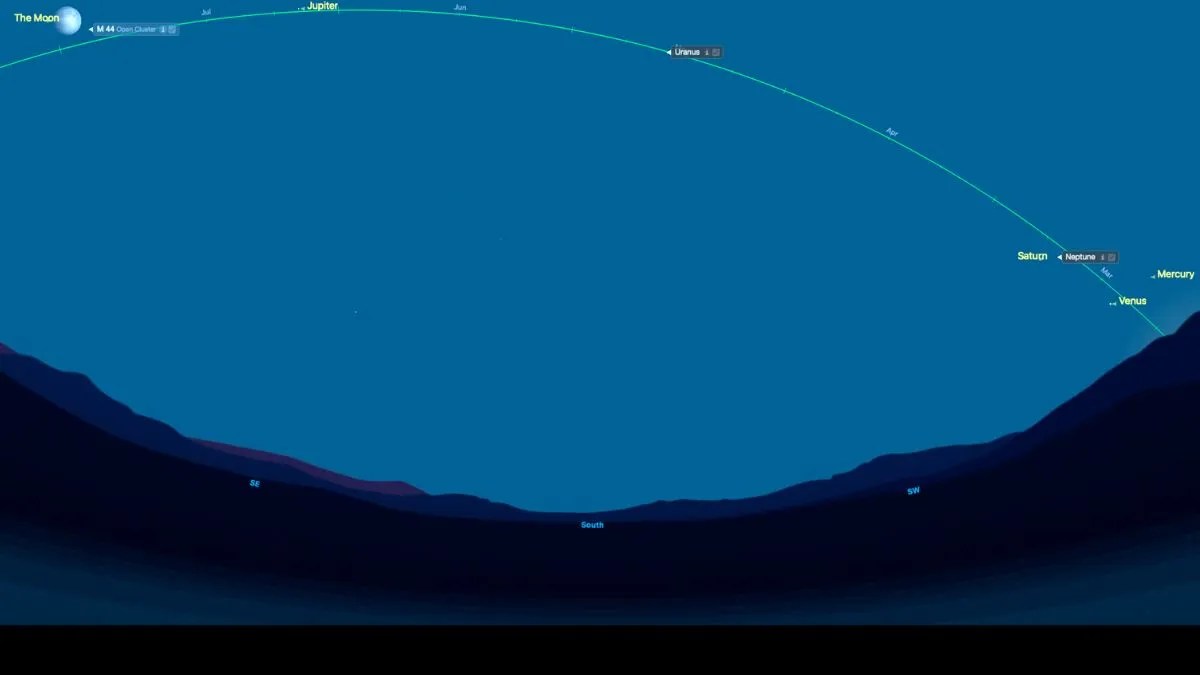
Lastly, a good reason to step outside and look up early this evening: “February’s ‘rare planetary alignment’ is coming — here’s what to expect from the planet parade“
#Aliens #BarrettBrown #conspiracy #conspiracyTheories #conspiracyTheory #culture #essay #essays #history #literature #Montaigne #politics #secrets #SteveBlank
“Conspiracy theories also bring another reward: power.”*…
Theophilus Schweighardt, The Temple of the Rose Cross, 1618 (source)Barrett Brown interrogates our fascination with conspiracies and conspiracy theories…
Over a period of several years in the early seventeenth century, there appeared in Western Europe three manifestos laying out the history of the theretofore unheard-of Rosicrucian order, whose secret directorate was said to employ powerful magical-scientific techniques in service to sociopolitical reform. This naturally led to quite a bit of public speculation, which gradually abated in the absence of further pronouncements; within a few generations the only parties ascribing any significance to the incident tended to be dubious characters claiming to be Rosicrucians themselves, rarely with much to show for it. Thus, as a result of its gradual association with cranks, the Rosicrucian story developed a kind of inoculation against serious scrutiny.
It wasn’t until the sixties that the British historian Dame Frances A. Yates breached the actual nature and extent of the thought movement that informed both the manifestos and its audience. In her book The Rosicrucian Enlightenment, she demonstrates that the texts were written as anti-Hapsburg, proreformist propaganda drawing on doctrines associated with the sixteenth-century philosopher Francis Bacon, and that this was understood by commentators on both sides; that the surreal “alchemical wedding” described therein references the 1613 marriage of England’s Elizabeth Stuart and Frederick V of the Palatinate, widely heralded as the linchpin of a proto-Protestant alliance capable of establishing such reform by force; that the broader proposals were indeed taken seriously by scholars, not as scripture but rather as a set of visionary policy proposals dressed in metaphor, akin to Bacon’s The New Atlantis; and that enthusiasts such as Elias Ashmole would directly implement those proposals by founding the Royal Society, establishing the primacy of science. Rather than being a footnote to premodern folly, the Rosicrucian affair turns out to sit at the narrative center of the modern world.
There’s a lesson here that bears attention today, at the apparent twilight of the same modern world, when the fundamental problem we face involves the degree to which the truth must now compete with such a vast multiplicity of falsehoods that discovering truth itself becomes unviable. Consider that so much of consequence to our own heritage should have been so misunderstood for as long as the Rosicrucian manifestos; it seems that crucial facts can be effectively concealed from serious attention simply by being visibly subject to the unserious sort. Such facts are gradually imbued with a sort of de facto defense mechanism against scrutiny, whereby the mere act of taking an interest in them serves to discredit professional researchers and journalists…
From the 1600s to recent history and the insights of Umberto Eco, what’s going on– and why: “The Ur-“Conspiracy”: History of a Pseudoconcept,” from @parisreview.bsky.social.
Apposite: “Revisionist History — Aliens, Secrets and Conspiracies,” by Steve Blank
* “The emotional appeal of a conspiracy theory is in its simplicity. It explains away complex phenomena, accounts for chance and accidents, offers the believer the satisfying sense of having special, privileged access to the truth. For those who become the one-party state’s gatekeepers, the repetition of these conspiracy theories also brings another reward: power.” – Anne Applebaum, Twilight of Democracy: The Seductive Lure of Authoritarianism
###
As we ponder perspicacity, we might we send inquisitive birthday greetings to Michel Eyquem de Montaigne; he was born on this date in 1533. Best known during his lifetime as a statesman, Montaigne is remembered for popularizing the essay as a literary form. His massive volume Essais (translated literally as “Attempts” or “Trials”)– contain what are, to this day, some of the most widely-influential essays ever written. Montaigne had a powerful impact on writers ever after, from Descartes, Pascal, and Rousseau through Hazlitt, Emerson, and Nietzsche, to Zweig, Hoffer, and Asimov. Indeed, he’s believed to have been an influence on the later works of Shakespeare.
And while he pre-dates the “Rosicrucian” publications mentioned above, he observed (in Essais) “the truth of these days is not that which really is, but what every man persuades another man to believe.”

Lastly, a good reason to step outside and look up early this evening: “February’s ‘rare planetary alignment’ is coming — here’s what to expect from the planet parade“
#Aliens #BarrettBrown #conspiracy #conspiracyTheories #conspiracyTheory #culture #essay #essays #history #literature #Montaigne #politics #secrets #SteveBlank