
Discussion
Loading...

#Tag

Log in
  • Sign up
  • About
  • Code of conduct
  • Privacy
  • Users
  • Instances
  • About Bonfire
Privacy and Surveillance boosted
TechNadu
TechNadu
@technadu@infosec.exchange  ·  activity timestamp 2 days ago

Privacy infrastructure has historically prioritized neutrality — encrypted traffic flows without inspection.
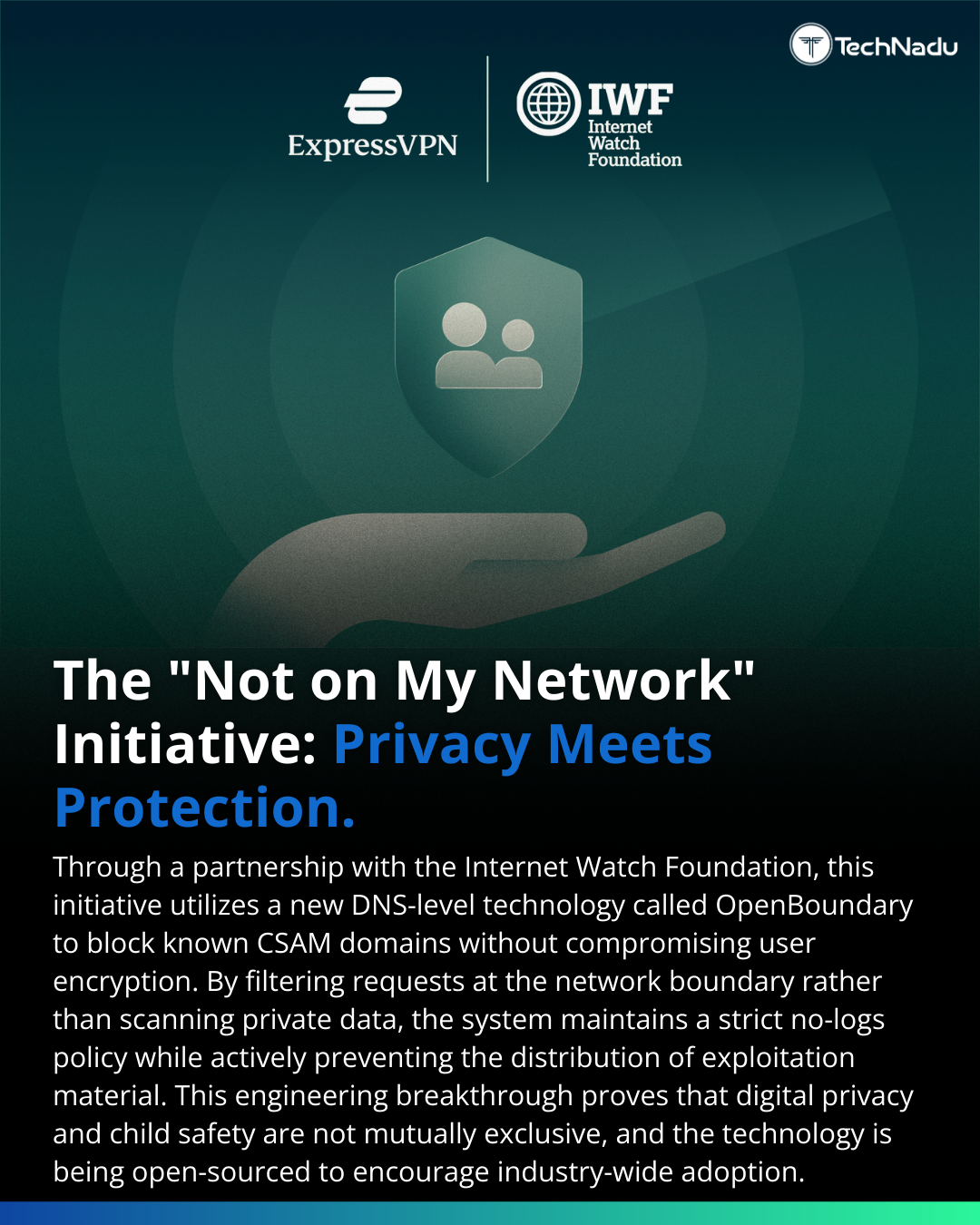
However, a new initiative involving ExpressVPN and the Internet Watch Foundation introduces a different architectural approach to restrict known CSAM domains.
The mechanism relies on OpenBoundary, a DNS-level filtering technology designed to block only domains verified by IWF.
Technical characteristics include:
• DNS resolver-level domain verification
• No deep packet inspection
• No encryption termination
• No traffic logging or user identification
If a requested domain appears on the IWF verified list, the connection is dropped at the network boundary.

The initiative - “Not on My Network” - is also encouraging adoption across the privacy infrastructure ecosystem, including CyberGhost VPN, Private Internet Access.
For security engineers, this raises an important architectural question:
Can network-level safeguards address exploitation risks without weakening encryption guarantees?

Source: https://www.expressvpn.com/blog/not-on-my-network-iwf-csam-domains/

Share your technical perspective in the comments.
Follow us for more cybersecurity engineering insights and threat intelligence discussions.

#Infosec #Cybersecurity #PrivacyEngineering #DNS #NetworkSecurity #Encryption #VPNInfrastructure #ThreatPrevention
How we engineered a way to restrict child sexual abuse material without looking at your data
ExpressVPN

ExpressVPN Restricts All IWF-Identified CSAM Domains 

ExpressVPN has partnered with the IWF to deploy OpenBoundary, a privacy-preserving DNS boundary that blocks dedicated child sexual abuse domains. 
  • Copy link
  • Flag this post
  • Block
TechNadu
TechNadu
@technadu@infosec.exchange  ·  activity timestamp 2 days ago

Privacy infrastructure has historically prioritized neutrality — encrypted traffic flows without inspection.
However, a new initiative involving ExpressVPN and the Internet Watch Foundation introduces a different architectural approach to restrict known CSAM domains.
The mechanism relies on OpenBoundary, a DNS-level filtering technology designed to block only domains verified by IWF.
Technical characteristics include:
• DNS resolver-level domain verification
• No deep packet inspection
• No encryption termination
• No traffic logging or user identification
If a requested domain appears on the IWF verified list, the connection is dropped at the network boundary.

The initiative - “Not on My Network” - is also encouraging adoption across the privacy infrastructure ecosystem, including CyberGhost VPN, Private Internet Access.
For security engineers, this raises an important architectural question:
Can network-level safeguards address exploitation risks without weakening encryption guarantees?

Source: https://www.expressvpn.com/blog/not-on-my-network-iwf-csam-domains/

Share your technical perspective in the comments.
Follow us for more cybersecurity engineering insights and threat intelligence discussions.

#Infosec #Cybersecurity #PrivacyEngineering #DNS #NetworkSecurity #Encryption #VPNInfrastructure #ThreatPrevention
How we engineered a way to restrict child sexual abuse material without looking at your data
ExpressVPN

ExpressVPN Restricts All IWF-Identified CSAM Domains 

ExpressVPN has partnered with the IWF to deploy OpenBoundary, a privacy-preserving DNS boundary that blocks dedicated child sexual abuse domains. 
  • Copy link
  • Flag this post
  • Block
Age Verification boosted
TechNadu
TechNadu
@technadu@infosec.exchange  ·  activity timestamp 4 days ago

Policy shift with technical implications.
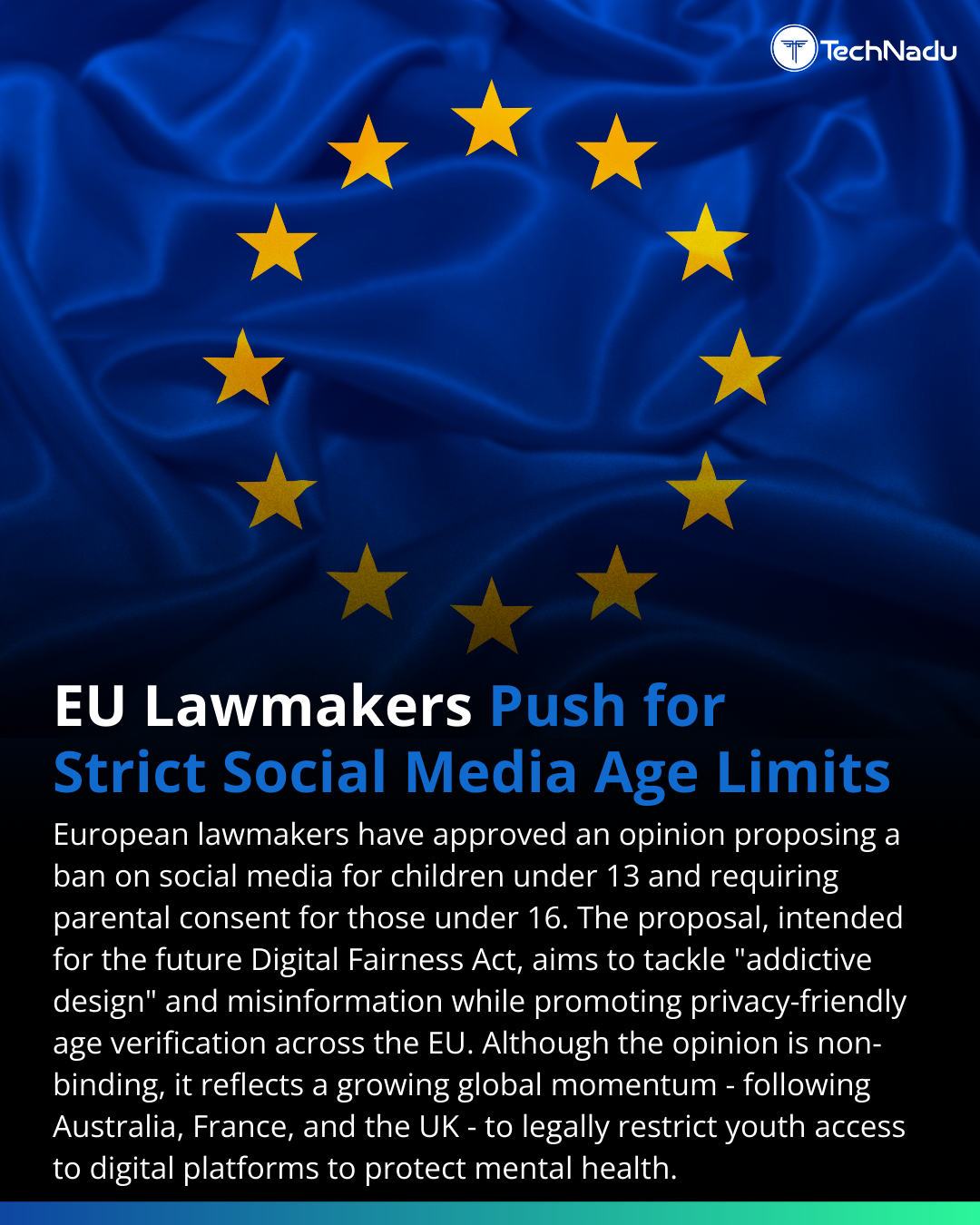
The European Parliament endorsed an opinion proposing:
• Social media ban under 13
• Parental consent under 16
• Privacy-preserving age assurance mechanisms
• Expanded regulation under the Digital Fairness Act

Security and engineering considerations:
Zero-knowledge proof-based age verification?
On-device age estimation vs centralized ID checks?

Data minimization vs compliance logging requirements?

AI-driven manipulation detection standards?
Age verification at EU scale introduces non-trivial architectural challenges - particularly around privacy-by-design and cross-border enforcement.

From a security architecture perspective:
Can platforms implement robust age controls without increasing identity exposure risks?
Engage below.

Source: https://therecord.media/eu-lawmakers-propose-youth-under-16-social-media-parental-consent

Follow @technadu for cybersecurity, AI governance, and digital compliance analysis.
Repost to inform the security community.

#Infosec #AgeVerification #PrivacyEngineering #DigitalPolicy #EURegulation #AIgovernance #PlatformSecurity #DataMinimization #CyberCompliance #OnlineSafety

EU lawmakers propose that youth under 16 be barred from social media without parental consent

EU lawmakers propose that youth under 16 be barred from social media without parental consent

The opinion also states that social media access should not be allowed for children below age 13 under any circumstances.
  • Copy link
  • Flag this post
  • Block
TechNadu
TechNadu
@technadu@infosec.exchange  ·  activity timestamp 4 days ago

Policy shift with technical implications.
The European Parliament endorsed an opinion proposing:
• Social media ban under 13
• Parental consent under 16
• Privacy-preserving age assurance mechanisms
• Expanded regulation under the Digital Fairness Act

Security and engineering considerations:
Zero-knowledge proof-based age verification?
On-device age estimation vs centralized ID checks?

Data minimization vs compliance logging requirements?

AI-driven manipulation detection standards?
Age verification at EU scale introduces non-trivial architectural challenges - particularly around privacy-by-design and cross-border enforcement.

From a security architecture perspective:
Can platforms implement robust age controls without increasing identity exposure risks?
Engage below.

Source: https://therecord.media/eu-lawmakers-propose-youth-under-16-social-media-parental-consent

Follow @technadu for cybersecurity, AI governance, and digital compliance analysis.
Repost to inform the security community.

#Infosec #AgeVerification #PrivacyEngineering #DigitalPolicy #EURegulation #AIgovernance #PlatformSecurity #DataMinimization #CyberCompliance #OnlineSafety

EU lawmakers propose that youth under 16 be barred from social media without parental consent

EU lawmakers propose that youth under 16 be barred from social media without parental consent

The opinion also states that social media access should not be allowed for children below age 13 under any circumstances.
  • Copy link
  • Flag this post
  • Block
Privacy and Surveillance boosted
TechNadu
TechNadu
@technadu@infosec.exchange  ·  activity timestamp 4 days ago

Policy development with cybersecurity implications.

Florida’s proposed HB 945 would establish a state-level operational intelligence unit with authority extending into threat identification and counterintelligence.

Risk dimensions:
• Expansion of state-run surveillance infrastructure
• Ideology-based scrutiny concerns
• Potential inter-state policy replication
• Oversight ambiguity and governance design challenges
• Broader digital monitoring implications
Security professionals understand that surveillance architecture, once normalized, rarely contracts.

From a risk modeling perspective:
What controls, auditability mechanisms, and transparency frameworks would be required to prevent mission creep?

Source: https://www.theguardian.com/commentisfree/2026/mar/01/florida-cia-intelligence-unit-surveillance-views

Engage below.
Follow TechNadu for cybersecurity law, digital rights, and governance analysis.
Repost to elevate the discussion within the security community.

#Infosec #CyberPolicy #SurveillanceRisk #Governance #PrivacyEngineering #SecurityArchitecture #DigitalRights #FirstAmendment #NationalSecurity #Compliance #ThreatModeling #PublicSectorSecurity

Florida wants its own CIA. That could lead to unchecked domestic surveillance
the Guardian

Florida wants its own CIA. That could lead to unchecked domestic surveillance | Seth Stern, Lauren Harper and Bobby Block

A bill to create a state intelligence operation would allow scrutiny based on ‘opinions’ – and could prompt other states to follow
  • Copy link
  • Flag this post
  • Block
TechNadu
TechNadu
@technadu@infosec.exchange  ·  activity timestamp 4 days ago

Policy development with cybersecurity implications.

Florida’s proposed HB 945 would establish a state-level operational intelligence unit with authority extending into threat identification and counterintelligence.

Risk dimensions:
• Expansion of state-run surveillance infrastructure
• Ideology-based scrutiny concerns
• Potential inter-state policy replication
• Oversight ambiguity and governance design challenges
• Broader digital monitoring implications
Security professionals understand that surveillance architecture, once normalized, rarely contracts.

From a risk modeling perspective:
What controls, auditability mechanisms, and transparency frameworks would be required to prevent mission creep?

Source: https://www.theguardian.com/commentisfree/2026/mar/01/florida-cia-intelligence-unit-surveillance-views

Engage below.
Follow TechNadu for cybersecurity law, digital rights, and governance analysis.
Repost to elevate the discussion within the security community.

#Infosec #CyberPolicy #SurveillanceRisk #Governance #PrivacyEngineering #SecurityArchitecture #DigitalRights #FirstAmendment #NationalSecurity #Compliance #ThreatModeling #PublicSectorSecurity

Florida wants its own CIA. That could lead to unchecked domestic surveillance
the Guardian

Florida wants its own CIA. That could lead to unchecked domestic surveillance | Seth Stern, Lauren Harper and Bobby Block

A bill to create a state intelligence operation would allow scrutiny based on ‘opinions’ – and could prompt other states to follow
  • Copy link
  • Flag this post
  • Block
Privacy and Surveillance boosted
TechNadu
TechNadu
@technadu@infosec.exchange  ·  activity timestamp 5 days ago

IoT privacy compliance development.
Samsung will revise ACR data practices after legal action by the Texas Attorney General.

Key elements:
• Real-time viewing habit collection under scrutiny
• Enhanced disclosure & consent flow promised
• Emphasis on consumer transparency
• Broader regulatory pressure on smart device telemetry

ACR data monetization highlights a persistent tension:
Device intelligence vs user autonomy
Advertising revenue vs explicit consent
Convenience vs continuous telemetry
As regulatory enforcement increases, IoT vendors may face stricter consent design expectations.
Question for security & privacy professionals:
Should connected consumer devices require periodic re-consent for telemetry collection?

Source: https://therecord.media/samsung-updates-acr-privacy-practices-texas

Engage below.
Follow TechNadu for privacy law, IoT security, and compliance updates.
Repost to broaden awareness.

#Infosec #PrivacyEngineering #ACR #IoTSecurity #DataGovernance #ConsumerPrivacy #RegulatoryCompliance #SmartDevices #CyberLaw #SecurityAwareness #DigitalRights

Samsung updates ACR privacy practices after Texas sues TV manufacturers

Samsung updates ACR privacy practices after Texas sues TV manufacturers

In December, Texas sued five major smart TV manufacturers — Samsung, Sony, LG, Hisense and TCL Technology — for allegedly collecting ACR data without consumers in the state being fully informed and consenting.
  • Copy link
  • Flag this post
  • Block
TechNadu
TechNadu
@technadu@infosec.exchange  ·  activity timestamp 5 days ago

IoT privacy compliance development.
Samsung will revise ACR data practices after legal action by the Texas Attorney General.

Key elements:
• Real-time viewing habit collection under scrutiny
• Enhanced disclosure & consent flow promised
• Emphasis on consumer transparency
• Broader regulatory pressure on smart device telemetry

ACR data monetization highlights a persistent tension:
Device intelligence vs user autonomy
Advertising revenue vs explicit consent
Convenience vs continuous telemetry
As regulatory enforcement increases, IoT vendors may face stricter consent design expectations.
Question for security & privacy professionals:
Should connected consumer devices require periodic re-consent for telemetry collection?

Source: https://therecord.media/samsung-updates-acr-privacy-practices-texas

Engage below.
Follow TechNadu for privacy law, IoT security, and compliance updates.
Repost to broaden awareness.

#Infosec #PrivacyEngineering #ACR #IoTSecurity #DataGovernance #ConsumerPrivacy #RegulatoryCompliance #SmartDevices #CyberLaw #SecurityAwareness #DigitalRights

Samsung updates ACR privacy practices after Texas sues TV manufacturers

Samsung updates ACR privacy practices after Texas sues TV manufacturers

In December, Texas sued five major smart TV manufacturers — Samsung, Sony, LG, Hisense and TCL Technology — for allegedly collecting ACR data without consumers in the state being fully informed and consenting.
  • Copy link
  • Flag this post
  • Block

Indieweb Studio

This is a relaxed, online social space for the indieweb community, brought to you by indieweb.social.

Please abide by our code of conduct and have a nice time!

Indieweb Studio: About · Code of conduct · Privacy · Users · Instances
Bonfire social · 1.0.2-alpha.34 no JS en
Automatic federation enabled
Log in Create account
Instance logo
  • Explore
  • About
  • Members
  • Code of Conduct