Discussion
Loading...

#Tag

Log in
  • Sign up
  • About
  • Code of conduct
  • Privacy
  • Users
  • Instances
  • About Bonfire
Photography Channel boosted
Ed van der Elsken
Ed van der Elsken
@EdvdElsken@mastodon.ozioso.online  ·  activity timestamp 2 hours ago

Vrouwen tijdens een nachtelijk feest, Ed van der Elsken, 1956 - 1957

#EdvanderElsken #African #Dutch #Elsken #fotografie #photography #EdVanDerElsken #EdvanderElsken

http://www.rijksmuseum.nl/en/collection/RP-F-2019-242-24-85

The image is a black and white photograph depicting four women, seemingly in the midst of nighttime festivities. The focus is on two prominent figures at the forefront: one woman with her head turned to look over her shoulder, wearing earrings, a necklace, bracelets, and holding what appears to be a small cloth or napkin; another has a fur-adorned headdress that adds texture and movement to the composition.

Behind them are partial silhouettes of two more women. The environment is dark, suggesting it's an indoor setting with limited lighting, perhaps at a social gathering or celebration where dancing or music might be involved. Their attire suggests cultural significance; their dresses have patterns typical of African textiles, often worn during special occasions and celebrations.

The composition captures the dynamic essence of the moment through motion blur on the woman with the fur headdress, indicating swift movement as she adjusts her headgear. The photograph is credited to Ed van der Elsken (1925-2005), a Dutch photographer known for his evocative street photography capturing the lives and culture in various global cities during the mid-20th century.

The specific context or location of this event isn't discernible from the image alone, but it reflects van der Elsken's interest in documenting human experiences with an emphasis on social interaction and cultural rich [...]
The image is a black and white photograph depicting four women, seemingly in the midst of nighttime festivities. The focus is on two prominent figures at the forefront: one woman with her head turned to look over her shoulder, wearing earrings, a necklace, bracelets, and holding what appears to be a small cloth or napkin; another has a fur-adorned headdress that adds texture and movement to the composition. Behind them are partial silhouettes of two more women. The environment is dark, suggesting it's an indoor setting with limited lighting, perhaps at a social gathering or celebration where dancing or music might be involved. Their attire suggests cultural significance; their dresses have patterns typical of African textiles, often worn during special occasions and celebrations. The composition captures the dynamic essence of the moment through motion blur on the woman with the fur headdress, indicating swift movement as she adjusts her headgear. The photograph is credited to Ed van der Elsken (1925-2005), a Dutch photographer known for his evocative street photography capturing the lives and culture in various global cities during the mid-20th century. The specific context or location of this event isn't discernible from the image alone, but it reflects van der Elsken's interest in documenting human experiences with an emphasis on social interaction and cultural rich [...]
Rijksmuseum.nl

Vrouwen tijdens een nachtelijk feest

content
  • Copy link
  • Flag this post
  • Block
Ed van der Elsken
Ed van der Elsken
@EdvdElsken@mastodon.ozioso.online  ·  activity timestamp 2 hours ago

Vrouwen tijdens een nachtelijk feest, Ed van der Elsken, 1956 - 1957

#EdvanderElsken #African #Dutch #Elsken #fotografie #photography #EdVanDerElsken #EdvanderElsken

http://www.rijksmuseum.nl/en/collection/RP-F-2019-242-24-85

The image is a black and white photograph depicting four women, seemingly in the midst of nighttime festivities. The focus is on two prominent figures at the forefront: one woman with her head turned to look over her shoulder, wearing earrings, a necklace, bracelets, and holding what appears to be a small cloth or napkin; another has a fur-adorned headdress that adds texture and movement to the composition.

Behind them are partial silhouettes of two more women. The environment is dark, suggesting it's an indoor setting with limited lighting, perhaps at a social gathering or celebration where dancing or music might be involved. Their attire suggests cultural significance; their dresses have patterns typical of African textiles, often worn during special occasions and celebrations.

The composition captures the dynamic essence of the moment through motion blur on the woman with the fur headdress, indicating swift movement as she adjusts her headgear. The photograph is credited to Ed van der Elsken (1925-2005), a Dutch photographer known for his evocative street photography capturing the lives and culture in various global cities during the mid-20th century.

The specific context or location of this event isn't discernible from the image alone, but it reflects van der Elsken's interest in documenting human experiences with an emphasis on social interaction and cultural rich [...]
The image is a black and white photograph depicting four women, seemingly in the midst of nighttime festivities. The focus is on two prominent figures at the forefront: one woman with her head turned to look over her shoulder, wearing earrings, a necklace, bracelets, and holding what appears to be a small cloth or napkin; another has a fur-adorned headdress that adds texture and movement to the composition. Behind them are partial silhouettes of two more women. The environment is dark, suggesting it's an indoor setting with limited lighting, perhaps at a social gathering or celebration where dancing or music might be involved. Their attire suggests cultural significance; their dresses have patterns typical of African textiles, often worn during special occasions and celebrations. The composition captures the dynamic essence of the moment through motion blur on the woman with the fur headdress, indicating swift movement as she adjusts her headgear. The photograph is credited to Ed van der Elsken (1925-2005), a Dutch photographer known for his evocative street photography capturing the lives and culture in various global cities during the mid-20th century. The specific context or location of this event isn't discernible from the image alone, but it reflects van der Elsken's interest in documenting human experiences with an emphasis on social interaction and cultural rich [...]
Rijksmuseum.nl

Vrouwen tijdens een nachtelijk feest

content
  • Copy link
  • Flag this post
  • Block
Photography Channel boosted
Ed van der Elsken
Ed van der Elsken
@EdvdElsken@mastodon.ozioso.online  ·  activity timestamp 4 hours ago

Sjem, twaalfjarige dochter van het dorpshoofd, met een struisvogel, Ed van der Elsken, 1956 - 1957

#EdvanderElsken #African #Africa #fotografie #photography #EdVanDerElsken #EdvanderElsken

http://www.rijksmuseum.nl/en/collection/RP-F-2019-298-13-91

The image is a black and white photograph depicting two individuals, likely taken during the 1950s based on the clothing style. The central figure appears to be an adolescent girl with her hair styled in twists or cornrows, wearing what seems to be traditional African attire including a striped garment that could be part of a wrap dress commonly worn by women and girls from various cultures across Africa. She is holding two animals close to her body: one small creature on the left side which resembles a kitten, and another larger animal with fluffy fur on the right side which might be a domesticated bird or possibly an ostrich based on its size and feather texture.

In the background, slightly out of focus, there appears to be another person partially visible. The setting is not entirely clear but seems outdoors, perhaps in a rural environment given the presence of what looks like tree bark behind them.

The photograph has been identified as belonging to Ed van der Elsken's collection and was taken during his visits to Africa where he documented various aspects of life including social customs, wildlife interactions among locals with animals. The image carries cultural significance by capturing daily-life moments in an African village from a historical perspective provided through the fashion and objects held by these individuals.

Given that Ed van der Elsken's work is k [...]
The image is a black and white photograph depicting two individuals, likely taken during the 1950s based on the clothing style. The central figure appears to be an adolescent girl with her hair styled in twists or cornrows, wearing what seems to be traditional African attire including a striped garment that could be part of a wrap dress commonly worn by women and girls from various cultures across Africa. She is holding two animals close to her body: one small creature on the left side which resembles a kitten, and another larger animal with fluffy fur on the right side which might be a domesticated bird or possibly an ostrich based on its size and feather texture. In the background, slightly out of focus, there appears to be another person partially visible. The setting is not entirely clear but seems outdoors, perhaps in a rural environment given the presence of what looks like tree bark behind them. The photograph has been identified as belonging to Ed van der Elsken's collection and was taken during his visits to Africa where he documented various aspects of life including social customs, wildlife interactions among locals with animals. The image carries cultural significance by capturing daily-life moments in an African village from a historical perspective provided through the fashion and objects held by these individuals. Given that Ed van der Elsken's work is k [...]
Rijksmuseum.nl

Sjem, twaalfjarige dochter van het dorpshoofd, met een struisvogel

content
  • Copy link
  • Flag this post
  • Block
Ed van der Elsken
Ed van der Elsken
@EdvdElsken@mastodon.ozioso.online  ·  activity timestamp 4 hours ago

Sjem, twaalfjarige dochter van het dorpshoofd, met een struisvogel, Ed van der Elsken, 1956 - 1957

#EdvanderElsken #African #Africa #fotografie #photography #EdVanDerElsken #EdvanderElsken

http://www.rijksmuseum.nl/en/collection/RP-F-2019-298-13-91

The image is a black and white photograph depicting two individuals, likely taken during the 1950s based on the clothing style. The central figure appears to be an adolescent girl with her hair styled in twists or cornrows, wearing what seems to be traditional African attire including a striped garment that could be part of a wrap dress commonly worn by women and girls from various cultures across Africa. She is holding two animals close to her body: one small creature on the left side which resembles a kitten, and another larger animal with fluffy fur on the right side which might be a domesticated bird or possibly an ostrich based on its size and feather texture.

In the background, slightly out of focus, there appears to be another person partially visible. The setting is not entirely clear but seems outdoors, perhaps in a rural environment given the presence of what looks like tree bark behind them.

The photograph has been identified as belonging to Ed van der Elsken's collection and was taken during his visits to Africa where he documented various aspects of life including social customs, wildlife interactions among locals with animals. The image carries cultural significance by capturing daily-life moments in an African village from a historical perspective provided through the fashion and objects held by these individuals.

Given that Ed van der Elsken's work is k [...]
The image is a black and white photograph depicting two individuals, likely taken during the 1950s based on the clothing style. The central figure appears to be an adolescent girl with her hair styled in twists or cornrows, wearing what seems to be traditional African attire including a striped garment that could be part of a wrap dress commonly worn by women and girls from various cultures across Africa. She is holding two animals close to her body: one small creature on the left side which resembles a kitten, and another larger animal with fluffy fur on the right side which might be a domesticated bird or possibly an ostrich based on its size and feather texture. In the background, slightly out of focus, there appears to be another person partially visible. The setting is not entirely clear but seems outdoors, perhaps in a rural environment given the presence of what looks like tree bark behind them. The photograph has been identified as belonging to Ed van der Elsken's collection and was taken during his visits to Africa where he documented various aspects of life including social customs, wildlife interactions among locals with animals. The image carries cultural significance by capturing daily-life moments in an African village from a historical perspective provided through the fashion and objects held by these individuals. Given that Ed van der Elsken's work is k [...]
Rijksmuseum.nl

Sjem, twaalfjarige dochter van het dorpshoofd, met een struisvogel

content
  • Copy link
  • Flag this post
  • Block
Photography Channel boosted
Ed van der Elsken
Ed van der Elsken
@EdvdElsken@mastodon.ozioso.online  ·  activity timestamp 6 hours ago

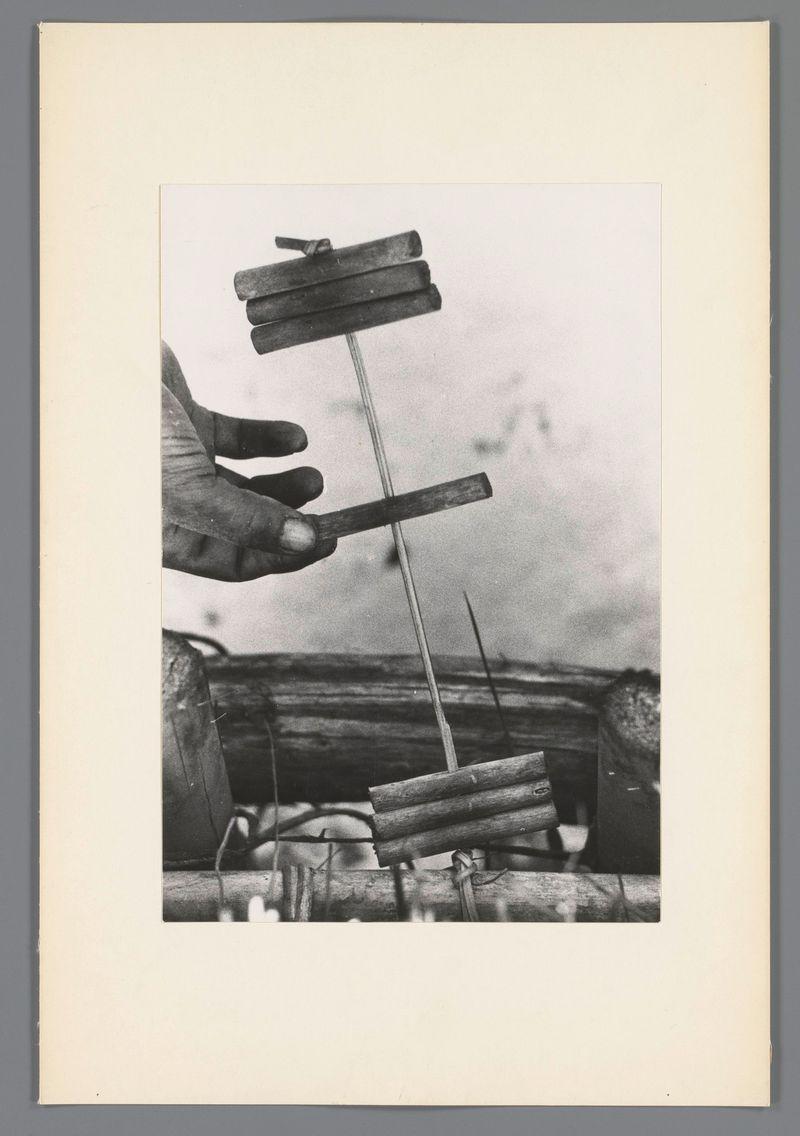
Weekkalender met zeven stokjes gebruikt door lokale bevolking, Ed van der Elsken, 1956 - 1957

#EdvanderElsken #fotografie #photography #EdVanDerElsken #EdvanderElsken

http://www.rijksmuseum.nl/en/collection/RP-F-2019-298-13-50

The image depicts a grayscale photograph showing the intricate work of someone creating an improvised device. The main subject is a person's hand, which appears to be manipulating or stabilizing several wooden sticks and rods arranged in a precarious balance on top of each other. One stick stands out as it is vertically positioned with one end resting against what seems like a larger piece of wood that serves as part of the assembly.

The background suggests an outdoor setting, likely involving some form of construction or manual craftwork due to visible logs and wooden planks. The composition emphasizes texture and shadow play on surfaces, highlighting the roughness of unfinished wood and the tension in maintaining balance within this makeshift structure.
The image depicts a grayscale photograph showing the intricate work of someone creating an improvised device. The main subject is a person's hand, which appears to be manipulating or stabilizing several wooden sticks and rods arranged in a precarious balance on top of each other. One stick stands out as it is vertically positioned with one end resting against what seems like a larger piece of wood that serves as part of the assembly. The background suggests an outdoor setting, likely involving some form of construction or manual craftwork due to visible logs and wooden planks. The composition emphasizes texture and shadow play on surfaces, highlighting the roughness of unfinished wood and the tension in maintaining balance within this makeshift structure.
Rijksmuseum.nl

Weekkalender met zeven stokjes gebruikt door lokale bevolking

content
  • Copy link
  • Flag this post
  • Block
Ed van der Elsken
Ed van der Elsken
@EdvdElsken@mastodon.ozioso.online  ·  activity timestamp 6 hours ago

Weekkalender met zeven stokjes gebruikt door lokale bevolking, Ed van der Elsken, 1956 - 1957

#EdvanderElsken #fotografie #photography #EdVanDerElsken #EdvanderElsken

http://www.rijksmuseum.nl/en/collection/RP-F-2019-298-13-50

The image depicts a grayscale photograph showing the intricate work of someone creating an improvised device. The main subject is a person's hand, which appears to be manipulating or stabilizing several wooden sticks and rods arranged in a precarious balance on top of each other. One stick stands out as it is vertically positioned with one end resting against what seems like a larger piece of wood that serves as part of the assembly.

The background suggests an outdoor setting, likely involving some form of construction or manual craftwork due to visible logs and wooden planks. The composition emphasizes texture and shadow play on surfaces, highlighting the roughness of unfinished wood and the tension in maintaining balance within this makeshift structure.
The image depicts a grayscale photograph showing the intricate work of someone creating an improvised device. The main subject is a person's hand, which appears to be manipulating or stabilizing several wooden sticks and rods arranged in a precarious balance on top of each other. One stick stands out as it is vertically positioned with one end resting against what seems like a larger piece of wood that serves as part of the assembly. The background suggests an outdoor setting, likely involving some form of construction or manual craftwork due to visible logs and wooden planks. The composition emphasizes texture and shadow play on surfaces, highlighting the roughness of unfinished wood and the tension in maintaining balance within this makeshift structure.
Rijksmuseum.nl

Weekkalender met zeven stokjes gebruikt door lokale bevolking

content
  • Copy link
  • Flag this post
  • Block
Photography Channel boosted
Ed van der Elsken
Ed van der Elsken
@EdvdElsken@mastodon.ozioso.online  ·  activity timestamp 7 hours ago

Twee vrouwen voor een woning met muurschilderingen, Ed van der Elsken, 1956 - 1957

#EdvanderElsken #African #fotografie #photography #EdVanDerElsken #EdvanderElsken

http://www.rijksmuseum.nl/en/collection/RP-F-2019-298-13-76

The image depicts a rural African setting, featuring two individuals in traditional attire and a thatched hut with a cross on top. The larger individual stands to the right, wearing minimal clothing, while the smaller figure sits on the ground to the left. Behind them is an animal resembling a wild cow, partially obscured by shadows cast from supporting poles of the structure. The photograph appears aged, likely taken during the mid-20th century, and captures a moment that reflects daily life in this community. Additional context for this image can be found at Twee vrouwen voor een woning met muurschilderingen, Ed van der Elsken, 1956 - 1957 [https://images.loener.nl/EdvdElsken/full/6484/648449ebba25398d90832d09.jpg], indicating a connection to the artist Ed van der Elsken and dating from approximately 1956-1957.
Rijksmuseum.nl

Twee vrouwen voor een woning met muurschilderingen

content
  • Copy link
  • Flag this post
  • Block
Ed van der Elsken
Ed van der Elsken
@EdvdElsken@mastodon.ozioso.online  ·  activity timestamp 7 hours ago

Twee vrouwen voor een woning met muurschilderingen, Ed van der Elsken, 1956 - 1957

#EdvanderElsken #African #fotografie #photography #EdVanDerElsken #EdvanderElsken

http://www.rijksmuseum.nl/en/collection/RP-F-2019-298-13-76

The image depicts a rural African setting, featuring two individuals in traditional attire and a thatched hut with a cross on top. The larger individual stands to the right, wearing minimal clothing, while the smaller figure sits on the ground to the left. Behind them is an animal resembling a wild cow, partially obscured by shadows cast from supporting poles of the structure. The photograph appears aged, likely taken during the mid-20th century, and captures a moment that reflects daily life in this community. Additional context for this image can be found at Twee vrouwen voor een woning met muurschilderingen, Ed van der Elsken, 1956 - 1957 [https://images.loener.nl/EdvdElsken/full/6484/648449ebba25398d90832d09.jpg], indicating a connection to the artist Ed van der Elsken and dating from approximately 1956-1957.
Rijksmuseum.nl

Twee vrouwen voor een woning met muurschilderingen

content
  • Copy link
  • Flag this post
  • Block
Photography Channel boosted
Ed van der Elsken
Ed van der Elsken
@EdvdElsken@mastodon.ozioso.online  ·  activity timestamp 12 hours ago

Roeiende man, Ed van der Elsken, 1956 - 1957

#Roeiende #EdvanderElsken #fotografie #photography #EdVanDerElsken #EdvanderElsken

http://www.rijksmuseum.nl/en/collection/RP-F-2019-242-24-97

The image is a black and white photograph capturing the back view of an adult man with muscular build, standing near water's edge. His physique suggests strength and physical fitness. He appears to be gazing into the distance over the body of water, which could imply contemplation or observation of something beyond the frame of the photo.

He has short hair on his head and is shirtless, revealing a well-defined torso with pronounced muscles in his arms, shoulders, chest, and back. The skin shows signs of sun exposure or work-related weariness. He's wearing what looks like a traditional garment draped around his waist; it appears to be made from raffia-like material tied at the front.

In his right hand, he is holding onto something that seems thin and possibly flexible, which could suggest an activity related to water—possibly fishing, swimming, or handling a boat. His left arm hangs loosely by his side.

The background features what looks like part of a wooden structure, perhaps a pier or dock edge where the man stands. The reflection on the surface suggests calmness in the body of water behind him. There is no indication of modern technology or contemporary clothing styles that could date this photograph more precisely beyond the mid-20th century.

The overall atmosphere conveyed by the image evokes a sense of solitude, and it might have been taken during an exploratory [...]
The image is a black and white photograph capturing the back view of an adult man with muscular build, standing near water's edge. His physique suggests strength and physical fitness. He appears to be gazing into the distance over the body of water, which could imply contemplation or observation of something beyond the frame of the photo. He has short hair on his head and is shirtless, revealing a well-defined torso with pronounced muscles in his arms, shoulders, chest, and back. The skin shows signs of sun exposure or work-related weariness. He's wearing what looks like a traditional garment draped around his waist; it appears to be made from raffia-like material tied at the front. In his right hand, he is holding onto something that seems thin and possibly flexible, which could suggest an activity related to water—possibly fishing, swimming, or handling a boat. His left arm hangs loosely by his side. The background features what looks like part of a wooden structure, perhaps a pier or dock edge where the man stands. The reflection on the surface suggests calmness in the body of water behind him. There is no indication of modern technology or contemporary clothing styles that could date this photograph more precisely beyond the mid-20th century. The overall atmosphere conveyed by the image evokes a sense of solitude, and it might have been taken during an exploratory [...]
Rijksmuseum.nl

Roeiende man

content
  • Copy link
  • Flag this post
  • Block
Ed van der Elsken
Ed van der Elsken
@EdvdElsken@mastodon.ozioso.online  ·  activity timestamp 12 hours ago

Roeiende man, Ed van der Elsken, 1956 - 1957

#Roeiende #EdvanderElsken #fotografie #photography #EdVanDerElsken #EdvanderElsken

http://www.rijksmuseum.nl/en/collection/RP-F-2019-242-24-97

The image is a black and white photograph capturing the back view of an adult man with muscular build, standing near water's edge. His physique suggests strength and physical fitness. He appears to be gazing into the distance over the body of water, which could imply contemplation or observation of something beyond the frame of the photo.

He has short hair on his head and is shirtless, revealing a well-defined torso with pronounced muscles in his arms, shoulders, chest, and back. The skin shows signs of sun exposure or work-related weariness. He's wearing what looks like a traditional garment draped around his waist; it appears to be made from raffia-like material tied at the front.

In his right hand, he is holding onto something that seems thin and possibly flexible, which could suggest an activity related to water—possibly fishing, swimming, or handling a boat. His left arm hangs loosely by his side.

The background features what looks like part of a wooden structure, perhaps a pier or dock edge where the man stands. The reflection on the surface suggests calmness in the body of water behind him. There is no indication of modern technology or contemporary clothing styles that could date this photograph more precisely beyond the mid-20th century.

The overall atmosphere conveyed by the image evokes a sense of solitude, and it might have been taken during an exploratory [...]
The image is a black and white photograph capturing the back view of an adult man with muscular build, standing near water's edge. His physique suggests strength and physical fitness. He appears to be gazing into the distance over the body of water, which could imply contemplation or observation of something beyond the frame of the photo. He has short hair on his head and is shirtless, revealing a well-defined torso with pronounced muscles in his arms, shoulders, chest, and back. The skin shows signs of sun exposure or work-related weariness. He's wearing what looks like a traditional garment draped around his waist; it appears to be made from raffia-like material tied at the front. In his right hand, he is holding onto something that seems thin and possibly flexible, which could suggest an activity related to water—possibly fishing, swimming, or handling a boat. His left arm hangs loosely by his side. The background features what looks like part of a wooden structure, perhaps a pier or dock edge where the man stands. The reflection on the surface suggests calmness in the body of water behind him. There is no indication of modern technology or contemporary clothing styles that could date this photograph more precisely beyond the mid-20th century. The overall atmosphere conveyed by the image evokes a sense of solitude, and it might have been taken during an exploratory [...]
Rijksmuseum.nl

Roeiende man

content
  • Copy link
  • Flag this post
  • Block
Photography Channel boosted
Ed van der Elsken
Ed van der Elsken
@EdvdElsken@mastodon.ozioso.online  ·  activity timestamp 14 hours ago

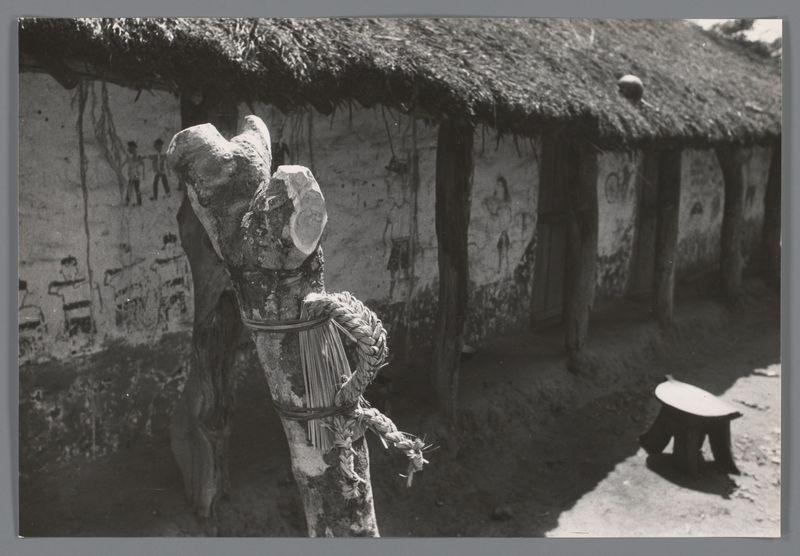
Gevlochten strooien fetisj genaamd 'Ambandrou' voor een woning met beschilderde muren, Ed van der Elsken, 1956 - 1957

#Gevlochten #Ambandrou #EdvanderElsken #fotografie #photography #EdVanDerElsken #EdvanderElsken

http://www.rijksmuseum.nl/en/collection/RP-F-2019-242-24-57

The image depicts a rural scene featuring earthenware pots and pottery on display, along with clay sculptures in various shapes and sizes. These objects are arranged against a rustic backdrop that includes elements like straw walls or huts, emphasizing the traditional craftsmanship involved. The overall color palette is subdued, consisting mainly of earthy tones such as browns, reds, and greys, which evoke a sense of cultural heritage and simplicity.

The composition suggests an emphasis on artisanal practices and the significance placed upon preserving local traditions through these items. There are no people present in the photograph, directing full attention to the objects themselves and their arrangement within this environment. This imagery reflects a focus on the tangible aspects of culture and how they convey stories or values associated with that community.

The image is likely part of an exhibition or collection showcasing traditional pottery techniques and artistry from a specific region or group. The absence of people allows viewers to imagine themselves in the context where these objects were created, enhancing their appreciation for the craftsmanship involved in producing such works.
The image depicts a rural scene featuring earthenware pots and pottery on display, along with clay sculptures in various shapes and sizes. These objects are arranged against a rustic backdrop that includes elements like straw walls or huts, emphasizing the traditional craftsmanship involved. The overall color palette is subdued, consisting mainly of earthy tones such as browns, reds, and greys, which evoke a sense of cultural heritage and simplicity. The composition suggests an emphasis on artisanal practices and the significance placed upon preserving local traditions through these items. There are no people present in the photograph, directing full attention to the objects themselves and their arrangement within this environment. This imagery reflects a focus on the tangible aspects of culture and how they convey stories or values associated with that community. The image is likely part of an exhibition or collection showcasing traditional pottery techniques and artistry from a specific region or group. The absence of people allows viewers to imagine themselves in the context where these objects were created, enhancing their appreciation for the craftsmanship involved in producing such works.
Rijksmuseum.nl

Gevlochten strooien fetisj genaamd 'Ambandrou' voor een woning met beschilderde muren

content
  • Copy link
  • Flag this post
  • Block
Ed van der Elsken
Ed van der Elsken
@EdvdElsken@mastodon.ozioso.online  ·  activity timestamp 14 hours ago

Gevlochten strooien fetisj genaamd 'Ambandrou' voor een woning met beschilderde muren, Ed van der Elsken, 1956 - 1957

#Gevlochten #Ambandrou #EdvanderElsken #fotografie #photography #EdVanDerElsken #EdvanderElsken

http://www.rijksmuseum.nl/en/collection/RP-F-2019-242-24-57

The image depicts a rural scene featuring earthenware pots and pottery on display, along with clay sculptures in various shapes and sizes. These objects are arranged against a rustic backdrop that includes elements like straw walls or huts, emphasizing the traditional craftsmanship involved. The overall color palette is subdued, consisting mainly of earthy tones such as browns, reds, and greys, which evoke a sense of cultural heritage and simplicity.

The composition suggests an emphasis on artisanal practices and the significance placed upon preserving local traditions through these items. There are no people present in the photograph, directing full attention to the objects themselves and their arrangement within this environment. This imagery reflects a focus on the tangible aspects of culture and how they convey stories or values associated with that community.

The image is likely part of an exhibition or collection showcasing traditional pottery techniques and artistry from a specific region or group. The absence of people allows viewers to imagine themselves in the context where these objects were created, enhancing their appreciation for the craftsmanship involved in producing such works.
The image depicts a rural scene featuring earthenware pots and pottery on display, along with clay sculptures in various shapes and sizes. These objects are arranged against a rustic backdrop that includes elements like straw walls or huts, emphasizing the traditional craftsmanship involved. The overall color palette is subdued, consisting mainly of earthy tones such as browns, reds, and greys, which evoke a sense of cultural heritage and simplicity. The composition suggests an emphasis on artisanal practices and the significance placed upon preserving local traditions through these items. There are no people present in the photograph, directing full attention to the objects themselves and their arrangement within this environment. This imagery reflects a focus on the tangible aspects of culture and how they convey stories or values associated with that community. The image is likely part of an exhibition or collection showcasing traditional pottery techniques and artistry from a specific region or group. The absence of people allows viewers to imagine themselves in the context where these objects were created, enhancing their appreciation for the craftsmanship involved in producing such works.
Rijksmuseum.nl

Gevlochten strooien fetisj genaamd 'Ambandrou' voor een woning met beschilderde muren

content
  • Copy link
  • Flag this post
  • Block
Photography Channel boosted
Ed van der Elsken
Ed van der Elsken
@EdvdElsken@mastodon.ozioso.online  ·  activity timestamp 16 hours ago

Naakt kind loopt voor twee vrouwen met kinderen, Ed van der Elsken, 1956 - 1957

#Naakt #EdvanderElsken #African #Dutch #fotografie #photography #EdVanDerElsken #EdvanderElsken

http://www.rijksmuseum.nl/en/collection/RP-F-2019-298-13-3

The image depicts a group of people, likely from an African community, captured in sepia-toned photography. In the foreground stands a bare-chested child with thin arms and legs, appearing malnourished or underfed. Behind this child are three adults: one woman is holding a baby wrapped in cloth to her chest; another woman holds up a young boy who seems contemplative, his hand near his chin as if thinking deeply or troubled by something he's observed. The expressions on their faces range from serious and concerned to distant thoughts.

The individuals wear traditional clothing with patterns suggesting cultural attire that may be indicative of the region where this photo was taken. Notably, there is a sense of depth in the composition; one woman appears closer to the camera while another seems farther away, creating an overlapping perspective. The background is indistinct and blurred, which keeps attention on the subjects.

The sepia tone adds a historical or vintage feel to the photograph, perhaps suggesting it was taken several decades ago when such images were more common in documenting daily life or social conditions within communities. There are no clear indicators of specific location details; however, there is an unmistakable narrative conveyed through these figures' expressions and body language that invites viewers into their world.

The image has a reference to 'N [...]
The image depicts a group of people, likely from an African community, captured in sepia-toned photography. In the foreground stands a bare-chested child with thin arms and legs, appearing malnourished or underfed. Behind this child are three adults: one woman is holding a baby wrapped in cloth to her chest; another woman holds up a young boy who seems contemplative, his hand near his chin as if thinking deeply or troubled by something he's observed. The expressions on their faces range from serious and concerned to distant thoughts. The individuals wear traditional clothing with patterns suggesting cultural attire that may be indicative of the region where this photo was taken. Notably, there is a sense of depth in the composition; one woman appears closer to the camera while another seems farther away, creating an overlapping perspective. The background is indistinct and blurred, which keeps attention on the subjects. The sepia tone adds a historical or vintage feel to the photograph, perhaps suggesting it was taken several decades ago when such images were more common in documenting daily life or social conditions within communities. There are no clear indicators of specific location details; however, there is an unmistakable narrative conveyed through these figures' expressions and body language that invites viewers into their world. The image has a reference to 'N [...]
Rijksmuseum.nl

Naakt kind loopt voor twee vrouwen met kinderen

content
  • Copy link
  • Flag this post
  • Block
Ed van der Elsken
Ed van der Elsken
@EdvdElsken@mastodon.ozioso.online  ·  activity timestamp 16 hours ago

Naakt kind loopt voor twee vrouwen met kinderen, Ed van der Elsken, 1956 - 1957

#Naakt #EdvanderElsken #African #Dutch #fotografie #photography #EdVanDerElsken #EdvanderElsken

http://www.rijksmuseum.nl/en/collection/RP-F-2019-298-13-3

The image depicts a group of people, likely from an African community, captured in sepia-toned photography. In the foreground stands a bare-chested child with thin arms and legs, appearing malnourished or underfed. Behind this child are three adults: one woman is holding a baby wrapped in cloth to her chest; another woman holds up a young boy who seems contemplative, his hand near his chin as if thinking deeply or troubled by something he's observed. The expressions on their faces range from serious and concerned to distant thoughts.

The individuals wear traditional clothing with patterns suggesting cultural attire that may be indicative of the region where this photo was taken. Notably, there is a sense of depth in the composition; one woman appears closer to the camera while another seems farther away, creating an overlapping perspective. The background is indistinct and blurred, which keeps attention on the subjects.

The sepia tone adds a historical or vintage feel to the photograph, perhaps suggesting it was taken several decades ago when such images were more common in documenting daily life or social conditions within communities. There are no clear indicators of specific location details; however, there is an unmistakable narrative conveyed through these figures' expressions and body language that invites viewers into their world.

The image has a reference to 'N [...]
The image depicts a group of people, likely from an African community, captured in sepia-toned photography. In the foreground stands a bare-chested child with thin arms and legs, appearing malnourished or underfed. Behind this child are three adults: one woman is holding a baby wrapped in cloth to her chest; another woman holds up a young boy who seems contemplative, his hand near his chin as if thinking deeply or troubled by something he's observed. The expressions on their faces range from serious and concerned to distant thoughts. The individuals wear traditional clothing with patterns suggesting cultural attire that may be indicative of the region where this photo was taken. Notably, there is a sense of depth in the composition; one woman appears closer to the camera while another seems farther away, creating an overlapping perspective. The background is indistinct and blurred, which keeps attention on the subjects. The sepia tone adds a historical or vintage feel to the photograph, perhaps suggesting it was taken several decades ago when such images were more common in documenting daily life or social conditions within communities. There are no clear indicators of specific location details; however, there is an unmistakable narrative conveyed through these figures' expressions and body language that invites viewers into their world. The image has a reference to 'N [...]
Rijksmuseum.nl

Naakt kind loopt voor twee vrouwen met kinderen

content
  • Copy link
  • Flag this post
  • Block
Photography Channel boosted
Ed van der Elsken
Ed van der Elsken
@EdvdElsken@mastodon.ozioso.online  ·  activity timestamp 18 hours ago

Savannelandschap, Ed van der Elsken, 1956 - 1957

#Savannelandschap #EdvanderElsken #fotografie #photography #EdVanDerElsken #EdvanderElsken

http://www.rijksmuseum.nl/en/collection/RP-F-2019-242-24-6

The image depicts a monochromatic landscape scene, possibly captured using black and white film. In the foreground, tall grasses or reeds occupy much of the space with varying textures and heights, creating depth through their layering effect against each other.

In the midground, there's an assortment of trees and shrubs dispersed across the terrain. Some appear denser than others, suggesting a mix of vegetation types that could be indicative of a savannah environment.

The background is dominated by expansive plains leading to distant hills or mountains under a cloudy sky, which adds a sense of scale and vastness to the scene. The horizon line appears soft but distinct against the lighter tones in the distance, possibly due to atmospheric conditions like humidity or dust particles suspended in the air.

There are no discernible human elements such as structures or people within this landscape, emphasizing its natural state. A notable feature is a single dead tree standing amidst the vegetation on the right-hand side of the photo; it stands stark against the otherwise living flora around it and draws attention due to its contrasting condition.

The image's composition with foreground, middle ground, and background layers creates an atmospheric perspective that enhances depth perception in this two-dimensional medium. This particular style could be associated with landsca [...]
The image depicts a monochromatic landscape scene, possibly captured using black and white film. In the foreground, tall grasses or reeds occupy much of the space with varying textures and heights, creating depth through their layering effect against each other. In the midground, there's an assortment of trees and shrubs dispersed across the terrain. Some appear denser than others, suggesting a mix of vegetation types that could be indicative of a savannah environment. The background is dominated by expansive plains leading to distant hills or mountains under a cloudy sky, which adds a sense of scale and vastness to the scene. The horizon line appears soft but distinct against the lighter tones in the distance, possibly due to atmospheric conditions like humidity or dust particles suspended in the air. There are no discernible human elements such as structures or people within this landscape, emphasizing its natural state. A notable feature is a single dead tree standing amidst the vegetation on the right-hand side of the photo; it stands stark against the otherwise living flora around it and draws attention due to its contrasting condition. The image's composition with foreground, middle ground, and background layers creates an atmospheric perspective that enhances depth perception in this two-dimensional medium. This particular style could be associated with landsca [...]
Rijksmuseum.nl

Savannelandschap

content
  • Copy link
  • Flag this post
  • Block
Ed van der Elsken
Ed van der Elsken
@EdvdElsken@mastodon.ozioso.online  ·  activity timestamp 18 hours ago

Savannelandschap, Ed van der Elsken, 1956 - 1957

#Savannelandschap #EdvanderElsken #fotografie #photography #EdVanDerElsken #EdvanderElsken

http://www.rijksmuseum.nl/en/collection/RP-F-2019-242-24-6

The image depicts a monochromatic landscape scene, possibly captured using black and white film. In the foreground, tall grasses or reeds occupy much of the space with varying textures and heights, creating depth through their layering effect against each other.

In the midground, there's an assortment of trees and shrubs dispersed across the terrain. Some appear denser than others, suggesting a mix of vegetation types that could be indicative of a savannah environment.

The background is dominated by expansive plains leading to distant hills or mountains under a cloudy sky, which adds a sense of scale and vastness to the scene. The horizon line appears soft but distinct against the lighter tones in the distance, possibly due to atmospheric conditions like humidity or dust particles suspended in the air.

There are no discernible human elements such as structures or people within this landscape, emphasizing its natural state. A notable feature is a single dead tree standing amidst the vegetation on the right-hand side of the photo; it stands stark against the otherwise living flora around it and draws attention due to its contrasting condition.

The image's composition with foreground, middle ground, and background layers creates an atmospheric perspective that enhances depth perception in this two-dimensional medium. This particular style could be associated with landsca [...]
The image depicts a monochromatic landscape scene, possibly captured using black and white film. In the foreground, tall grasses or reeds occupy much of the space with varying textures and heights, creating depth through their layering effect against each other. In the midground, there's an assortment of trees and shrubs dispersed across the terrain. Some appear denser than others, suggesting a mix of vegetation types that could be indicative of a savannah environment. The background is dominated by expansive plains leading to distant hills or mountains under a cloudy sky, which adds a sense of scale and vastness to the scene. The horizon line appears soft but distinct against the lighter tones in the distance, possibly due to atmospheric conditions like humidity or dust particles suspended in the air. There are no discernible human elements such as structures or people within this landscape, emphasizing its natural state. A notable feature is a single dead tree standing amidst the vegetation on the right-hand side of the photo; it stands stark against the otherwise living flora around it and draws attention due to its contrasting condition. The image's composition with foreground, middle ground, and background layers creates an atmospheric perspective that enhances depth perception in this two-dimensional medium. This particular style could be associated with landsca [...]
Rijksmuseum.nl

Savannelandschap

content
  • Copy link
  • Flag this post
  • Block
Photography Channel boosted
Ed van der Elsken
Ed van der Elsken
@EdvdElsken@mastodon.ozioso.online  ·  activity timestamp 20 hours ago

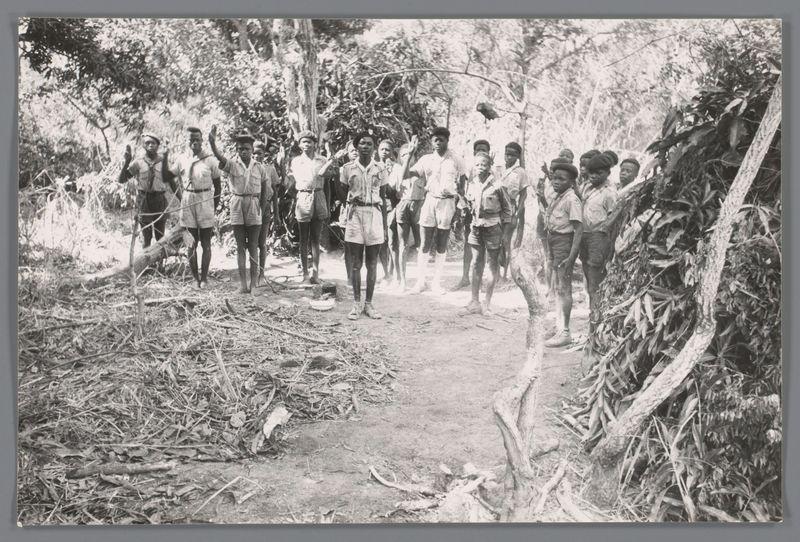
Groepsportret van onbekende leden van de scouting, Ed van der Elsken, 1956 - 1957

#Groepsportretvan #EdvanderElsken #theScoutAssociation #fotografie #photography #EdVanDerElsken #EdvanderElsken

http://www.rijksmuseum.nl/en/collection/RP-F-2019-242-24-18

The image depicts a group of people in an outdoor setting, likely from the mid-20th century given the black and white photograph quality. They are standing on what appears to be a dirt path surrounded by dense foliage indicative of a tropical environment. The individuals appear uniformed, possibly scouts or members of a youth organization, wearing short-sleeved shirts, shorts, hats, and badges, suggesting they could be part of an organized group like the Scout Association.

The people are standing in two lines facing forward; some raise their right hands as if saluting or waving. Their expressions range from neutral to attentive, with no signs of distress or discomfort. In the background, there is more vegetation and a hint of structures that might suggest human habitation nearby. The ground has scattered debris like leaves and branches.

The photograph carries historical connotations, potentially documenting an event such as a scouting camp or community gathering in a rural setting during colonial times given its style and composition.
The image depicts a group of people in an outdoor setting, likely from the mid-20th century given the black and white photograph quality. They are standing on what appears to be a dirt path surrounded by dense foliage indicative of a tropical environment. The individuals appear uniformed, possibly scouts or members of a youth organization, wearing short-sleeved shirts, shorts, hats, and badges, suggesting they could be part of an organized group like the Scout Association. The people are standing in two lines facing forward; some raise their right hands as if saluting or waving. Their expressions range from neutral to attentive, with no signs of distress or discomfort. In the background, there is more vegetation and a hint of structures that might suggest human habitation nearby. The ground has scattered debris like leaves and branches. The photograph carries historical connotations, potentially documenting an event such as a scouting camp or community gathering in a rural setting during colonial times given its style and composition.
Rijksmuseum.nl

Groepsportret van onbekende leden van de scouting

content
  • Copy link
  • Flag this post
  • Block
Ed van der Elsken
Ed van der Elsken
@EdvdElsken@mastodon.ozioso.online  ·  activity timestamp 20 hours ago

Groepsportret van onbekende leden van de scouting, Ed van der Elsken, 1956 - 1957

#Groepsportretvan #EdvanderElsken #theScoutAssociation #fotografie #photography #EdVanDerElsken #EdvanderElsken

http://www.rijksmuseum.nl/en/collection/RP-F-2019-242-24-18

The image depicts a group of people in an outdoor setting, likely from the mid-20th century given the black and white photograph quality. They are standing on what appears to be a dirt path surrounded by dense foliage indicative of a tropical environment. The individuals appear uniformed, possibly scouts or members of a youth organization, wearing short-sleeved shirts, shorts, hats, and badges, suggesting they could be part of an organized group like the Scout Association.

The people are standing in two lines facing forward; some raise their right hands as if saluting or waving. Their expressions range from neutral to attentive, with no signs of distress or discomfort. In the background, there is more vegetation and a hint of structures that might suggest human habitation nearby. The ground has scattered debris like leaves and branches.

The photograph carries historical connotations, potentially documenting an event such as a scouting camp or community gathering in a rural setting during colonial times given its style and composition.
The image depicts a group of people in an outdoor setting, likely from the mid-20th century given the black and white photograph quality. They are standing on what appears to be a dirt path surrounded by dense foliage indicative of a tropical environment. The individuals appear uniformed, possibly scouts or members of a youth organization, wearing short-sleeved shirts, shorts, hats, and badges, suggesting they could be part of an organized group like the Scout Association. The people are standing in two lines facing forward; some raise their right hands as if saluting or waving. Their expressions range from neutral to attentive, with no signs of distress or discomfort. In the background, there is more vegetation and a hint of structures that might suggest human habitation nearby. The ground has scattered debris like leaves and branches. The photograph carries historical connotations, potentially documenting an event such as a scouting camp or community gathering in a rural setting during colonial times given its style and composition.
Rijksmuseum.nl

Groepsportret van onbekende leden van de scouting

content
  • Copy link
  • Flag this post
  • Block
Photography Channel boosted
Ed van der Elsken
Ed van der Elsken
@EdvdElsken@mastodon.ozioso.online  ·  activity timestamp 23 hours ago

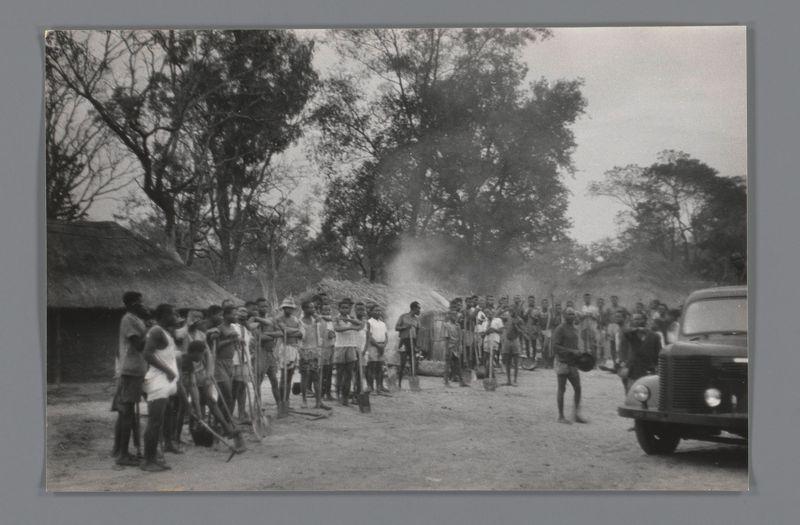
Stratenmakers wachten op instructies, Ed van der Elsken, 1956 - 1957

#EdvanderElsken #fotografie #photography #EdVanDerElsken #EdvanderElsken

http://www.rijksmuseum.nl/en/collection/RP-F-2019-242-24-15

The image depicts a group of people gathered in an outdoor setting, likely from the mid-20th century given its grainy black and white quality. The scene appears to be rural with thatched-roof structures suggestive of huts or simple dwellings on the left side. A dense cluster of trees forms a natural backdrop behind the crowd.

The group is composed predominantly of males standing in rows, facing what seems to be an area of activity where smoke is rising from beneath foliage at some distance away. The people's attire varies but generally appears practical and suited for outdoor work or travel; many are wearing hats which may indicate protection against sun exposure.

On the right side, a vintage vehicle with prominent headlights stands prominently in front of the group, indicating its significance either as an observer element or potentially partaking in whatever is taking place. The smoke adds to the scene's dynamic quality but also creates mystery about the exact nature of the gathering and activity happening out of view.

The overall composition captures a moment that seems both ordinary yet charged with anticipation or reaction to unseen events, reflecting perhaps daily life activities or a special occasion within this community captured by photographer Ed van der Elsken.
The image depicts a group of people gathered in an outdoor setting, likely from the mid-20th century given its grainy black and white quality. The scene appears to be rural with thatched-roof structures suggestive of huts or simple dwellings on the left side. A dense cluster of trees forms a natural backdrop behind the crowd. The group is composed predominantly of males standing in rows, facing what seems to be an area of activity where smoke is rising from beneath foliage at some distance away. The people's attire varies but generally appears practical and suited for outdoor work or travel; many are wearing hats which may indicate protection against sun exposure. On the right side, a vintage vehicle with prominent headlights stands prominently in front of the group, indicating its significance either as an observer element or potentially partaking in whatever is taking place. The smoke adds to the scene's dynamic quality but also creates mystery about the exact nature of the gathering and activity happening out of view. The overall composition captures a moment that seems both ordinary yet charged with anticipation or reaction to unseen events, reflecting perhaps daily life activities or a special occasion within this community captured by photographer Ed van der Elsken.
Rijksmuseum.nl

Stratenmakers wachten op instructies

content
  • Copy link
  • Flag this post
  • Block
Ed van der Elsken
Ed van der Elsken
@EdvdElsken@mastodon.ozioso.online  ·  activity timestamp 23 hours ago

Stratenmakers wachten op instructies, Ed van der Elsken, 1956 - 1957

#EdvanderElsken #fotografie #photography #EdVanDerElsken #EdvanderElsken

http://www.rijksmuseum.nl/en/collection/RP-F-2019-242-24-15

The image depicts a group of people gathered in an outdoor setting, likely from the mid-20th century given its grainy black and white quality. The scene appears to be rural with thatched-roof structures suggestive of huts or simple dwellings on the left side. A dense cluster of trees forms a natural backdrop behind the crowd.

The group is composed predominantly of males standing in rows, facing what seems to be an area of activity where smoke is rising from beneath foliage at some distance away. The people's attire varies but generally appears practical and suited for outdoor work or travel; many are wearing hats which may indicate protection against sun exposure.

On the right side, a vintage vehicle with prominent headlights stands prominently in front of the group, indicating its significance either as an observer element or potentially partaking in whatever is taking place. The smoke adds to the scene's dynamic quality but also creates mystery about the exact nature of the gathering and activity happening out of view.

The overall composition captures a moment that seems both ordinary yet charged with anticipation or reaction to unseen events, reflecting perhaps daily life activities or a special occasion within this community captured by photographer Ed van der Elsken.
The image depicts a group of people gathered in an outdoor setting, likely from the mid-20th century given its grainy black and white quality. The scene appears to be rural with thatched-roof structures suggestive of huts or simple dwellings on the left side. A dense cluster of trees forms a natural backdrop behind the crowd. The group is composed predominantly of males standing in rows, facing what seems to be an area of activity where smoke is rising from beneath foliage at some distance away. The people's attire varies but generally appears practical and suited for outdoor work or travel; many are wearing hats which may indicate protection against sun exposure. On the right side, a vintage vehicle with prominent headlights stands prominently in front of the group, indicating its significance either as an observer element or potentially partaking in whatever is taking place. The smoke adds to the scene's dynamic quality but also creates mystery about the exact nature of the gathering and activity happening out of view. The overall composition captures a moment that seems both ordinary yet charged with anticipation or reaction to unseen events, reflecting perhaps daily life activities or a special occasion within this community captured by photographer Ed van der Elsken.
Rijksmuseum.nl

Stratenmakers wachten op instructies

content
  • Copy link
  • Flag this post
  • Block

Indieweb Studio

This is a relaxed, online social space for the indieweb community, brought to you by indieweb.social.

Please abide by our code of conduct and have a nice time!

Indieweb Studio: About · Code of conduct · Privacy · Users · Instances
Bonfire social · 1.0.2-alpha.7 no JS en
Automatic federation enabled
Log in Create account
  • Explore
  • About
  • Members
  • Code of Conduct