Discussion
Loading...

#Tag

Log in
  • Sign up
  • About
  • Code of conduct
  • Privacy
  • Users
  • Instances
  • About Bonfire
Photography Channel boosted
Ed van der Elsken
Ed van der Elsken
@EdvdElsken@mastodon.ozioso.online  ·  activity timestamp 2 hours ago

Vrouwen tijdens een nachtelijk feest, Ed van der Elsken, 1956 - 1957

#EdvanderElsken #African #Dutch #Elsken #fotografie #photography #EdVanDerElsken #EdvanderElsken

http://www.rijksmuseum.nl/en/collection/RP-F-2019-242-24-85

The image is a black and white photograph depicting four women, seemingly in the midst of nighttime festivities. The focus is on two prominent figures at the forefront: one woman with her head turned to look over her shoulder, wearing earrings, a necklace, bracelets, and holding what appears to be a small cloth or napkin; another has a fur-adorned headdress that adds texture and movement to the composition.

Behind them are partial silhouettes of two more women. The environment is dark, suggesting it's an indoor setting with limited lighting, perhaps at a social gathering or celebration where dancing or music might be involved. Their attire suggests cultural significance; their dresses have patterns typical of African textiles, often worn during special occasions and celebrations.

The composition captures the dynamic essence of the moment through motion blur on the woman with the fur headdress, indicating swift movement as she adjusts her headgear. The photograph is credited to Ed van der Elsken (1925-2005), a Dutch photographer known for his evocative street photography capturing the lives and culture in various global cities during the mid-20th century.

The specific context or location of this event isn't discernible from the image alone, but it reflects van der Elsken's interest in documenting human experiences with an emphasis on social interaction and cultural rich [...]
The image is a black and white photograph depicting four women, seemingly in the midst of nighttime festivities. The focus is on two prominent figures at the forefront: one woman with her head turned to look over her shoulder, wearing earrings, a necklace, bracelets, and holding what appears to be a small cloth or napkin; another has a fur-adorned headdress that adds texture and movement to the composition. Behind them are partial silhouettes of two more women. The environment is dark, suggesting it's an indoor setting with limited lighting, perhaps at a social gathering or celebration where dancing or music might be involved. Their attire suggests cultural significance; their dresses have patterns typical of African textiles, often worn during special occasions and celebrations. The composition captures the dynamic essence of the moment through motion blur on the woman with the fur headdress, indicating swift movement as she adjusts her headgear. The photograph is credited to Ed van der Elsken (1925-2005), a Dutch photographer known for his evocative street photography capturing the lives and culture in various global cities during the mid-20th century. The specific context or location of this event isn't discernible from the image alone, but it reflects van der Elsken's interest in documenting human experiences with an emphasis on social interaction and cultural rich [...]
Rijksmuseum.nl

Vrouwen tijdens een nachtelijk feest

content
  • Copy link
  • Flag this post
  • Block
Ed van der Elsken
Ed van der Elsken
@EdvdElsken@mastodon.ozioso.online  ·  activity timestamp 2 hours ago

Vrouwen tijdens een nachtelijk feest, Ed van der Elsken, 1956 - 1957

#EdvanderElsken #African #Dutch #Elsken #fotografie #photography #EdVanDerElsken #EdvanderElsken

http://www.rijksmuseum.nl/en/collection/RP-F-2019-242-24-85

The image is a black and white photograph depicting four women, seemingly in the midst of nighttime festivities. The focus is on two prominent figures at the forefront: one woman with her head turned to look over her shoulder, wearing earrings, a necklace, bracelets, and holding what appears to be a small cloth or napkin; another has a fur-adorned headdress that adds texture and movement to the composition.

Behind them are partial silhouettes of two more women. The environment is dark, suggesting it's an indoor setting with limited lighting, perhaps at a social gathering or celebration where dancing or music might be involved. Their attire suggests cultural significance; their dresses have patterns typical of African textiles, often worn during special occasions and celebrations.

The composition captures the dynamic essence of the moment through motion blur on the woman with the fur headdress, indicating swift movement as she adjusts her headgear. The photograph is credited to Ed van der Elsken (1925-2005), a Dutch photographer known for his evocative street photography capturing the lives and culture in various global cities during the mid-20th century.

The specific context or location of this event isn't discernible from the image alone, but it reflects van der Elsken's interest in documenting human experiences with an emphasis on social interaction and cultural rich [...]
The image is a black and white photograph depicting four women, seemingly in the midst of nighttime festivities. The focus is on two prominent figures at the forefront: one woman with her head turned to look over her shoulder, wearing earrings, a necklace, bracelets, and holding what appears to be a small cloth or napkin; another has a fur-adorned headdress that adds texture and movement to the composition. Behind them are partial silhouettes of two more women. The environment is dark, suggesting it's an indoor setting with limited lighting, perhaps at a social gathering or celebration where dancing or music might be involved. Their attire suggests cultural significance; their dresses have patterns typical of African textiles, often worn during special occasions and celebrations. The composition captures the dynamic essence of the moment through motion blur on the woman with the fur headdress, indicating swift movement as she adjusts her headgear. The photograph is credited to Ed van der Elsken (1925-2005), a Dutch photographer known for his evocative street photography capturing the lives and culture in various global cities during the mid-20th century. The specific context or location of this event isn't discernible from the image alone, but it reflects van der Elsken's interest in documenting human experiences with an emphasis on social interaction and cultural rich [...]
Rijksmuseum.nl

Vrouwen tijdens een nachtelijk feest

content
  • Copy link
  • Flag this post
  • Block
Photography Channel boosted
Ed van der Elsken
Ed van der Elsken
@EdvdElsken@mastodon.ozioso.online  ·  activity timestamp 4 hours ago

Sjem, twaalfjarige dochter van het dorpshoofd, met een struisvogel, Ed van der Elsken, 1956 - 1957

#EdvanderElsken #African #Africa #fotografie #photography #EdVanDerElsken #EdvanderElsken

http://www.rijksmuseum.nl/en/collection/RP-F-2019-298-13-91

The image is a black and white photograph depicting two individuals, likely taken during the 1950s based on the clothing style. The central figure appears to be an adolescent girl with her hair styled in twists or cornrows, wearing what seems to be traditional African attire including a striped garment that could be part of a wrap dress commonly worn by women and girls from various cultures across Africa. She is holding two animals close to her body: one small creature on the left side which resembles a kitten, and another larger animal with fluffy fur on the right side which might be a domesticated bird or possibly an ostrich based on its size and feather texture.

In the background, slightly out of focus, there appears to be another person partially visible. The setting is not entirely clear but seems outdoors, perhaps in a rural environment given the presence of what looks like tree bark behind them.

The photograph has been identified as belonging to Ed van der Elsken's collection and was taken during his visits to Africa where he documented various aspects of life including social customs, wildlife interactions among locals with animals. The image carries cultural significance by capturing daily-life moments in an African village from a historical perspective provided through the fashion and objects held by these individuals.

Given that Ed van der Elsken's work is k [...]
The image is a black and white photograph depicting two individuals, likely taken during the 1950s based on the clothing style. The central figure appears to be an adolescent girl with her hair styled in twists or cornrows, wearing what seems to be traditional African attire including a striped garment that could be part of a wrap dress commonly worn by women and girls from various cultures across Africa. She is holding two animals close to her body: one small creature on the left side which resembles a kitten, and another larger animal with fluffy fur on the right side which might be a domesticated bird or possibly an ostrich based on its size and feather texture. In the background, slightly out of focus, there appears to be another person partially visible. The setting is not entirely clear but seems outdoors, perhaps in a rural environment given the presence of what looks like tree bark behind them. The photograph has been identified as belonging to Ed van der Elsken's collection and was taken during his visits to Africa where he documented various aspects of life including social customs, wildlife interactions among locals with animals. The image carries cultural significance by capturing daily-life moments in an African village from a historical perspective provided through the fashion and objects held by these individuals. Given that Ed van der Elsken's work is k [...]
Rijksmuseum.nl

Sjem, twaalfjarige dochter van het dorpshoofd, met een struisvogel

content
  • Copy link
  • Flag this post
  • Block
Ed van der Elsken
Ed van der Elsken
@EdvdElsken@mastodon.ozioso.online  ·  activity timestamp 4 hours ago

Sjem, twaalfjarige dochter van het dorpshoofd, met een struisvogel, Ed van der Elsken, 1956 - 1957

#EdvanderElsken #African #Africa #fotografie #photography #EdVanDerElsken #EdvanderElsken

http://www.rijksmuseum.nl/en/collection/RP-F-2019-298-13-91

The image is a black and white photograph depicting two individuals, likely taken during the 1950s based on the clothing style. The central figure appears to be an adolescent girl with her hair styled in twists or cornrows, wearing what seems to be traditional African attire including a striped garment that could be part of a wrap dress commonly worn by women and girls from various cultures across Africa. She is holding two animals close to her body: one small creature on the left side which resembles a kitten, and another larger animal with fluffy fur on the right side which might be a domesticated bird or possibly an ostrich based on its size and feather texture.

In the background, slightly out of focus, there appears to be another person partially visible. The setting is not entirely clear but seems outdoors, perhaps in a rural environment given the presence of what looks like tree bark behind them.

The photograph has been identified as belonging to Ed van der Elsken's collection and was taken during his visits to Africa where he documented various aspects of life including social customs, wildlife interactions among locals with animals. The image carries cultural significance by capturing daily-life moments in an African village from a historical perspective provided through the fashion and objects held by these individuals.

Given that Ed van der Elsken's work is k [...]
The image is a black and white photograph depicting two individuals, likely taken during the 1950s based on the clothing style. The central figure appears to be an adolescent girl with her hair styled in twists or cornrows, wearing what seems to be traditional African attire including a striped garment that could be part of a wrap dress commonly worn by women and girls from various cultures across Africa. She is holding two animals close to her body: one small creature on the left side which resembles a kitten, and another larger animal with fluffy fur on the right side which might be a domesticated bird or possibly an ostrich based on its size and feather texture. In the background, slightly out of focus, there appears to be another person partially visible. The setting is not entirely clear but seems outdoors, perhaps in a rural environment given the presence of what looks like tree bark behind them. The photograph has been identified as belonging to Ed van der Elsken's collection and was taken during his visits to Africa where he documented various aspects of life including social customs, wildlife interactions among locals with animals. The image carries cultural significance by capturing daily-life moments in an African village from a historical perspective provided through the fashion and objects held by these individuals. Given that Ed van der Elsken's work is k [...]
Rijksmuseum.nl

Sjem, twaalfjarige dochter van het dorpshoofd, met een struisvogel

content
  • Copy link
  • Flag this post
  • Block
Photography Channel boosted
Ed van der Elsken
Ed van der Elsken
@EdvdElsken@mastodon.ozioso.online  ·  activity timestamp 7 hours ago

Twee vrouwen voor een woning met muurschilderingen, Ed van der Elsken, 1956 - 1957

#EdvanderElsken #African #fotografie #photography #EdVanDerElsken #EdvanderElsken

http://www.rijksmuseum.nl/en/collection/RP-F-2019-298-13-76

The image depicts a rural African setting, featuring two individuals in traditional attire and a thatched hut with a cross on top. The larger individual stands to the right, wearing minimal clothing, while the smaller figure sits on the ground to the left. Behind them is an animal resembling a wild cow, partially obscured by shadows cast from supporting poles of the structure. The photograph appears aged, likely taken during the mid-20th century, and captures a moment that reflects daily life in this community. Additional context for this image can be found at Twee vrouwen voor een woning met muurschilderingen, Ed van der Elsken, 1956 - 1957 [https://images.loener.nl/EdvdElsken/full/6484/648449ebba25398d90832d09.jpg], indicating a connection to the artist Ed van der Elsken and dating from approximately 1956-1957.
Rijksmuseum.nl

Twee vrouwen voor een woning met muurschilderingen

content
  • Copy link
  • Flag this post
  • Block
Ed van der Elsken
Ed van der Elsken
@EdvdElsken@mastodon.ozioso.online  ·  activity timestamp 7 hours ago

Twee vrouwen voor een woning met muurschilderingen, Ed van der Elsken, 1956 - 1957

#EdvanderElsken #African #fotografie #photography #EdVanDerElsken #EdvanderElsken

http://www.rijksmuseum.nl/en/collection/RP-F-2019-298-13-76

The image depicts a rural African setting, featuring two individuals in traditional attire and a thatched hut with a cross on top. The larger individual stands to the right, wearing minimal clothing, while the smaller figure sits on the ground to the left. Behind them is an animal resembling a wild cow, partially obscured by shadows cast from supporting poles of the structure. The photograph appears aged, likely taken during the mid-20th century, and captures a moment that reflects daily life in this community. Additional context for this image can be found at Twee vrouwen voor een woning met muurschilderingen, Ed van der Elsken, 1956 - 1957 [https://images.loener.nl/EdvdElsken/full/6484/648449ebba25398d90832d09.jpg], indicating a connection to the artist Ed van der Elsken and dating from approximately 1956-1957.
Rijksmuseum.nl

Twee vrouwen voor een woning met muurschilderingen

content
  • Copy link
  • Flag this post
  • Block
Photography Channel boosted
Ed van der Elsken
Ed van der Elsken
@EdvdElsken@mastodon.ozioso.online  ·  activity timestamp 16 hours ago

Naakt kind loopt voor twee vrouwen met kinderen, Ed van der Elsken, 1956 - 1957

#Naakt #EdvanderElsken #African #Dutch #fotografie #photography #EdVanDerElsken #EdvanderElsken

http://www.rijksmuseum.nl/en/collection/RP-F-2019-298-13-3

The image depicts a group of people, likely from an African community, captured in sepia-toned photography. In the foreground stands a bare-chested child with thin arms and legs, appearing malnourished or underfed. Behind this child are three adults: one woman is holding a baby wrapped in cloth to her chest; another woman holds up a young boy who seems contemplative, his hand near his chin as if thinking deeply or troubled by something he's observed. The expressions on their faces range from serious and concerned to distant thoughts.

The individuals wear traditional clothing with patterns suggesting cultural attire that may be indicative of the region where this photo was taken. Notably, there is a sense of depth in the composition; one woman appears closer to the camera while another seems farther away, creating an overlapping perspective. The background is indistinct and blurred, which keeps attention on the subjects.

The sepia tone adds a historical or vintage feel to the photograph, perhaps suggesting it was taken several decades ago when such images were more common in documenting daily life or social conditions within communities. There are no clear indicators of specific location details; however, there is an unmistakable narrative conveyed through these figures' expressions and body language that invites viewers into their world.

The image has a reference to 'N [...]
The image depicts a group of people, likely from an African community, captured in sepia-toned photography. In the foreground stands a bare-chested child with thin arms and legs, appearing malnourished or underfed. Behind this child are three adults: one woman is holding a baby wrapped in cloth to her chest; another woman holds up a young boy who seems contemplative, his hand near his chin as if thinking deeply or troubled by something he's observed. The expressions on their faces range from serious and concerned to distant thoughts. The individuals wear traditional clothing with patterns suggesting cultural attire that may be indicative of the region where this photo was taken. Notably, there is a sense of depth in the composition; one woman appears closer to the camera while another seems farther away, creating an overlapping perspective. The background is indistinct and blurred, which keeps attention on the subjects. The sepia tone adds a historical or vintage feel to the photograph, perhaps suggesting it was taken several decades ago when such images were more common in documenting daily life or social conditions within communities. There are no clear indicators of specific location details; however, there is an unmistakable narrative conveyed through these figures' expressions and body language that invites viewers into their world. The image has a reference to 'N [...]
Rijksmuseum.nl

Naakt kind loopt voor twee vrouwen met kinderen

content
  • Copy link
  • Flag this post
  • Block
Ed van der Elsken
Ed van der Elsken
@EdvdElsken@mastodon.ozioso.online  ·  activity timestamp 16 hours ago

Naakt kind loopt voor twee vrouwen met kinderen, Ed van der Elsken, 1956 - 1957

#Naakt #EdvanderElsken #African #Dutch #fotografie #photography #EdVanDerElsken #EdvanderElsken

http://www.rijksmuseum.nl/en/collection/RP-F-2019-298-13-3

The image depicts a group of people, likely from an African community, captured in sepia-toned photography. In the foreground stands a bare-chested child with thin arms and legs, appearing malnourished or underfed. Behind this child are three adults: one woman is holding a baby wrapped in cloth to her chest; another woman holds up a young boy who seems contemplative, his hand near his chin as if thinking deeply or troubled by something he's observed. The expressions on their faces range from serious and concerned to distant thoughts.

The individuals wear traditional clothing with patterns suggesting cultural attire that may be indicative of the region where this photo was taken. Notably, there is a sense of depth in the composition; one woman appears closer to the camera while another seems farther away, creating an overlapping perspective. The background is indistinct and blurred, which keeps attention on the subjects.

The sepia tone adds a historical or vintage feel to the photograph, perhaps suggesting it was taken several decades ago when such images were more common in documenting daily life or social conditions within communities. There are no clear indicators of specific location details; however, there is an unmistakable narrative conveyed through these figures' expressions and body language that invites viewers into their world.

The image has a reference to 'N [...]
The image depicts a group of people, likely from an African community, captured in sepia-toned photography. In the foreground stands a bare-chested child with thin arms and legs, appearing malnourished or underfed. Behind this child are three adults: one woman is holding a baby wrapped in cloth to her chest; another woman holds up a young boy who seems contemplative, his hand near his chin as if thinking deeply or troubled by something he's observed. The expressions on their faces range from serious and concerned to distant thoughts. The individuals wear traditional clothing with patterns suggesting cultural attire that may be indicative of the region where this photo was taken. Notably, there is a sense of depth in the composition; one woman appears closer to the camera while another seems farther away, creating an overlapping perspective. The background is indistinct and blurred, which keeps attention on the subjects. The sepia tone adds a historical or vintage feel to the photograph, perhaps suggesting it was taken several decades ago when such images were more common in documenting daily life or social conditions within communities. There are no clear indicators of specific location details; however, there is an unmistakable narrative conveyed through these figures' expressions and body language that invites viewers into their world. The image has a reference to 'N [...]
Rijksmuseum.nl

Naakt kind loopt voor twee vrouwen met kinderen

content
  • Copy link
  • Flag this post
  • Block
Photography Channel boosted
Ed van der Elsken
Ed van der Elsken
@EdvdElsken@mastodon.ozioso.online  ·  activity timestamp 2 days ago

Nijlpaarden in een meer, Ed van der Elsken, 1956 - 1957

#EdvanderElsken #European #theNileRiver #African #fotografie #photography #EdVanDerElsken #EdvanderElsken

http://www.rijksmuseum.nl/en/collection/RP-F-2019-242-24-31

The image depicts a monochrome view of a tranquil river scene. The water appears calm with gentle ripples, and several dark forms are visible floating on the surface at various distances from each other, suggesting they could be birds or possibly aquatic animals like crocodiles submerged in shallow waters.

In the background, we observe an expanse of dense vegetation composed primarily of trees and shrubs that create a textured silhouette against the lighter sky. The horizon is slightly overcast with diffused lighting, which contributes to the subdued tone of the photograph. There's no direct evidence of human presence or activity within this natural landscape.

The overall composition captures a sense of stillness and isolation in nature. It appears as if it could have been taken during either early morning or late afternoon due to the soft light conditions. The absence of any discernible man-made structures further emphasizes the untouched aspect of the environment captured here, which is likely indicative of an undeveloped area possibly situated within a wildlife reserve.

This photograph carries historical significance and cultural value as it is credited with Ed van der Elsken, who was known for his evocative street photography during significant periods in European history. His work often depicted everyday life from the vantage point of locals or through their exper [...]
The image depicts a monochrome view of a tranquil river scene. The water appears calm with gentle ripples, and several dark forms are visible floating on the surface at various distances from each other, suggesting they could be birds or possibly aquatic animals like crocodiles submerged in shallow waters. In the background, we observe an expanse of dense vegetation composed primarily of trees and shrubs that create a textured silhouette against the lighter sky. The horizon is slightly overcast with diffused lighting, which contributes to the subdued tone of the photograph. There's no direct evidence of human presence or activity within this natural landscape. The overall composition captures a sense of stillness and isolation in nature. It appears as if it could have been taken during either early morning or late afternoon due to the soft light conditions. The absence of any discernible man-made structures further emphasizes the untouched aspect of the environment captured here, which is likely indicative of an undeveloped area possibly situated within a wildlife reserve. This photograph carries historical significance and cultural value as it is credited with Ed van der Elsken, who was known for his evocative street photography during significant periods in European history. His work often depicted everyday life from the vantage point of locals or through their exper [...]
Rijksmuseum.nl

Nijlpaarden in een meer

content
  • Copy link
  • Flag this post
  • Block
Ed van der Elsken
Ed van der Elsken
@EdvdElsken@mastodon.ozioso.online  ·  activity timestamp 2 days ago

Nijlpaarden in een meer, Ed van der Elsken, 1956 - 1957

#EdvanderElsken #European #theNileRiver #African #fotografie #photography #EdVanDerElsken #EdvanderElsken

http://www.rijksmuseum.nl/en/collection/RP-F-2019-242-24-31

The image depicts a monochrome view of a tranquil river scene. The water appears calm with gentle ripples, and several dark forms are visible floating on the surface at various distances from each other, suggesting they could be birds or possibly aquatic animals like crocodiles submerged in shallow waters.

In the background, we observe an expanse of dense vegetation composed primarily of trees and shrubs that create a textured silhouette against the lighter sky. The horizon is slightly overcast with diffused lighting, which contributes to the subdued tone of the photograph. There's no direct evidence of human presence or activity within this natural landscape.

The overall composition captures a sense of stillness and isolation in nature. It appears as if it could have been taken during either early morning or late afternoon due to the soft light conditions. The absence of any discernible man-made structures further emphasizes the untouched aspect of the environment captured here, which is likely indicative of an undeveloped area possibly situated within a wildlife reserve.

This photograph carries historical significance and cultural value as it is credited with Ed van der Elsken, who was known for his evocative street photography during significant periods in European history. His work often depicted everyday life from the vantage point of locals or through their exper [...]
The image depicts a monochrome view of a tranquil river scene. The water appears calm with gentle ripples, and several dark forms are visible floating on the surface at various distances from each other, suggesting they could be birds or possibly aquatic animals like crocodiles submerged in shallow waters. In the background, we observe an expanse of dense vegetation composed primarily of trees and shrubs that create a textured silhouette against the lighter sky. The horizon is slightly overcast with diffused lighting, which contributes to the subdued tone of the photograph. There's no direct evidence of human presence or activity within this natural landscape. The overall composition captures a sense of stillness and isolation in nature. It appears as if it could have been taken during either early morning or late afternoon due to the soft light conditions. The absence of any discernible man-made structures further emphasizes the untouched aspect of the environment captured here, which is likely indicative of an undeveloped area possibly situated within a wildlife reserve. This photograph carries historical significance and cultural value as it is credited with Ed van der Elsken, who was known for his evocative street photography during significant periods in European history. His work often depicted everyday life from the vantage point of locals or through their exper [...]
Rijksmuseum.nl

Nijlpaarden in een meer

content
  • Copy link
  • Flag this post
  • Block
Photography Channel boosted
Ed van der Elsken
Ed van der Elsken
@EdvdElsken@mastodon.ozioso.online  ·  activity timestamp 2 days ago

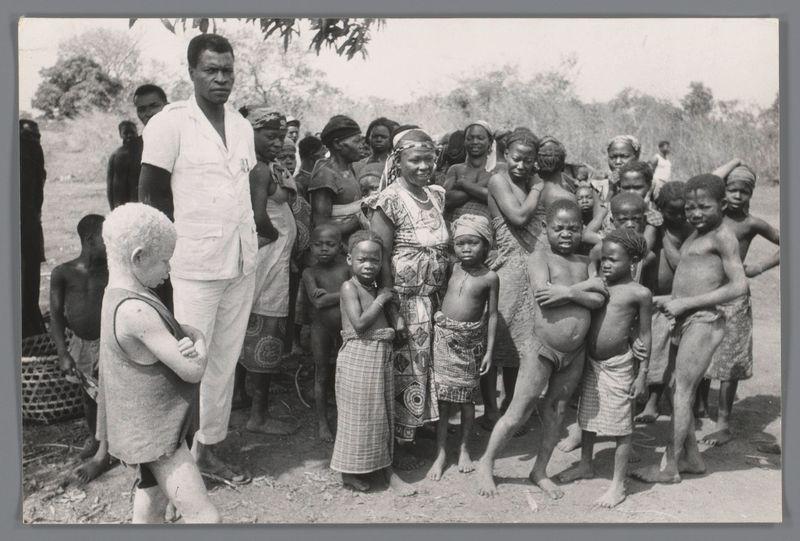
Groep dorpsbewoners met links een jongen met albinisme, Ed van der Elsken, 1956 - 1957

#Groep #EdvanderElsken #African #fotografie #photography #EdVanDerElsken #EdvanderElsken

http://www.rijksmuseum.nl/en/collection/RP-F-2019-242-24-20

The image is a black and white photograph featuring a group of people, predominantly women and children dressed in traditional African attire. In the center stands an individual with distinctive features that suggest they have albinism: pale skin and hairless scalp are visible traits associated with this condition. Surrounding them are several individuals, likely family members or community members, who display various expressions ranging from neutral to smiling towards the camera.

Behind these central figures is a crowd of people, suggesting a communal gathering or event. The background appears rural, possibly in an African setting given the traditional clothing and natural surroundings that include trees and open fields. Some participants are looking directly at the photographer while others seem engaged with each other.

The photograph captures a moment likely documenting cultural practices, community life, or perhaps a significant occasion within this group's context. There is no discernible text to provide additional information about the event or location depicted in the photo.
The image is a black and white photograph featuring a group of people, predominantly women and children dressed in traditional African attire. In the center stands an individual with distinctive features that suggest they have albinism: pale skin and hairless scalp are visible traits associated with this condition. Surrounding them are several individuals, likely family members or community members, who display various expressions ranging from neutral to smiling towards the camera. Behind these central figures is a crowd of people, suggesting a communal gathering or event. The background appears rural, possibly in an African setting given the traditional clothing and natural surroundings that include trees and open fields. Some participants are looking directly at the photographer while others seem engaged with each other. The photograph captures a moment likely documenting cultural practices, community life, or perhaps a significant occasion within this group's context. There is no discernible text to provide additional information about the event or location depicted in the photo.
Rijksmuseum.nl

Groep dorpsbewoners met links een jongen met albinisme

content
  • Copy link
  • Flag this post
  • Block
Ed van der Elsken
Ed van der Elsken
@EdvdElsken@mastodon.ozioso.online  ·  activity timestamp 2 days ago

Groep dorpsbewoners met links een jongen met albinisme, Ed van der Elsken, 1956 - 1957

#Groep #EdvanderElsken #African #fotografie #photography #EdVanDerElsken #EdvanderElsken

http://www.rijksmuseum.nl/en/collection/RP-F-2019-242-24-20

The image is a black and white photograph featuring a group of people, predominantly women and children dressed in traditional African attire. In the center stands an individual with distinctive features that suggest they have albinism: pale skin and hairless scalp are visible traits associated with this condition. Surrounding them are several individuals, likely family members or community members, who display various expressions ranging from neutral to smiling towards the camera.

Behind these central figures is a crowd of people, suggesting a communal gathering or event. The background appears rural, possibly in an African setting given the traditional clothing and natural surroundings that include trees and open fields. Some participants are looking directly at the photographer while others seem engaged with each other.

The photograph captures a moment likely documenting cultural practices, community life, or perhaps a significant occasion within this group's context. There is no discernible text to provide additional information about the event or location depicted in the photo.
The image is a black and white photograph featuring a group of people, predominantly women and children dressed in traditional African attire. In the center stands an individual with distinctive features that suggest they have albinism: pale skin and hairless scalp are visible traits associated with this condition. Surrounding them are several individuals, likely family members or community members, who display various expressions ranging from neutral to smiling towards the camera. Behind these central figures is a crowd of people, suggesting a communal gathering or event. The background appears rural, possibly in an African setting given the traditional clothing and natural surroundings that include trees and open fields. Some participants are looking directly at the photographer while others seem engaged with each other. The photograph captures a moment likely documenting cultural practices, community life, or perhaps a significant occasion within this group's context. There is no discernible text to provide additional information about the event or location depicted in the photo.
Rijksmuseum.nl

Groep dorpsbewoners met links een jongen met albinisme

content
  • Copy link
  • Flag this post
  • Block
Photography Channel boosted
Ed van der Elsken
Ed van der Elsken
@EdvdElsken@mastodon.ozioso.online  ·  activity timestamp 2 days ago

Dorpsgezicht met een rieten offer kooi genaamd 'Lingoe' voor de de N'Gandros, geesten der voorvaderen, Ed van der Elsken, c. 1957 - c. 1970

#Dorpsgezicht #EdvanderElsken #African #fotografie #photography #EdVanDerElsken #EdvanderElsken

http://www.rijksmuseum.nl/en/collection/RP-F-2019-242-24-7

The image depicts a rural scene, possibly in an African village. In the foreground hangs a traditional woven mosquito net from a tree branch or pole above a small structure with thatched roofing. The background shows several similar thatched-roof huts distributed across what appears to be open land. There is notable vegetation including trees and shrubs which are scattered throughout the scene, some bearing fruit. A person can barely be seen in the distance on the left side of the photo crouching or kneeling near a tree. The sky is overcast with no discernible features apart from its greyish tone that suggests an early morning or late afternoon setting due to the softness and direction of light casting shadows subtly across the landscape.

This image seems to be part of a larger collection as indicated by the reference information provided, which includes "Dorpsgezicht met een rieten offer kooi genaamd 'Lingoe' voor de N'Gandros, geesten der voorvaderen" attributed to Ed van der Elsken. The caption also indicates a date range of approximately 1957-1970, placing this photograph in the mid-to-late 20th century during what could be considered colonial or post-colonial period photography focused on rural life and culture within African societies.

The image captures elements that signify daily village life such as communal housing structures, natural surroundings, an indicati [...]
The image depicts a rural scene, possibly in an African village. In the foreground hangs a traditional woven mosquito net from a tree branch or pole above a small structure with thatched roofing. The background shows several similar thatched-roof huts distributed across what appears to be open land. There is notable vegetation including trees and shrubs which are scattered throughout the scene, some bearing fruit. A person can barely be seen in the distance on the left side of the photo crouching or kneeling near a tree. The sky is overcast with no discernible features apart from its greyish tone that suggests an early morning or late afternoon setting due to the softness and direction of light casting shadows subtly across the landscape. This image seems to be part of a larger collection as indicated by the reference information provided, which includes "Dorpsgezicht met een rieten offer kooi genaamd 'Lingoe' voor de N'Gandros, geesten der voorvaderen" attributed to Ed van der Elsken. The caption also indicates a date range of approximately 1957-1970, placing this photograph in the mid-to-late 20th century during what could be considered colonial or post-colonial period photography focused on rural life and culture within African societies. The image captures elements that signify daily village life such as communal housing structures, natural surroundings, an indicati [...]
Rijksmuseum.nl

Dorpsgezicht met een rieten offer kooi genaamd 'Lingoe' voor de de N'Gandros, geesten der voorvaderen

content
  • Copy link
  • Flag this post
  • Block
Ed van der Elsken
Ed van der Elsken
@EdvdElsken@mastodon.ozioso.online  ·  activity timestamp 2 days ago

Dorpsgezicht met een rieten offer kooi genaamd 'Lingoe' voor de de N'Gandros, geesten der voorvaderen, Ed van der Elsken, c. 1957 - c. 1970

#Dorpsgezicht #EdvanderElsken #African #fotografie #photography #EdVanDerElsken #EdvanderElsken

http://www.rijksmuseum.nl/en/collection/RP-F-2019-242-24-7

The image depicts a rural scene, possibly in an African village. In the foreground hangs a traditional woven mosquito net from a tree branch or pole above a small structure with thatched roofing. The background shows several similar thatched-roof huts distributed across what appears to be open land. There is notable vegetation including trees and shrubs which are scattered throughout the scene, some bearing fruit. A person can barely be seen in the distance on the left side of the photo crouching or kneeling near a tree. The sky is overcast with no discernible features apart from its greyish tone that suggests an early morning or late afternoon setting due to the softness and direction of light casting shadows subtly across the landscape.

This image seems to be part of a larger collection as indicated by the reference information provided, which includes "Dorpsgezicht met een rieten offer kooi genaamd 'Lingoe' voor de N'Gandros, geesten der voorvaderen" attributed to Ed van der Elsken. The caption also indicates a date range of approximately 1957-1970, placing this photograph in the mid-to-late 20th century during what could be considered colonial or post-colonial period photography focused on rural life and culture within African societies.

The image captures elements that signify daily village life such as communal housing structures, natural surroundings, an indicati [...]
The image depicts a rural scene, possibly in an African village. In the foreground hangs a traditional woven mosquito net from a tree branch or pole above a small structure with thatched roofing. The background shows several similar thatched-roof huts distributed across what appears to be open land. There is notable vegetation including trees and shrubs which are scattered throughout the scene, some bearing fruit. A person can barely be seen in the distance on the left side of the photo crouching or kneeling near a tree. The sky is overcast with no discernible features apart from its greyish tone that suggests an early morning or late afternoon setting due to the softness and direction of light casting shadows subtly across the landscape. This image seems to be part of a larger collection as indicated by the reference information provided, which includes "Dorpsgezicht met een rieten offer kooi genaamd 'Lingoe' voor de N'Gandros, geesten der voorvaderen" attributed to Ed van der Elsken. The caption also indicates a date range of approximately 1957-1970, placing this photograph in the mid-to-late 20th century during what could be considered colonial or post-colonial period photography focused on rural life and culture within African societies. The image captures elements that signify daily village life such as communal housing structures, natural surroundings, an indicati [...]
Rijksmuseum.nl

Dorpsgezicht met een rieten offer kooi genaamd 'Lingoe' voor de de N'Gandros, geesten der voorvaderen

content
  • Copy link
  • Flag this post
  • Block
Photography Channel boosted
Ed van der Elsken
Ed van der Elsken
@EdvdElsken@mastodon.ozioso.online  ·  activity timestamp 2 days ago

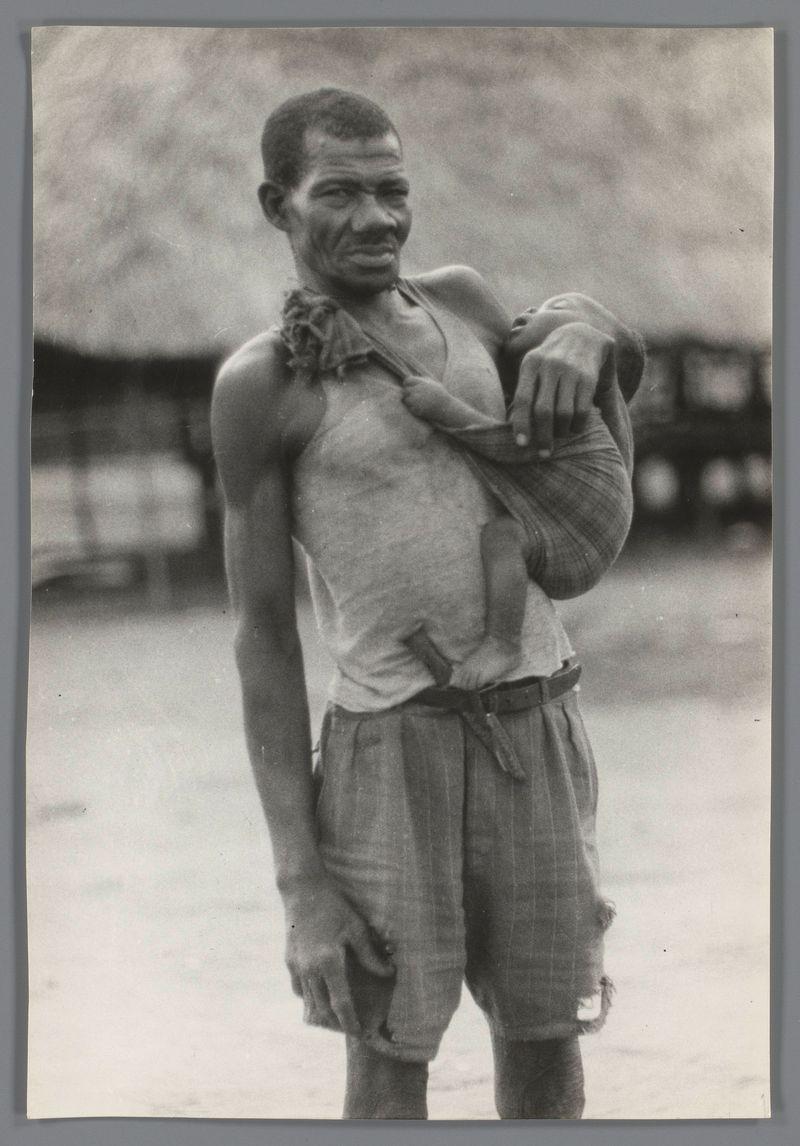
Portret van een onbekende man met baby, Ed van der Elsken, 1956 - 1957

#Portretvaneen #EdvanderElsken #African #fotografie #photography #EdVanDerElsken #EdvanderElsken

http://www.rijksmuseum.nl/en/collection/RP-F-2019-242-24-25

The image is a black and white photograph showing an older man with dark skin, likely of African descent. He has facial features such as pronounced cheekbones, deep-set eyes, and a thick moustache that suggests maturity or aging. His expression appears pained or grimacing slightly, possibly in discomfort.

He's wearing what seems to be traditional or utilitarian clothing: a sleeveless vest over his bare chest, shorts with a patterned weave, and long socks pulled up just below the knee. The man is holding an infant on his right side close to his body; only parts of both figures are visible, including one arm extended around the child's torso.

The background is blurred but indicates an outdoor setting that looks rural or possibly impoverished based on hints of simple structures. There appears to be a structure with what could be straw-thatched roofing and another building in the distant backdrop which might suggest this photo was taken at some distance from urban areas, potentially under conditions reflecting poverty or hardship.

There are no explicit contextual clues as to why he is holding an infant; it may have been staged for artistic purposes given its historical context.
The image is a black and white photograph showing an older man with dark skin, likely of African descent. He has facial features such as pronounced cheekbones, deep-set eyes, and a thick moustache that suggests maturity or aging. His expression appears pained or grimacing slightly, possibly in discomfort. He's wearing what seems to be traditional or utilitarian clothing: a sleeveless vest over his bare chest, shorts with a patterned weave, and long socks pulled up just below the knee. The man is holding an infant on his right side close to his body; only parts of both figures are visible, including one arm extended around the child's torso. The background is blurred but indicates an outdoor setting that looks rural or possibly impoverished based on hints of simple structures. There appears to be a structure with what could be straw-thatched roofing and another building in the distant backdrop which might suggest this photo was taken at some distance from urban areas, potentially under conditions reflecting poverty or hardship. There are no explicit contextual clues as to why he is holding an infant; it may have been staged for artistic purposes given its historical context.
Rijksmuseum.nl

Portret van een onbekende man met baby

content
  • Copy link
  • Flag this post
  • Block
Ed van der Elsken
Ed van der Elsken
@EdvdElsken@mastodon.ozioso.online  ·  activity timestamp 2 days ago

Portret van een onbekende man met baby, Ed van der Elsken, 1956 - 1957

#Portretvaneen #EdvanderElsken #African #fotografie #photography #EdVanDerElsken #EdvanderElsken

http://www.rijksmuseum.nl/en/collection/RP-F-2019-242-24-25

The image is a black and white photograph showing an older man with dark skin, likely of African descent. He has facial features such as pronounced cheekbones, deep-set eyes, and a thick moustache that suggests maturity or aging. His expression appears pained or grimacing slightly, possibly in discomfort.

He's wearing what seems to be traditional or utilitarian clothing: a sleeveless vest over his bare chest, shorts with a patterned weave, and long socks pulled up just below the knee. The man is holding an infant on his right side close to his body; only parts of both figures are visible, including one arm extended around the child's torso.

The background is blurred but indicates an outdoor setting that looks rural or possibly impoverished based on hints of simple structures. There appears to be a structure with what could be straw-thatched roofing and another building in the distant backdrop which might suggest this photo was taken at some distance from urban areas, potentially under conditions reflecting poverty or hardship.

There are no explicit contextual clues as to why he is holding an infant; it may have been staged for artistic purposes given its historical context.
The image is a black and white photograph showing an older man with dark skin, likely of African descent. He has facial features such as pronounced cheekbones, deep-set eyes, and a thick moustache that suggests maturity or aging. His expression appears pained or grimacing slightly, possibly in discomfort. He's wearing what seems to be traditional or utilitarian clothing: a sleeveless vest over his bare chest, shorts with a patterned weave, and long socks pulled up just below the knee. The man is holding an infant on his right side close to his body; only parts of both figures are visible, including one arm extended around the child's torso. The background is blurred but indicates an outdoor setting that looks rural or possibly impoverished based on hints of simple structures. There appears to be a structure with what could be straw-thatched roofing and another building in the distant backdrop which might suggest this photo was taken at some distance from urban areas, potentially under conditions reflecting poverty or hardship. There are no explicit contextual clues as to why he is holding an infant; it may have been staged for artistic purposes given its historical context.
Rijksmuseum.nl

Portret van een onbekende man met baby

content
  • Copy link
  • Flag this post
  • Block
Photography Channel boosted
Ed van der Elsken
Ed van der Elsken
@EdvdElsken@mastodon.ozioso.online  ·  activity timestamp 3 days ago

Familie bezig met dagelijkse activiteiten buiten hun huis, Ed van der Elsken, 1956 - 1957

#Familiebezig #EdvanderElsken #African #Africa #fotografie #photography #EdVanDerElsken #EdvanderElsken

http://www.rijksmuseum.nl/en/collection/RP-F-2019-242-24-41

The image depicts a rural scene with several individuals engaged in daily activities within what appears to be an African village setting. In the foreground, four children are seated on various surfaces including mats and directly onto the ground. They seem relaxed or contemplative; one child is holding a cooking pot while another has a stick-like object. The middle area shows two adults: one sitting by a fire pit with wooden logs scattered around it, possibly tending to some activity like brewing tea or preparing food, using an utensil that could be used for mixing liquids. Another adult sits on the ground beside what looks like a woven basket, suggesting they might have been involved in weaving or another craft.

Behind them stands a child holding a bow and arrow; this suggests playtime or learning how to use such equipment. The setting includes traditional huts made of thatch with conical roofs, indicating indigenous architecture typical for rural African communities. There is also an individual lying on their back on a raised wooden platform near the hut.

The environment appears somewhat arid but not barren, as there are some trees and bushes in the background under a cloudy sky. The clothing style worn by individuals suggests cultural attire commonly seen among various ethnic groups across Africa during mid-20th century times when such photographs were taken to docu [...]
The image depicts a rural scene with several individuals engaged in daily activities within what appears to be an African village setting. In the foreground, four children are seated on various surfaces including mats and directly onto the ground. They seem relaxed or contemplative; one child is holding a cooking pot while another has a stick-like object. The middle area shows two adults: one sitting by a fire pit with wooden logs scattered around it, possibly tending to some activity like brewing tea or preparing food, using an utensil that could be used for mixing liquids. Another adult sits on the ground beside what looks like a woven basket, suggesting they might have been involved in weaving or another craft. Behind them stands a child holding a bow and arrow; this suggests playtime or learning how to use such equipment. The setting includes traditional huts made of thatch with conical roofs, indicating indigenous architecture typical for rural African communities. There is also an individual lying on their back on a raised wooden platform near the hut. The environment appears somewhat arid but not barren, as there are some trees and bushes in the background under a cloudy sky. The clothing style worn by individuals suggests cultural attire commonly seen among various ethnic groups across Africa during mid-20th century times when such photographs were taken to docu [...]
Rijksmuseum.nl

Familie bezig met dagelijkse activiteiten buiten hun huis

content
  • Copy link
  • Flag this post
  • Block
Ed van der Elsken
Ed van der Elsken
@EdvdElsken@mastodon.ozioso.online  ·  activity timestamp 3 days ago

Familie bezig met dagelijkse activiteiten buiten hun huis, Ed van der Elsken, 1956 - 1957

#Familiebezig #EdvanderElsken #African #Africa #fotografie #photography #EdVanDerElsken #EdvanderElsken

http://www.rijksmuseum.nl/en/collection/RP-F-2019-242-24-41

The image depicts a rural scene with several individuals engaged in daily activities within what appears to be an African village setting. In the foreground, four children are seated on various surfaces including mats and directly onto the ground. They seem relaxed or contemplative; one child is holding a cooking pot while another has a stick-like object. The middle area shows two adults: one sitting by a fire pit with wooden logs scattered around it, possibly tending to some activity like brewing tea or preparing food, using an utensil that could be used for mixing liquids. Another adult sits on the ground beside what looks like a woven basket, suggesting they might have been involved in weaving or another craft.

Behind them stands a child holding a bow and arrow; this suggests playtime or learning how to use such equipment. The setting includes traditional huts made of thatch with conical roofs, indicating indigenous architecture typical for rural African communities. There is also an individual lying on their back on a raised wooden platform near the hut.

The environment appears somewhat arid but not barren, as there are some trees and bushes in the background under a cloudy sky. The clothing style worn by individuals suggests cultural attire commonly seen among various ethnic groups across Africa during mid-20th century times when such photographs were taken to docu [...]
The image depicts a rural scene with several individuals engaged in daily activities within what appears to be an African village setting. In the foreground, four children are seated on various surfaces including mats and directly onto the ground. They seem relaxed or contemplative; one child is holding a cooking pot while another has a stick-like object. The middle area shows two adults: one sitting by a fire pit with wooden logs scattered around it, possibly tending to some activity like brewing tea or preparing food, using an utensil that could be used for mixing liquids. Another adult sits on the ground beside what looks like a woven basket, suggesting they might have been involved in weaving or another craft. Behind them stands a child holding a bow and arrow; this suggests playtime or learning how to use such equipment. The setting includes traditional huts made of thatch with conical roofs, indicating indigenous architecture typical for rural African communities. There is also an individual lying on their back on a raised wooden platform near the hut. The environment appears somewhat arid but not barren, as there are some trees and bushes in the background under a cloudy sky. The clothing style worn by individuals suggests cultural attire commonly seen among various ethnic groups across Africa during mid-20th century times when such photographs were taken to docu [...]
Rijksmuseum.nl

Familie bezig met dagelijkse activiteiten buiten hun huis

content
  • Copy link
  • Flag this post
  • Block
Photography Channel boosted
Ed van der Elsken
Ed van der Elsken
@EdvdElsken@mastodon.ozioso.online  ·  activity timestamp 4 days ago

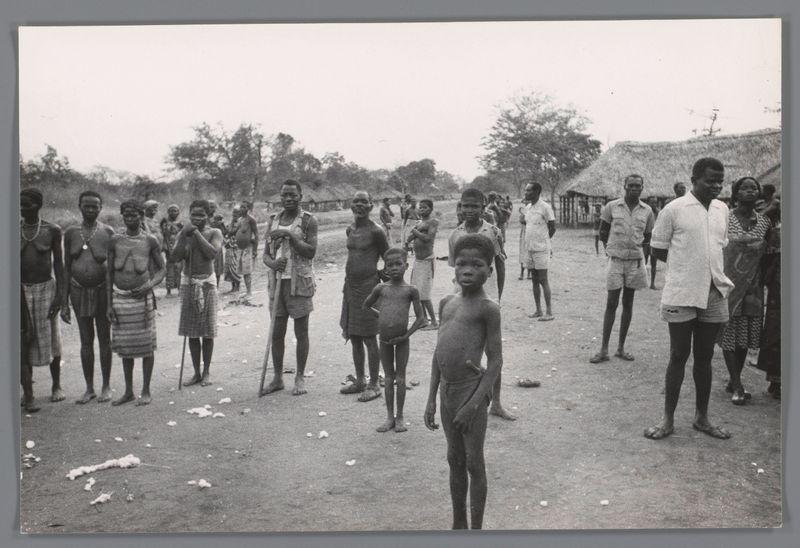
Inwoners van een dorp, Ed van der Elsken, 1956 - 1957

#Inwonersvaneendorp #EdvanderElsken #African #fotografie #photography #EdVanDerElsken #EdvanderElsken

http://www.rijksmuseum.nl/en/collection/RP-F-2019-242-24-13

This black and white photograph captures a group of people, likely from an African village, gathered outdoors. The setting appears to be rural with simple thatched-roof structures in the background indicative of traditional architecture. A diverse range of individuals is present; both adults and children are visible, some standing while others sit on the ground or lean against objects. Their attire varies greatly, reflecting different social statuses, genders, and ages within the community. Some wear what seems to be rudimentary clothing typical for a warm climate, such as shorts and simple blouses, suggesting practicality over fashion in their daily lives.

The composition of the photo suggests it was taken candidly without posing or staging; people seem engaged with each other rather than directly facing the camera. The expressions on most faces are neutral to contemplative. A few individuals stand out due to different stances and postures that suggest attentiveness, perhaps towards a person outside the frame who might be addressing them.

White cotton-like particles scattered across the ground could indicate recent activity involving textiles or crops. The photographer's intent appears to document everyday life with an emphasis on authenticity rather than aesthetic composition.
This black and white photograph captures a group of people, likely from an African village, gathered outdoors. The setting appears to be rural with simple thatched-roof structures in the background indicative of traditional architecture. A diverse range of individuals is present; both adults and children are visible, some standing while others sit on the ground or lean against objects. Their attire varies greatly, reflecting different social statuses, genders, and ages within the community. Some wear what seems to be rudimentary clothing typical for a warm climate, such as shorts and simple blouses, suggesting practicality over fashion in their daily lives. The composition of the photo suggests it was taken candidly without posing or staging; people seem engaged with each other rather than directly facing the camera. The expressions on most faces are neutral to contemplative. A few individuals stand out due to different stances and postures that suggest attentiveness, perhaps towards a person outside the frame who might be addressing them. White cotton-like particles scattered across the ground could indicate recent activity involving textiles or crops. The photographer's intent appears to document everyday life with an emphasis on authenticity rather than aesthetic composition.
Rijksmuseum.nl

Inwoners van een dorp

content
  • Copy link
  • Flag this post
  • Block
Ed van der Elsken
Ed van der Elsken
@EdvdElsken@mastodon.ozioso.online  ·  activity timestamp 4 days ago

Inwoners van een dorp, Ed van der Elsken, 1956 - 1957

#Inwonersvaneendorp #EdvanderElsken #African #fotografie #photography #EdVanDerElsken #EdvanderElsken

http://www.rijksmuseum.nl/en/collection/RP-F-2019-242-24-13

This black and white photograph captures a group of people, likely from an African village, gathered outdoors. The setting appears to be rural with simple thatched-roof structures in the background indicative of traditional architecture. A diverse range of individuals is present; both adults and children are visible, some standing while others sit on the ground or lean against objects. Their attire varies greatly, reflecting different social statuses, genders, and ages within the community. Some wear what seems to be rudimentary clothing typical for a warm climate, such as shorts and simple blouses, suggesting practicality over fashion in their daily lives.

The composition of the photo suggests it was taken candidly without posing or staging; people seem engaged with each other rather than directly facing the camera. The expressions on most faces are neutral to contemplative. A few individuals stand out due to different stances and postures that suggest attentiveness, perhaps towards a person outside the frame who might be addressing them.

White cotton-like particles scattered across the ground could indicate recent activity involving textiles or crops. The photographer's intent appears to document everyday life with an emphasis on authenticity rather than aesthetic composition.
This black and white photograph captures a group of people, likely from an African village, gathered outdoors. The setting appears to be rural with simple thatched-roof structures in the background indicative of traditional architecture. A diverse range of individuals is present; both adults and children are visible, some standing while others sit on the ground or lean against objects. Their attire varies greatly, reflecting different social statuses, genders, and ages within the community. Some wear what seems to be rudimentary clothing typical for a warm climate, such as shorts and simple blouses, suggesting practicality over fashion in their daily lives. The composition of the photo suggests it was taken candidly without posing or staging; people seem engaged with each other rather than directly facing the camera. The expressions on most faces are neutral to contemplative. A few individuals stand out due to different stances and postures that suggest attentiveness, perhaps towards a person outside the frame who might be addressing them. White cotton-like particles scattered across the ground could indicate recent activity involving textiles or crops. The photographer's intent appears to document everyday life with an emphasis on authenticity rather than aesthetic composition.
Rijksmuseum.nl

Inwoners van een dorp

content
  • Copy link
  • Flag this post
  • Block

Indieweb Studio

This is a relaxed, online social space for the indieweb community, brought to you by indieweb.social.

Please abide by our code of conduct and have a nice time!

Indieweb Studio: About · Code of conduct · Privacy · Users · Instances
Bonfire social · 1.0.2-alpha.7 no JS en
Automatic federation enabled
Log in Create account
  • Explore
  • About
  • Members
  • Code of Conduct