Discussion
Loading...

#Tag

Log in
  • Sign up
  • About
  • Code of conduct
  • Privacy
  • Users
  • Instances
  • About Bonfire
Photography Channel boosted
Lewis Hine
Lewis Hine
@LewisHine@mastodon.ozioso.online  ·  activity timestamp 50 minutes ago

Noon hour, April 17, 1909. Natick (R.I.) Mills. Location: Natick, Rhode Island.

#Natick #RhodeIsland #NatickMillOffice #NatickMills #Photography #LewisHine #ChildLabour #ChildLabor

https://www.loc.gov/pictures/item/2018674416/

The image depicts a historical black and white photograph showing four individuals outside the "Natick Mill Office" building. The architecture of the mill office suggests it was built during an earlier period, possibly late 19th to early 20th century based on design elements like rectangular brickwork with stone accents around windows and doors.

The photo is in sepia tones, which were common for photographs at that time before color photography became widespread. The individuals appear as figures of a bygone era; their clothing suggests they are factory workers or laborers from the early 20th century. They stand outside on what appears to be an unpaved road with some patches and puddles.

The photograph is labeled "Natick Mill Office," indicating that it was taken at Natick Mills in Rhode Island, likely during a break time referred to as 'noon hour' given the date mentioned (April 17, 1909) from an article titled "Noon Hour." The image captures a moment of rest or transition for these workers outside their workplace.

The individuals are engaged differently: some stand with hands on hips while others have objects like buckets and bottles in hand. Their positioning suggests casual interaction but also separation by roles within the mill environment, reflecting typical social dynamics at such industrial sites during that time period.

This historical snapshot provides insi [...]
The image depicts a historical black and white photograph showing four individuals outside the "Natick Mill Office" building. The architecture of the mill office suggests it was built during an earlier period, possibly late 19th to early 20th century based on design elements like rectangular brickwork with stone accents around windows and doors. The photo is in sepia tones, which were common for photographs at that time before color photography became widespread. The individuals appear as figures of a bygone era; their clothing suggests they are factory workers or laborers from the early 20th century. They stand outside on what appears to be an unpaved road with some patches and puddles. The photograph is labeled "Natick Mill Office," indicating that it was taken at Natick Mills in Rhode Island, likely during a break time referred to as 'noon hour' given the date mentioned (April 17, 1909) from an article titled "Noon Hour." The image captures a moment of rest or transition for these workers outside their workplace. The individuals are engaged differently: some stand with hands on hips while others have objects like buckets and bottles in hand. Their positioning suggests casual interaction but also separation by roles within the mill environment, reflecting typical social dynamics at such industrial sites during that time period. This historical snapshot provides insi [...]
  • Copy link
  • Flag this post
  • Block
Lewis Hine
Lewis Hine
@LewisHine@mastodon.ozioso.online  ·  activity timestamp 50 minutes ago

Noon hour, April 17, 1909. Natick (R.I.) Mills. Location: Natick, Rhode Island.

#Natick #RhodeIsland #NatickMillOffice #NatickMills #Photography #LewisHine #ChildLabour #ChildLabor

https://www.loc.gov/pictures/item/2018674416/

The image depicts a historical black and white photograph showing four individuals outside the "Natick Mill Office" building. The architecture of the mill office suggests it was built during an earlier period, possibly late 19th to early 20th century based on design elements like rectangular brickwork with stone accents around windows and doors.

The photo is in sepia tones, which were common for photographs at that time before color photography became widespread. The individuals appear as figures of a bygone era; their clothing suggests they are factory workers or laborers from the early 20th century. They stand outside on what appears to be an unpaved road with some patches and puddles.

The photograph is labeled "Natick Mill Office," indicating that it was taken at Natick Mills in Rhode Island, likely during a break time referred to as 'noon hour' given the date mentioned (April 17, 1909) from an article titled "Noon Hour." The image captures a moment of rest or transition for these workers outside their workplace.

The individuals are engaged differently: some stand with hands on hips while others have objects like buckets and bottles in hand. Their positioning suggests casual interaction but also separation by roles within the mill environment, reflecting typical social dynamics at such industrial sites during that time period.

This historical snapshot provides insi [...]
The image depicts a historical black and white photograph showing four individuals outside the "Natick Mill Office" building. The architecture of the mill office suggests it was built during an earlier period, possibly late 19th to early 20th century based on design elements like rectangular brickwork with stone accents around windows and doors. The photo is in sepia tones, which were common for photographs at that time before color photography became widespread. The individuals appear as figures of a bygone era; their clothing suggests they are factory workers or laborers from the early 20th century. They stand outside on what appears to be an unpaved road with some patches and puddles. The photograph is labeled "Natick Mill Office," indicating that it was taken at Natick Mills in Rhode Island, likely during a break time referred to as 'noon hour' given the date mentioned (April 17, 1909) from an article titled "Noon Hour." The image captures a moment of rest or transition for these workers outside their workplace. The individuals are engaged differently: some stand with hands on hips while others have objects like buckets and bottles in hand. Their positioning suggests casual interaction but also separation by roles within the mill environment, reflecting typical social dynamics at such industrial sites during that time period. This historical snapshot provides insi [...]
  • Copy link
  • Flag this post
  • Block
Photography Channel boosted
Lewis Hine
Lewis Hine
@LewisHine@mastodon.ozioso.online  ·  activity timestamp 3 hours ago

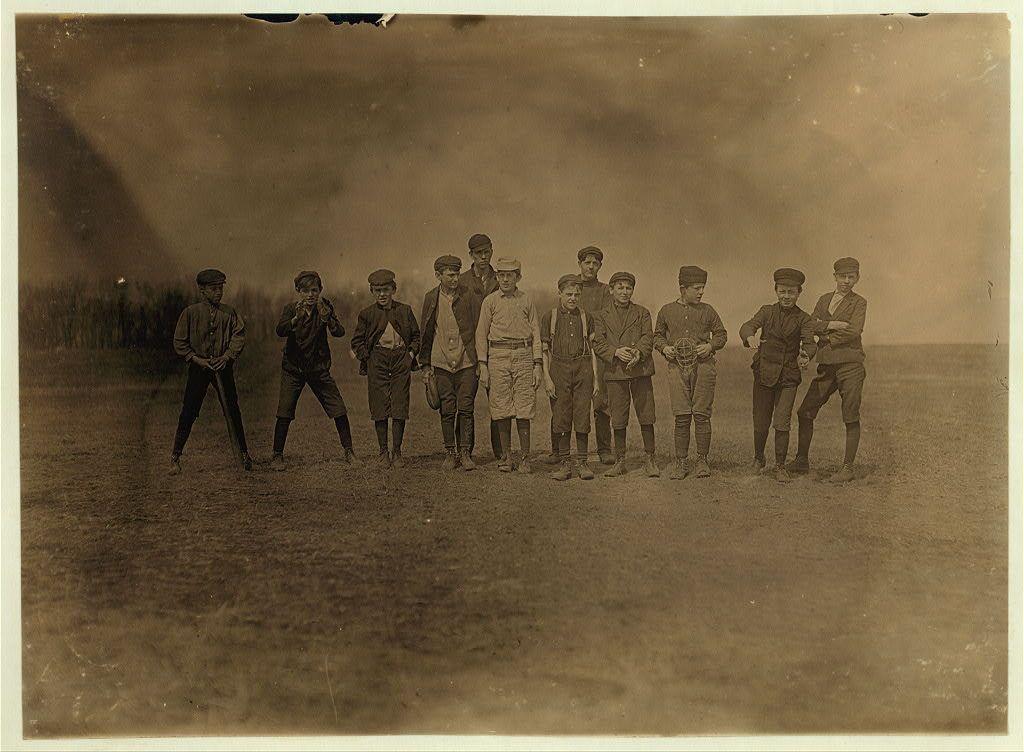
One of the ball-teams made up of boys from Natick Mills, Natick, R.I. Saturday P.M. April 17, 1909. Location: Natick, Rhode Island.

#NatickMills #Natick #RhodeIsland #Photography #LewisHine #ChildLabour #ChildLabor

https://www.loc.gov/pictures/item/2018674415/

This black and white photograph captures a group of young boys in uniforms standing outdoors, likely on a field or open ground. The image appears to be from an earlier era, suggested by the style of clothing worn by the subjects—high-collared jackets, caps, and knee-length pants. Some individuals have their hands placed on their hips or pockets while others hold sports equipment such as baseball bats and gloves. Their expressions are varied but seem casual and relaxed.

The setting is overcast with a hazy sky in the background which might indicate either early morning or late afternoon light conditions. The field appears to be uneven, possibly indicating it's used for playing sports like baseball given their attire. There are no distinct features such as trees or buildings visible in the immediate vicinity of the group.

The caption provided states that this photograph shows a ball-team made up of boys from Natick Mills in Natick, Rhode Island on April 17th, Saturday afternoon at P.M., which helps contextualize the image. The overall impression is one of camaraderie among young athletes captured during a sports gathering or practice session.
This black and white photograph captures a group of young boys in uniforms standing outdoors, likely on a field or open ground. The image appears to be from an earlier era, suggested by the style of clothing worn by the subjects—high-collared jackets, caps, and knee-length pants. Some individuals have their hands placed on their hips or pockets while others hold sports equipment such as baseball bats and gloves. Their expressions are varied but seem casual and relaxed. The setting is overcast with a hazy sky in the background which might indicate either early morning or late afternoon light conditions. The field appears to be uneven, possibly indicating it's used for playing sports like baseball given their attire. There are no distinct features such as trees or buildings visible in the immediate vicinity of the group. The caption provided states that this photograph shows a ball-team made up of boys from Natick Mills in Natick, Rhode Island on April 17th, Saturday afternoon at P.M., which helps contextualize the image. The overall impression is one of camaraderie among young athletes captured during a sports gathering or practice session.
  • Copy link
  • Flag this post
  • Block
Lewis Hine
Lewis Hine
@LewisHine@mastodon.ozioso.online  ·  activity timestamp 3 hours ago

One of the ball-teams made up of boys from Natick Mills, Natick, R.I. Saturday P.M. April 17, 1909. Location: Natick, Rhode Island.

#NatickMills #Natick #RhodeIsland #Photography #LewisHine #ChildLabour #ChildLabor

https://www.loc.gov/pictures/item/2018674415/

This black and white photograph captures a group of young boys in uniforms standing outdoors, likely on a field or open ground. The image appears to be from an earlier era, suggested by the style of clothing worn by the subjects—high-collared jackets, caps, and knee-length pants. Some individuals have their hands placed on their hips or pockets while others hold sports equipment such as baseball bats and gloves. Their expressions are varied but seem casual and relaxed.

The setting is overcast with a hazy sky in the background which might indicate either early morning or late afternoon light conditions. The field appears to be uneven, possibly indicating it's used for playing sports like baseball given their attire. There are no distinct features such as trees or buildings visible in the immediate vicinity of the group.

The caption provided states that this photograph shows a ball-team made up of boys from Natick Mills in Natick, Rhode Island on April 17th, Saturday afternoon at P.M., which helps contextualize the image. The overall impression is one of camaraderie among young athletes captured during a sports gathering or practice session.
This black and white photograph captures a group of young boys in uniforms standing outdoors, likely on a field or open ground. The image appears to be from an earlier era, suggested by the style of clothing worn by the subjects—high-collared jackets, caps, and knee-length pants. Some individuals have their hands placed on their hips or pockets while others hold sports equipment such as baseball bats and gloves. Their expressions are varied but seem casual and relaxed. The setting is overcast with a hazy sky in the background which might indicate either early morning or late afternoon light conditions. The field appears to be uneven, possibly indicating it's used for playing sports like baseball given their attire. There are no distinct features such as trees or buildings visible in the immediate vicinity of the group. The caption provided states that this photograph shows a ball-team made up of boys from Natick Mills in Natick, Rhode Island on April 17th, Saturday afternoon at P.M., which helps contextualize the image. The overall impression is one of camaraderie among young athletes captured during a sports gathering or practice session.
  • Copy link
  • Flag this post
  • Block
Photography Channel boosted
Lewis Hine
Lewis Hine
@LewisHine@mastodon.ozioso.online  ·  activity timestamp 5 hours ago

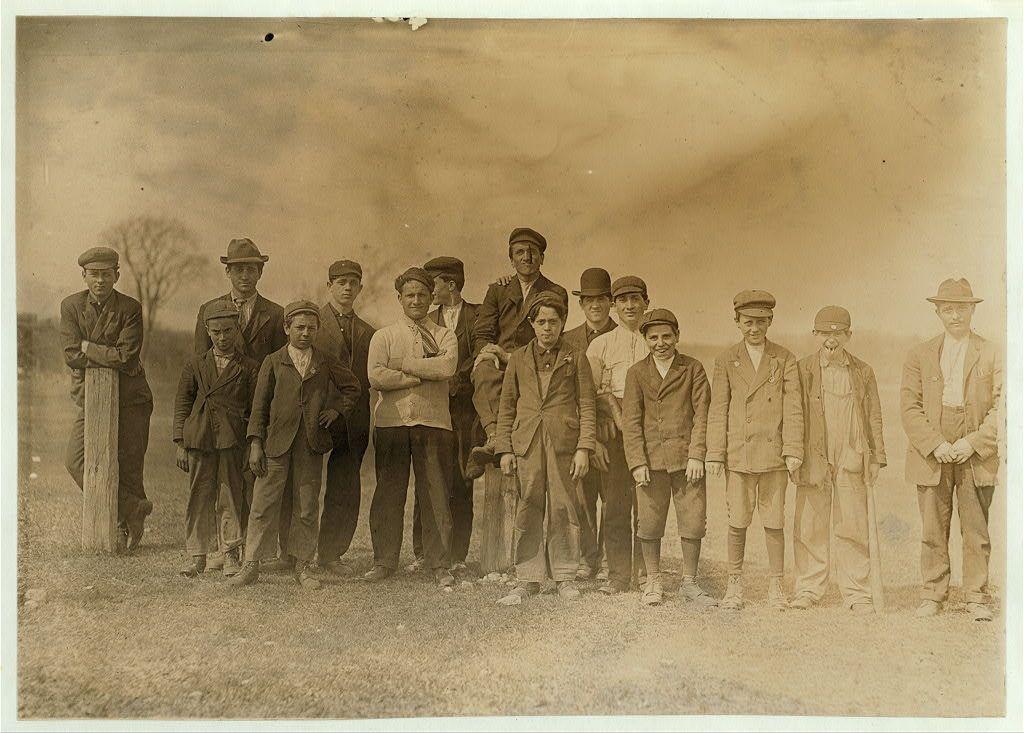
Saturday afternoon ball game. Boys all work in the Natick (R. I.) Mills. Location: Natick, Rhode Island.

#Natick #RI)Mills #RhodeIsland #Photography #LewisHine #ChildLabour #ChildLabor

https://www.loc.gov/pictures/item/2018674414/

A sepia-toned photograph depicting a group of individuals from the late 19th to early 20th century, gathered outside on an overcast day. The people are wearing various styles of hats and suits typical for that era, suggesting they might be workers or part of a social club. Some hold baseball equipment like bats, hinting at their possible involvement in sports activities such as baseball during the Saturday afternoons mentioned in the caption.
  • Copy link
  • Flag this post
  • Block
Lewis Hine
Lewis Hine
@LewisHine@mastodon.ozioso.online  ·  activity timestamp 5 hours ago

Saturday afternoon ball game. Boys all work in the Natick (R. I.) Mills. Location: Natick, Rhode Island.

#Natick #RI)Mills #RhodeIsland #Photography #LewisHine #ChildLabour #ChildLabor

https://www.loc.gov/pictures/item/2018674414/

A sepia-toned photograph depicting a group of individuals from the late 19th to early 20th century, gathered outside on an overcast day. The people are wearing various styles of hats and suits typical for that era, suggesting they might be workers or part of a social club. Some hold baseball equipment like bats, hinting at their possible involvement in sports activities such as baseball during the Saturday afternoons mentioned in the caption.
  • Copy link
  • Flag this post
  • Block
Photography Channel boosted
Lewis Hine
Lewis Hine
@LewisHine@mastodon.ozioso.online  ·  activity timestamp 7 hours ago

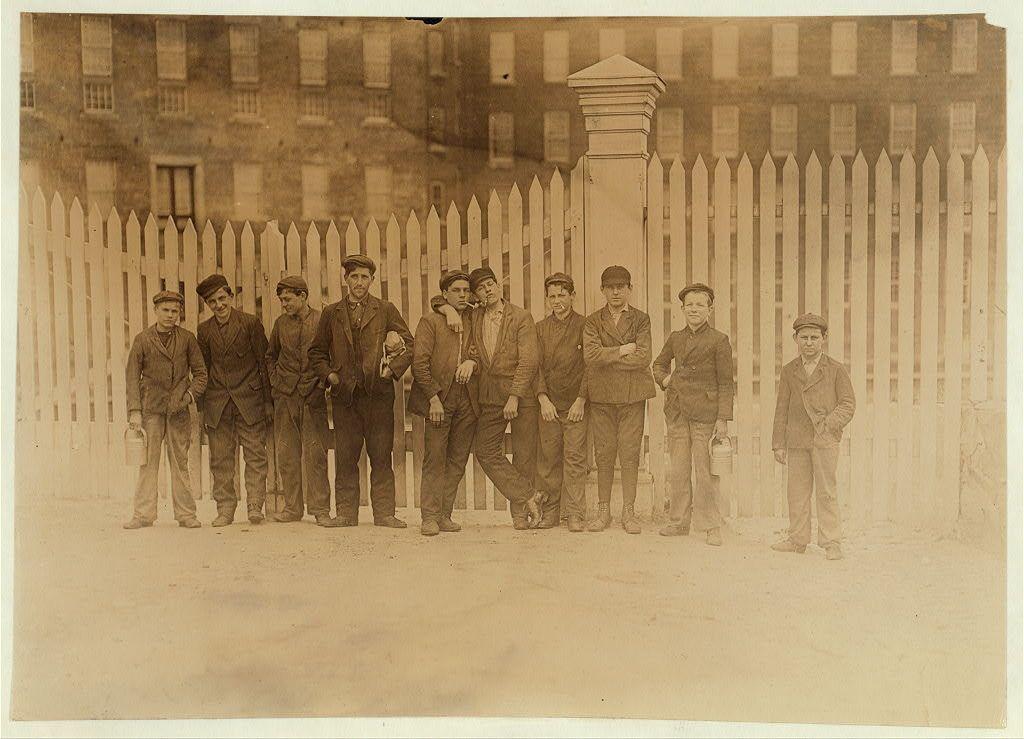
Some of the boys working in Natcik Mills (R. I.) Saturday Noon, April 17, 1909. Location: Natick, Rhode Island.

#NatcikMills #Natick #RhodeIsland #Photography #LewisHine #ChildLabour #ChildLabor

https://www.loc.gov/pictures/item/2018674413/

The image is a sepia-toned photograph depicting ten young boys standing in front of a white picket fence, with the backdrop featuring an urban building. The setting appears to be on Saturday at noon as indicated by the caption "Some of the boys working in Natcik Mills (R.I.) Saturday Noon, April 17, 1909." Location: Natick, Rhode Island. Each boy is dressed differently, suggesting a variety of roles or tasks within their work environment. Some are wearing hats and jackets while others have on more casual clothing such as coats or trousers without sleeves.

The boys display varying postures; some stand with arms crossed confidently, others lean casually against the fence, one holds what looks like a milk can in his hand, another has an object that resembles coal or small rocks. The overall atmosphere of the photo is somber and reflective, indicative of early 20th-century labor conditions for young children.

The quality of the photograph suggests it may have been taken with an old camera, emphasizing historical context over clarity.
The image is a sepia-toned photograph depicting ten young boys standing in front of a white picket fence, with the backdrop featuring an urban building. The setting appears to be on Saturday at noon as indicated by the caption "Some of the boys working in Natcik Mills (R.I.) Saturday Noon, April 17, 1909." Location: Natick, Rhode Island. Each boy is dressed differently, suggesting a variety of roles or tasks within their work environment. Some are wearing hats and jackets while others have on more casual clothing such as coats or trousers without sleeves. The boys display varying postures; some stand with arms crossed confidently, others lean casually against the fence, one holds what looks like a milk can in his hand, another has an object that resembles coal or small rocks. The overall atmosphere of the photo is somber and reflective, indicative of early 20th-century labor conditions for young children. The quality of the photograph suggests it may have been taken with an old camera, emphasizing historical context over clarity.
  • Copy link
  • Flag this post
  • Block
Lewis Hine
Lewis Hine
@LewisHine@mastodon.ozioso.online  ·  activity timestamp 7 hours ago

Some of the boys working in Natcik Mills (R. I.) Saturday Noon, April 17, 1909. Location: Natick, Rhode Island.

#NatcikMills #Natick #RhodeIsland #Photography #LewisHine #ChildLabour #ChildLabor

https://www.loc.gov/pictures/item/2018674413/

The image is a sepia-toned photograph depicting ten young boys standing in front of a white picket fence, with the backdrop featuring an urban building. The setting appears to be on Saturday at noon as indicated by the caption "Some of the boys working in Natcik Mills (R.I.) Saturday Noon, April 17, 1909." Location: Natick, Rhode Island. Each boy is dressed differently, suggesting a variety of roles or tasks within their work environment. Some are wearing hats and jackets while others have on more casual clothing such as coats or trousers without sleeves.

The boys display varying postures; some stand with arms crossed confidently, others lean casually against the fence, one holds what looks like a milk can in his hand, another has an object that resembles coal or small rocks. The overall atmosphere of the photo is somber and reflective, indicative of early 20th-century labor conditions for young children.

The quality of the photograph suggests it may have been taken with an old camera, emphasizing historical context over clarity.
The image is a sepia-toned photograph depicting ten young boys standing in front of a white picket fence, with the backdrop featuring an urban building. The setting appears to be on Saturday at noon as indicated by the caption "Some of the boys working in Natcik Mills (R.I.) Saturday Noon, April 17, 1909." Location: Natick, Rhode Island. Each boy is dressed differently, suggesting a variety of roles or tasks within their work environment. Some are wearing hats and jackets while others have on more casual clothing such as coats or trousers without sleeves. The boys display varying postures; some stand with arms crossed confidently, others lean casually against the fence, one holds what looks like a milk can in his hand, another has an object that resembles coal or small rocks. The overall atmosphere of the photo is somber and reflective, indicative of early 20th-century labor conditions for young children. The quality of the photograph suggests it may have been taken with an old camera, emphasizing historical context over clarity.
  • Copy link
  • Flag this post
  • Block
Photography Channel boosted
Lewis Hine
Lewis Hine
@LewisHine@mastodon.ozioso.online  ·  activity timestamp 9 hours ago

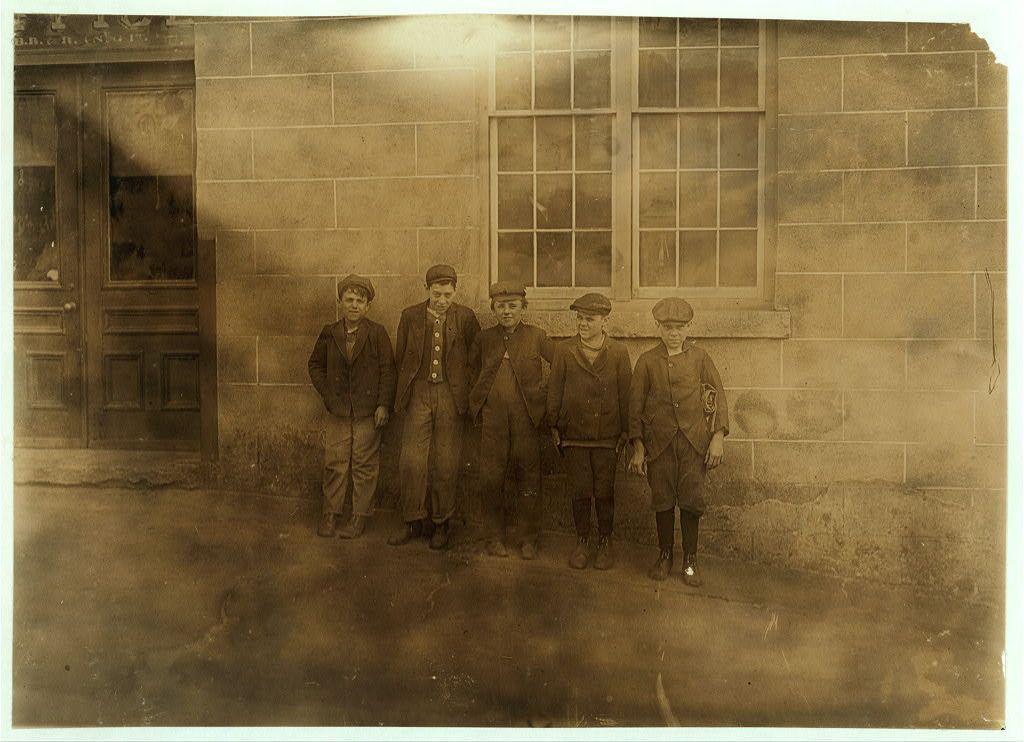
A few of the small boys working in the Natick (R.I.) Mills. Some of the smallest ones said they worked there 2 years. Location: Natick, Rhode Island.

#Natick #RhodeIsland #Photography #LewisHine #ChildLabour #ChildLabor

https://www.loc.gov/pictures/item/2018674412/

The image is a sepia-toned photograph depicting six young boys standing in front of an industrial building. They appear to be wearing work uniforms, with some in shorts and others in trousers, all sporting caps or flat hats typical for the era suggested by their clothing style. The setting seems rural, given the simple construction of the buildings behind them; a large stone structure is visible on the left, while windows can be seen above head height on what appears to be an older brick building.

There's no explicit action taking place—only posing—and it's hard to ascertain age with precision as portraits were not typically detailed during this time. The boys' expressions range from solemn to mildly curious or unenthusiastic; none are smiling broadly, suggesting a more candid and less cheerful mood typical of early industrial-era photographs.

The photograph is vintage in quality—somewhere between the late 19th and early 20th century—and there's an air of historical significance. The boys' presence at such young ages suggests they may be involved in labor or work, which aligns with what was known about child employment during this period in industrialized nations.

Overall, it captures a moment from the past that speaks volumes on children working conditions and their lives as early 20th-century workers.
The image is a sepia-toned photograph depicting six young boys standing in front of an industrial building. They appear to be wearing work uniforms, with some in shorts and others in trousers, all sporting caps or flat hats typical for the era suggested by their clothing style. The setting seems rural, given the simple construction of the buildings behind them; a large stone structure is visible on the left, while windows can be seen above head height on what appears to be an older brick building. There's no explicit action taking place—only posing—and it's hard to ascertain age with precision as portraits were not typically detailed during this time. The boys' expressions range from solemn to mildly curious or unenthusiastic; none are smiling broadly, suggesting a more candid and less cheerful mood typical of early industrial-era photographs. The photograph is vintage in quality—somewhere between the late 19th and early 20th century—and there's an air of historical significance. The boys' presence at such young ages suggests they may be involved in labor or work, which aligns with what was known about child employment during this period in industrialized nations. Overall, it captures a moment from the past that speaks volumes on children working conditions and their lives as early 20th-century workers.
  • Copy link
  • Flag this post
  • Block
Lewis Hine
Lewis Hine
@LewisHine@mastodon.ozioso.online  ·  activity timestamp 9 hours ago

A few of the small boys working in the Natick (R.I.) Mills. Some of the smallest ones said they worked there 2 years. Location: Natick, Rhode Island.

#Natick #RhodeIsland #Photography #LewisHine #ChildLabour #ChildLabor

https://www.loc.gov/pictures/item/2018674412/

The image is a sepia-toned photograph depicting six young boys standing in front of an industrial building. They appear to be wearing work uniforms, with some in shorts and others in trousers, all sporting caps or flat hats typical for the era suggested by their clothing style. The setting seems rural, given the simple construction of the buildings behind them; a large stone structure is visible on the left, while windows can be seen above head height on what appears to be an older brick building.

There's no explicit action taking place—only posing—and it's hard to ascertain age with precision as portraits were not typically detailed during this time. The boys' expressions range from solemn to mildly curious or unenthusiastic; none are smiling broadly, suggesting a more candid and less cheerful mood typical of early industrial-era photographs.

The photograph is vintage in quality—somewhere between the late 19th and early 20th century—and there's an air of historical significance. The boys' presence at such young ages suggests they may be involved in labor or work, which aligns with what was known about child employment during this period in industrialized nations.

Overall, it captures a moment from the past that speaks volumes on children working conditions and their lives as early 20th-century workers.
The image is a sepia-toned photograph depicting six young boys standing in front of an industrial building. They appear to be wearing work uniforms, with some in shorts and others in trousers, all sporting caps or flat hats typical for the era suggested by their clothing style. The setting seems rural, given the simple construction of the buildings behind them; a large stone structure is visible on the left, while windows can be seen above head height on what appears to be an older brick building. There's no explicit action taking place—only posing—and it's hard to ascertain age with precision as portraits were not typically detailed during this time. The boys' expressions range from solemn to mildly curious or unenthusiastic; none are smiling broadly, suggesting a more candid and less cheerful mood typical of early industrial-era photographs. The photograph is vintage in quality—somewhere between the late 19th and early 20th century—and there's an air of historical significance. The boys' presence at such young ages suggests they may be involved in labor or work, which aligns with what was known about child employment during this period in industrialized nations. Overall, it captures a moment from the past that speaks volumes on children working conditions and their lives as early 20th-century workers.
  • Copy link
  • Flag this post
  • Block
Photography Channel boosted
Lewis Hine
Lewis Hine
@LewisHine@mastodon.ozioso.online  ·  activity timestamp 12 hours ago

Group working in Washington Mill. Location: Lawrence, Massachusetts.

#WashingtonMill #Lawrence #Massachusetts #LewisHine’s #Photography #LewisHine #ChildLabour #ChildLabor

https://www.loc.gov/pictures/item/2018675391/

This sepia-toned photograph features a group of young boys and men dressed in work attire, standing on what appears to be an outdoor street or alleyway. The clothing suggests the era may have been around early 1920s given its style. Some individuals are wearing overalls with suspenders while others wear suits paired with button-up shirts and hats typical for that time period. Several of them display a stern demeanor, standing with arms crossed or hands in pockets.

The boys appear to be younger than the men, some as young as children but all likely under the age of 16 given their size compared to adults. Their expressions vary from serious to somewhat curious or defiant. The older individuals seem more composed and focused on something outside the frame. 

In the background, blurred buildings suggest an urban environment with a mix of residential structures that could be housing for workers. There is no direct indication of industry in this part of the image; however, given the clothing style, it's plausible they may have been working nearby.

There are various items such as pipes and hats scattered among them which add to their workman-like appearance. The photograph has a grainy texture typical of early 20th-century photography and shows signs of age with wear on its edges indicating that this photo might be over a century old, reflecting the conditions of labor during  [...]
This sepia-toned photograph features a group of young boys and men dressed in work attire, standing on what appears to be an outdoor street or alleyway. The clothing suggests the era may have been around early 1920s given its style. Some individuals are wearing overalls with suspenders while others wear suits paired with button-up shirts and hats typical for that time period. Several of them display a stern demeanor, standing with arms crossed or hands in pockets. The boys appear to be younger than the men, some as young as children but all likely under the age of 16 given their size compared to adults. Their expressions vary from serious to somewhat curious or defiant. The older individuals seem more composed and focused on something outside the frame. In the background, blurred buildings suggest an urban environment with a mix of residential structures that could be housing for workers. There is no direct indication of industry in this part of the image; however, given the clothing style, it's plausible they may have been working nearby. There are various items such as pipes and hats scattered among them which add to their workman-like appearance. The photograph has a grainy texture typical of early 20th-century photography and shows signs of age with wear on its edges indicating that this photo might be over a century old, reflecting the conditions of labor during [...]
  • Copy link
  • Flag this post
  • Block
Lewis Hine
Lewis Hine
@LewisHine@mastodon.ozioso.online  ·  activity timestamp 12 hours ago

Group working in Washington Mill. Location: Lawrence, Massachusetts.

#WashingtonMill #Lawrence #Massachusetts #LewisHine’s #Photography #LewisHine #ChildLabour #ChildLabor

https://www.loc.gov/pictures/item/2018675391/

This sepia-toned photograph features a group of young boys and men dressed in work attire, standing on what appears to be an outdoor street or alleyway. The clothing suggests the era may have been around early 1920s given its style. Some individuals are wearing overalls with suspenders while others wear suits paired with button-up shirts and hats typical for that time period. Several of them display a stern demeanor, standing with arms crossed or hands in pockets.

The boys appear to be younger than the men, some as young as children but all likely under the age of 16 given their size compared to adults. Their expressions vary from serious to somewhat curious or defiant. The older individuals seem more composed and focused on something outside the frame. 

In the background, blurred buildings suggest an urban environment with a mix of residential structures that could be housing for workers. There is no direct indication of industry in this part of the image; however, given the clothing style, it's plausible they may have been working nearby.

There are various items such as pipes and hats scattered among them which add to their workman-like appearance. The photograph has a grainy texture typical of early 20th-century photography and shows signs of age with wear on its edges indicating that this photo might be over a century old, reflecting the conditions of labor during  [...]
This sepia-toned photograph features a group of young boys and men dressed in work attire, standing on what appears to be an outdoor street or alleyway. The clothing suggests the era may have been around early 1920s given its style. Some individuals are wearing overalls with suspenders while others wear suits paired with button-up shirts and hats typical for that time period. Several of them display a stern demeanor, standing with arms crossed or hands in pockets. The boys appear to be younger than the men, some as young as children but all likely under the age of 16 given their size compared to adults. Their expressions vary from serious to somewhat curious or defiant. The older individuals seem more composed and focused on something outside the frame. In the background, blurred buildings suggest an urban environment with a mix of residential structures that could be housing for workers. There is no direct indication of industry in this part of the image; however, given the clothing style, it's plausible they may have been working nearby. There are various items such as pipes and hats scattered among them which add to their workman-like appearance. The photograph has a grainy texture typical of early 20th-century photography and shows signs of age with wear on its edges indicating that this photo might be over a century old, reflecting the conditions of labor during [...]
  • Copy link
  • Flag this post
  • Block
Photography Channel boosted
Lewis Hine
Lewis Hine
@LewisHine@mastodon.ozioso.online  ·  activity timestamp 14 hours ago

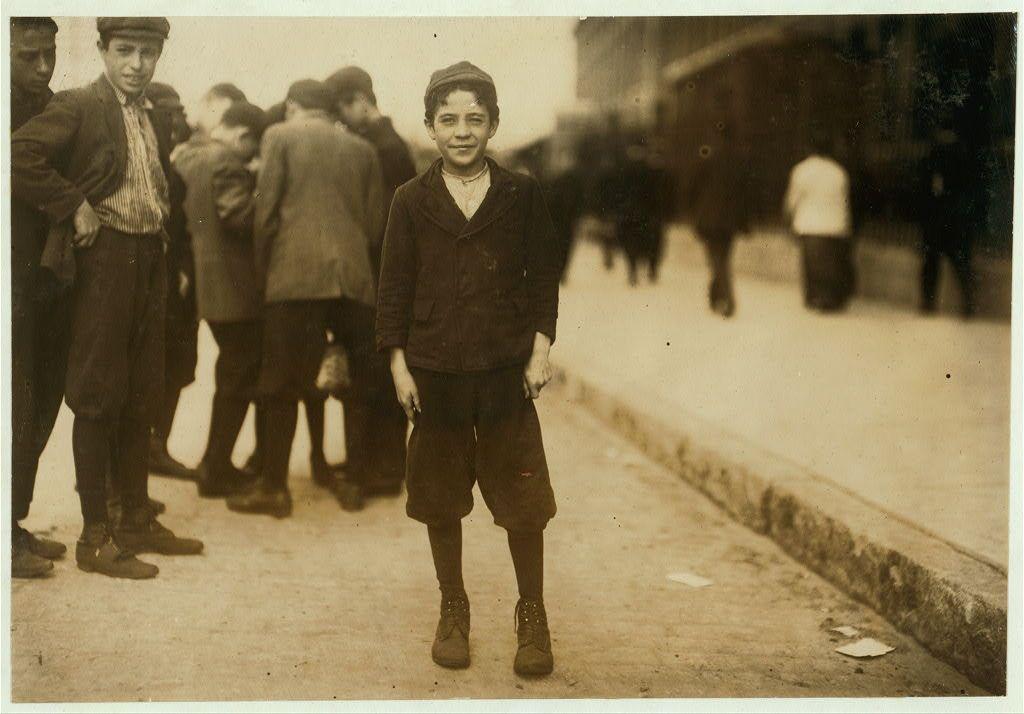
Sam Gangi, 82 Pleasant Valley St., Ayer Mill (See 2502). Location: Lawrence, Massachusetts.

#SamGangi #PleasantValleySt #AyerMill #Lawrence #Massachusetts #LewisHine’s #America #Photography #LewisHine #ChildLabour #ChildLabor

https://www.loc.gov/pictures/item/2018675388/

The image is a historical black and white photograph depicting multiple individuals standing on an outdoor street, with one central figure prominently in focus. The main subject appears to be a young boy dressed in dark clothing, including shorts, boots, and a coat, suggesting early 20th-century fashion for children. His attire looks worn but well-kept.

The background features several other people who seem to be engaged in casual conversation or waiting their turn; they are wearing coats and hats indicative of cold weather. The setting appears urban with cobblestone streets and buildings that have a historical architectural style, potentially from the early 1900s based on clothing styles and photographic quality.

There's an air of informality to the scene as people gather in groups or stand alone. Notably, there is no modern technology visible which supports its older time period setting. The image captures a candid moment that could be part of Lewis Hine’s work documenting child labor conditions during his tenure with the National Child Labor Committee.

The photograph conveys a sense of historical context regarding social history and urban life in early 20th-century America, specifically focusing on children's lives and experiences at that time.
The image is a historical black and white photograph depicting multiple individuals standing on an outdoor street, with one central figure prominently in focus. The main subject appears to be a young boy dressed in dark clothing, including shorts, boots, and a coat, suggesting early 20th-century fashion for children. His attire looks worn but well-kept. The background features several other people who seem to be engaged in casual conversation or waiting their turn; they are wearing coats and hats indicative of cold weather. The setting appears urban with cobblestone streets and buildings that have a historical architectural style, potentially from the early 1900s based on clothing styles and photographic quality. There's an air of informality to the scene as people gather in groups or stand alone. Notably, there is no modern technology visible which supports its older time period setting. The image captures a candid moment that could be part of Lewis Hine’s work documenting child labor conditions during his tenure with the National Child Labor Committee. The photograph conveys a sense of historical context regarding social history and urban life in early 20th-century America, specifically focusing on children's lives and experiences at that time.
  • Copy link
  • Flag this post
  • Block
Lewis Hine
Lewis Hine
@LewisHine@mastodon.ozioso.online  ·  activity timestamp 14 hours ago

Sam Gangi, 82 Pleasant Valley St., Ayer Mill (See 2502). Location: Lawrence, Massachusetts.

#SamGangi #PleasantValleySt #AyerMill #Lawrence #Massachusetts #LewisHine’s #America #Photography #LewisHine #ChildLabour #ChildLabor

https://www.loc.gov/pictures/item/2018675388/

The image is a historical black and white photograph depicting multiple individuals standing on an outdoor street, with one central figure prominently in focus. The main subject appears to be a young boy dressed in dark clothing, including shorts, boots, and a coat, suggesting early 20th-century fashion for children. His attire looks worn but well-kept.

The background features several other people who seem to be engaged in casual conversation or waiting their turn; they are wearing coats and hats indicative of cold weather. The setting appears urban with cobblestone streets and buildings that have a historical architectural style, potentially from the early 1900s based on clothing styles and photographic quality.

There's an air of informality to the scene as people gather in groups or stand alone. Notably, there is no modern technology visible which supports its older time period setting. The image captures a candid moment that could be part of Lewis Hine’s work documenting child labor conditions during his tenure with the National Child Labor Committee.

The photograph conveys a sense of historical context regarding social history and urban life in early 20th-century America, specifically focusing on children's lives and experiences at that time.
The image is a historical black and white photograph depicting multiple individuals standing on an outdoor street, with one central figure prominently in focus. The main subject appears to be a young boy dressed in dark clothing, including shorts, boots, and a coat, suggesting early 20th-century fashion for children. His attire looks worn but well-kept. The background features several other people who seem to be engaged in casual conversation or waiting their turn; they are wearing coats and hats indicative of cold weather. The setting appears urban with cobblestone streets and buildings that have a historical architectural style, potentially from the early 1900s based on clothing styles and photographic quality. There's an air of informality to the scene as people gather in groups or stand alone. Notably, there is no modern technology visible which supports its older time period setting. The image captures a candid moment that could be part of Lewis Hine’s work documenting child labor conditions during his tenure with the National Child Labor Committee. The photograph conveys a sense of historical context regarding social history and urban life in early 20th-century America, specifically focusing on children's lives and experiences at that time.
  • Copy link
  • Flag this post
  • Block
Photography Channel boosted
Lewis Hine
Lewis Hine
@LewisHine@mastodon.ozioso.online  ·  activity timestamp 15 hours ago

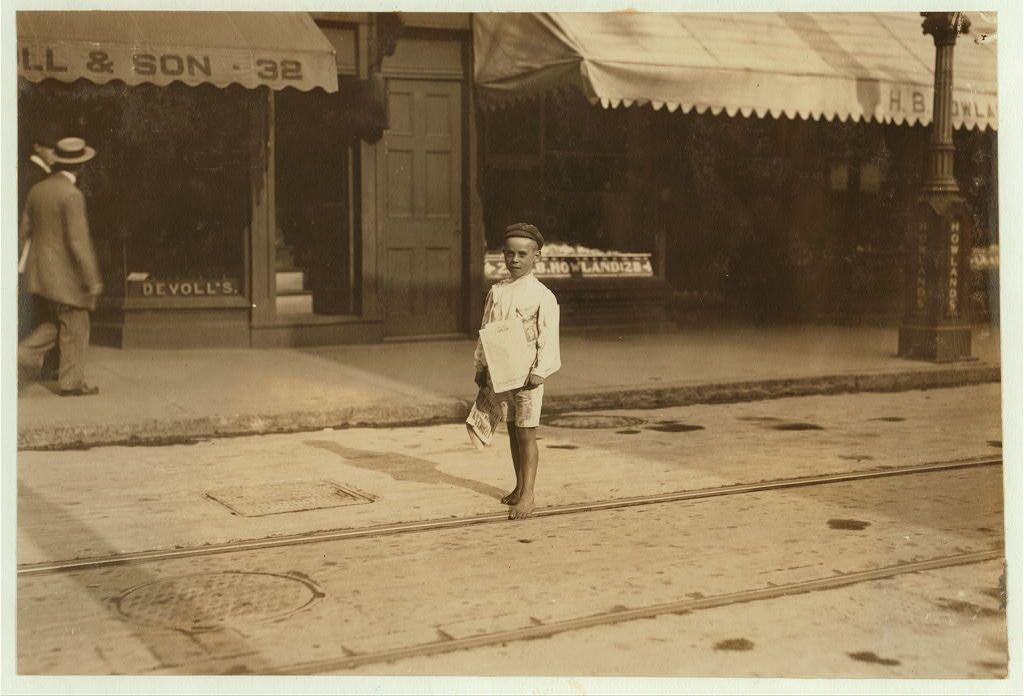
John Sims, 7 year old newsie, New Bedford, Mass. August 22, 1911. Evening. Richard K. Conant, Witness. Location: New Bedford, Massachusetts.

#JohnSims #NewBedford #RichardKConant #Massachusetts #HBDOWNLAND" #TSHOWLAND" #LewisHine #Photography #LewisHine #ChildLabour #ChildLabor

https://www.loc.gov/pictures/item/2018675382/

The image depicts a young boy standing on the sidewalk in an urban setting from around 1911. He appears to be wearing a white shirt with short sleeves, shorts, and shoes without socks or laces. The boy is holding what seems to be a newspaper under his arm while another paper lies discarded at his feet.

The street behind him features various storefronts such as "WILL & SON - 32" and "DEVOLL'S," indicating the presence of shops on both sides, including signs for hats ("H.B. DOWNLAND") and tobacco products ("T.S. HOWLAND"). The scene is set in what looks like a late summer or early autumn evening based on the lighting.

The image has a sepia-tone quality typical of old photographs from that era. It evokes a sense of daily life, labor, and innocence as captured by photographer Lewis Hine through his work with the National Child Labor Committee. The photograph is credited to John Sims (7 years old) being a newsie in New Bedford, Massachusetts on August 22, 1911, during an evening session taken by Richard K. Conant under witness conditions for documentation purposes.
The image depicts a young boy standing on the sidewalk in an urban setting from around 1911. He appears to be wearing a white shirt with short sleeves, shorts, and shoes without socks or laces. The boy is holding what seems to be a newspaper under his arm while another paper lies discarded at his feet. The street behind him features various storefronts such as "WILL & SON - 32" and "DEVOLL'S," indicating the presence of shops on both sides, including signs for hats ("H.B. DOWNLAND") and tobacco products ("T.S. HOWLAND"). The scene is set in what looks like a late summer or early autumn evening based on the lighting. The image has a sepia-tone quality typical of old photographs from that era. It evokes a sense of daily life, labor, and innocence as captured by photographer Lewis Hine through his work with the National Child Labor Committee. The photograph is credited to John Sims (7 years old) being a newsie in New Bedford, Massachusetts on August 22, 1911, during an evening session taken by Richard K. Conant under witness conditions for documentation purposes.
  • Copy link
  • Flag this post
  • Block
Lewis Hine
Lewis Hine
@LewisHine@mastodon.ozioso.online  ·  activity timestamp 15 hours ago

John Sims, 7 year old newsie, New Bedford, Mass. August 22, 1911. Evening. Richard K. Conant, Witness. Location: New Bedford, Massachusetts.

#JohnSims #NewBedford #RichardKConant #Massachusetts #HBDOWNLAND" #TSHOWLAND" #LewisHine #Photography #LewisHine #ChildLabour #ChildLabor

https://www.loc.gov/pictures/item/2018675382/

The image depicts a young boy standing on the sidewalk in an urban setting from around 1911. He appears to be wearing a white shirt with short sleeves, shorts, and shoes without socks or laces. The boy is holding what seems to be a newspaper under his arm while another paper lies discarded at his feet.

The street behind him features various storefronts such as "WILL & SON - 32" and "DEVOLL'S," indicating the presence of shops on both sides, including signs for hats ("H.B. DOWNLAND") and tobacco products ("T.S. HOWLAND"). The scene is set in what looks like a late summer or early autumn evening based on the lighting.

The image has a sepia-tone quality typical of old photographs from that era. It evokes a sense of daily life, labor, and innocence as captured by photographer Lewis Hine through his work with the National Child Labor Committee. The photograph is credited to John Sims (7 years old) being a newsie in New Bedford, Massachusetts on August 22, 1911, during an evening session taken by Richard K. Conant under witness conditions for documentation purposes.
The image depicts a young boy standing on the sidewalk in an urban setting from around 1911. He appears to be wearing a white shirt with short sleeves, shorts, and shoes without socks or laces. The boy is holding what seems to be a newspaper under his arm while another paper lies discarded at his feet. The street behind him features various storefronts such as "WILL & SON - 32" and "DEVOLL'S," indicating the presence of shops on both sides, including signs for hats ("H.B. DOWNLAND") and tobacco products ("T.S. HOWLAND"). The scene is set in what looks like a late summer or early autumn evening based on the lighting. The image has a sepia-tone quality typical of old photographs from that era. It evokes a sense of daily life, labor, and innocence as captured by photographer Lewis Hine through his work with the National Child Labor Committee. The photograph is credited to John Sims (7 years old) being a newsie in New Bedford, Massachusetts on August 22, 1911, during an evening session taken by Richard K. Conant under witness conditions for documentation purposes.
  • Copy link
  • Flag this post
  • Block
Photography Channel boosted
Lewis Hine
Lewis Hine
@LewisHine@mastodon.ozioso.online  ·  activity timestamp 17 hours ago

Group of workers in the Carding and weaving room of the Kilburn Mills. Location: New Bedford, Massachusetts.

#theKilburnMills #NewBedford #Massachusetts #KilburnMills #Photography #LewisHine #ChildLabour #ChildLabor

https://www.loc.gov/pictures/item/2018675379/

The image is a historical black and white photograph depicting a group of people lined up in an outdoor setting, possibly waiting to enter or having just exited a building. The individuals appear diverse, with both men and women present, many wearing hats typical of early 20th-century fashion. Some are dressed more formally than others, suggesting different social statuses within the group.

The architecture surrounding them features brick buildings indicative of urban development during that era. A few people hold what could be personal items or work-related materials such as satchels and bags. The street is paved with cobblestones, adding to the vintage feel of the scene. 

In the foreground on one side stands a figure in profile view who seems less engaged with others around him, possibly due to his attire that appears more casual than those waiting.

The photograph exudes an air of anticipation or fatigue among some individuals, suggesting they may be workers taking a break from their day's labor. The overall composition and the subject matter hint at life during industrial times in New Bedford, Massachusetts, potentially connected with textile production as suggested by one online reference linking it to Kilburn Mills.

The photograph captures not just people but also offers insights into societal norms of that time regarding attire, gender roles, social stratificati [...]

The image is a historical black and white photograph depicting a group of people lined up in an outdoor setting, possibly waiting to enter or having just exited a building. The individuals appear diverse, with both men and women present, many wearing hats typical of early 20th-century fashion. Some are dressed more formally than others, suggesting different social statuses within the group. The architecture surrounding them features brick buildings indicative of urban development during that era. A few people hold what could be personal items or work-related materials such as satchels and bags. The street is paved with cobblestones, adding to the vintage feel of the scene. In the foreground on one side stands a figure in profile view who seems less engaged with others around him, possibly due to his attire that appears more casual than those waiting. The photograph exudes an air of anticipation or fatigue among some individuals, suggesting they may be workers taking a break from their day's labor. The overall composition and the subject matter hint at life during industrial times in New Bedford, Massachusetts, potentially connected with textile production as suggested by one online reference linking it to Kilburn Mills. The photograph captures not just people but also offers insights into societal norms of that time regarding attire, gender roles, social stratificati [...]
  • Copy link
  • Flag this post
  • Block
Lewis Hine
Lewis Hine
@LewisHine@mastodon.ozioso.online  ·  activity timestamp 17 hours ago

Group of workers in the Carding and weaving room of the Kilburn Mills. Location: New Bedford, Massachusetts.

#theKilburnMills #NewBedford #Massachusetts #KilburnMills #Photography #LewisHine #ChildLabour #ChildLabor

https://www.loc.gov/pictures/item/2018675379/

The image is a historical black and white photograph depicting a group of people lined up in an outdoor setting, possibly waiting to enter or having just exited a building. The individuals appear diverse, with both men and women present, many wearing hats typical of early 20th-century fashion. Some are dressed more formally than others, suggesting different social statuses within the group.

The architecture surrounding them features brick buildings indicative of urban development during that era. A few people hold what could be personal items or work-related materials such as satchels and bags. The street is paved with cobblestones, adding to the vintage feel of the scene. 

In the foreground on one side stands a figure in profile view who seems less engaged with others around him, possibly due to his attire that appears more casual than those waiting.

The photograph exudes an air of anticipation or fatigue among some individuals, suggesting they may be workers taking a break from their day's labor. The overall composition and the subject matter hint at life during industrial times in New Bedford, Massachusetts, potentially connected with textile production as suggested by one online reference linking it to Kilburn Mills.

The photograph captures not just people but also offers insights into societal norms of that time regarding attire, gender roles, social stratificati [...]
The image is a historical black and white photograph depicting a group of people lined up in an outdoor setting, possibly waiting to enter or having just exited a building. The individuals appear diverse, with both men and women present, many wearing hats typical of early 20th-century fashion. Some are dressed more formally than others, suggesting different social statuses within the group. The architecture surrounding them features brick buildings indicative of urban development during that era. A few people hold what could be personal items or work-related materials such as satchels and bags. The street is paved with cobblestones, adding to the vintage feel of the scene. In the foreground on one side stands a figure in profile view who seems less engaged with others around him, possibly due to his attire that appears more casual than those waiting. The photograph exudes an air of anticipation or fatigue among some individuals, suggesting they may be workers taking a break from their day's labor. The overall composition and the subject matter hint at life during industrial times in New Bedford, Massachusetts, potentially connected with textile production as suggested by one online reference linking it to Kilburn Mills. The photograph captures not just people but also offers insights into societal norms of that time regarding attire, gender roles, social stratificati [...]
  • Copy link
  • Flag this post
  • Block
Photography Channel boosted
Lewis Hine
Lewis Hine
@LewisHine@mastodon.ozioso.online  ·  activity timestamp 19 hours ago

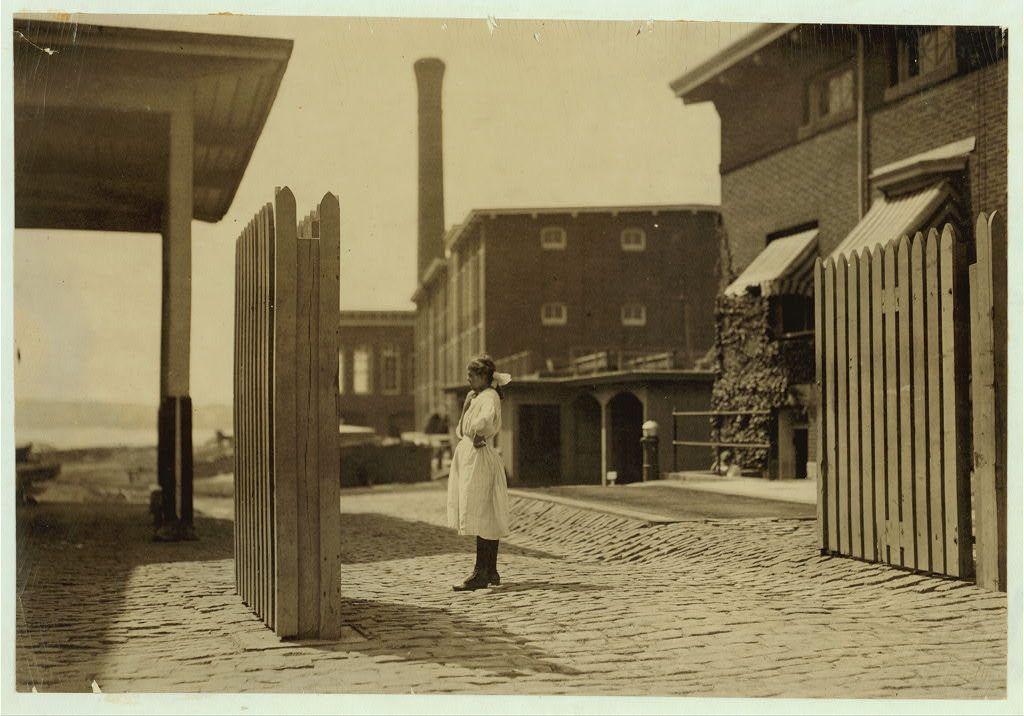
Working girl about 14 standing at gate. R. K. Conant - Witness. Location: New Bedford, Massachusetts.

#RKConant-Witness #NewBedford #Massachusetts #RKConant #Photography #LewisHine #ChildLabour #ChildLabor

https://www.loc.gov/pictures/item/2018675376/

A sepia-toned photograph depicts a historical scene with an individual standing at the entrance of what appears to be a factory or industrial building. The person, likely female based on appearance and attire which includes dark boots and white garments that suggest work clothes from past eras, is positioned in front of tall wooden slats resembling gates. They are facing away towards the structure's interior where several large buildings with brickwork can be seen under an overcast sky.

The architecture around indicates a late 19th or early 20th-century setting with features such as chimney stacks and what looks to be industrial machinery in the distant background, hinting at heavy industry. The cobblestone street is empty save for this individual's presence, suggesting perhaps a moment of pause amidst work hours.

The photograph has an aged look, which enhances its historical feel and suggests it was taken during that era captured by R.K. Conant as per provided metadata indicating "Working girl about 14 standing at gate." This image captures the essence of industrial life with emphasis on laborers in a specific setting—New Bedford, Massachusetts—as noted in the source link.

In summary, this photograph embodies historical work-life conditions through its depiction of an individual amidst an early industrial landscape.
A sepia-toned photograph depicts a historical scene with an individual standing at the entrance of what appears to be a factory or industrial building. The person, likely female based on appearance and attire which includes dark boots and white garments that suggest work clothes from past eras, is positioned in front of tall wooden slats resembling gates. They are facing away towards the structure's interior where several large buildings with brickwork can be seen under an overcast sky. The architecture around indicates a late 19th or early 20th-century setting with features such as chimney stacks and what looks to be industrial machinery in the distant background, hinting at heavy industry. The cobblestone street is empty save for this individual's presence, suggesting perhaps a moment of pause amidst work hours. The photograph has an aged look, which enhances its historical feel and suggests it was taken during that era captured by R.K. Conant as per provided metadata indicating "Working girl about 14 standing at gate." This image captures the essence of industrial life with emphasis on laborers in a specific setting—New Bedford, Massachusetts—as noted in the source link. In summary, this photograph embodies historical work-life conditions through its depiction of an individual amidst an early industrial landscape.
  • Copy link
  • Flag this post
  • Block
Lewis Hine
Lewis Hine
@LewisHine@mastodon.ozioso.online  ·  activity timestamp 19 hours ago

Working girl about 14 standing at gate. R. K. Conant - Witness. Location: New Bedford, Massachusetts.

#RKConant-Witness #NewBedford #Massachusetts #RKConant #Photography #LewisHine #ChildLabour #ChildLabor

https://www.loc.gov/pictures/item/2018675376/

A sepia-toned photograph depicts a historical scene with an individual standing at the entrance of what appears to be a factory or industrial building. The person, likely female based on appearance and attire which includes dark boots and white garments that suggest work clothes from past eras, is positioned in front of tall wooden slats resembling gates. They are facing away towards the structure's interior where several large buildings with brickwork can be seen under an overcast sky.

The architecture around indicates a late 19th or early 20th-century setting with features such as chimney stacks and what looks to be industrial machinery in the distant background, hinting at heavy industry. The cobblestone street is empty save for this individual's presence, suggesting perhaps a moment of pause amidst work hours.

The photograph has an aged look, which enhances its historical feel and suggests it was taken during that era captured by R.K. Conant as per provided metadata indicating "Working girl about 14 standing at gate." This image captures the essence of industrial life with emphasis on laborers in a specific setting—New Bedford, Massachusetts—as noted in the source link.

In summary, this photograph embodies historical work-life conditions through its depiction of an individual amidst an early industrial landscape.
A sepia-toned photograph depicts a historical scene with an individual standing at the entrance of what appears to be a factory or industrial building. The person, likely female based on appearance and attire which includes dark boots and white garments that suggest work clothes from past eras, is positioned in front of tall wooden slats resembling gates. They are facing away towards the structure's interior where several large buildings with brickwork can be seen under an overcast sky. The architecture around indicates a late 19th or early 20th-century setting with features such as chimney stacks and what looks to be industrial machinery in the distant background, hinting at heavy industry. The cobblestone street is empty save for this individual's presence, suggesting perhaps a moment of pause amidst work hours. The photograph has an aged look, which enhances its historical feel and suggests it was taken during that era captured by R.K. Conant as per provided metadata indicating "Working girl about 14 standing at gate." This image captures the essence of industrial life with emphasis on laborers in a specific setting—New Bedford, Massachusetts—as noted in the source link. In summary, this photograph embodies historical work-life conditions through its depiction of an individual amidst an early industrial landscape.
  • Copy link
  • Flag this post
  • Block

Indieweb Studio

This is a relaxed, online social space for the indieweb community, brought to you by indieweb.social.

Please abide by our code of conduct and have a nice time!

Indieweb Studio: About · Code of conduct · Privacy · Users · Instances
Bonfire social · 1.0.2-alpha.7 no JS en
Automatic federation enabled
Log in Create account
  • Explore
  • About
  • Members
  • Code of Conduct