The surprisingly connected origins of "detective" and "thug".
#etymology #wordnerd #linguistics #HistoricalLinguistics #language #words #lingcomm #detective #thug
The surprisingly connected origins of "detective" and "thug".
#etymology #wordnerd #linguistics #HistoricalLinguistics #language #words #lingcomm #detective #thug
The surprisingly connected origins of "detective" and "thug".
#etymology #wordnerd #linguistics #HistoricalLinguistics #language #words #lingcomm #detective #thug
#WritersCoffeeClub Feb. 3 – What signature marks your work as definitively and effectively yours?
If it's English-language #historicalFiction and has a reconstruction of premodern Korean names based on philological research, historical #linguistics, and #etymology, it is almost certainly mine because I'm the only one to my knowledge connecting this linguistic scholarship to fiction in the Anglosphere. The modern phonetics of Sino-Korean Hanja are used indiscriminately in period fiction, in my opinion, despite a wealth of evidence that people in the period pronounced some of these words very differently.
This kind of linguistic reconstruction is especially important in my big WIP, which was pretty much launched by one such reconstruction of a 1st century BCE name. A short story prominently featuring speculative reconstructions of 15th century names (and not the names of royals, nobility, or men) is currently out on submission 🤞
#WritersCoffeeClub Feb. 3 – What signature marks your work as definitively and effectively yours?
If it's English-language #historicalFiction and has a reconstruction of premodern Korean names based on philological research, historical #linguistics, and #etymology, it is almost certainly mine because I'm the only one to my knowledge connecting this linguistic scholarship to fiction in the Anglosphere. The modern phonetics of Sino-Korean Hanja are used indiscriminately in period fiction, in my opinion, despite a wealth of evidence that people in the period pronounced some of these words very differently.
This kind of linguistic reconstruction is especially important in my big WIP, which was pretty much launched by one such reconstruction of a 1st century BCE name. A short story prominently featuring speculative reconstructions of 15th century names (and not the names of royals, nobility, or men) is currently out on submission 🤞

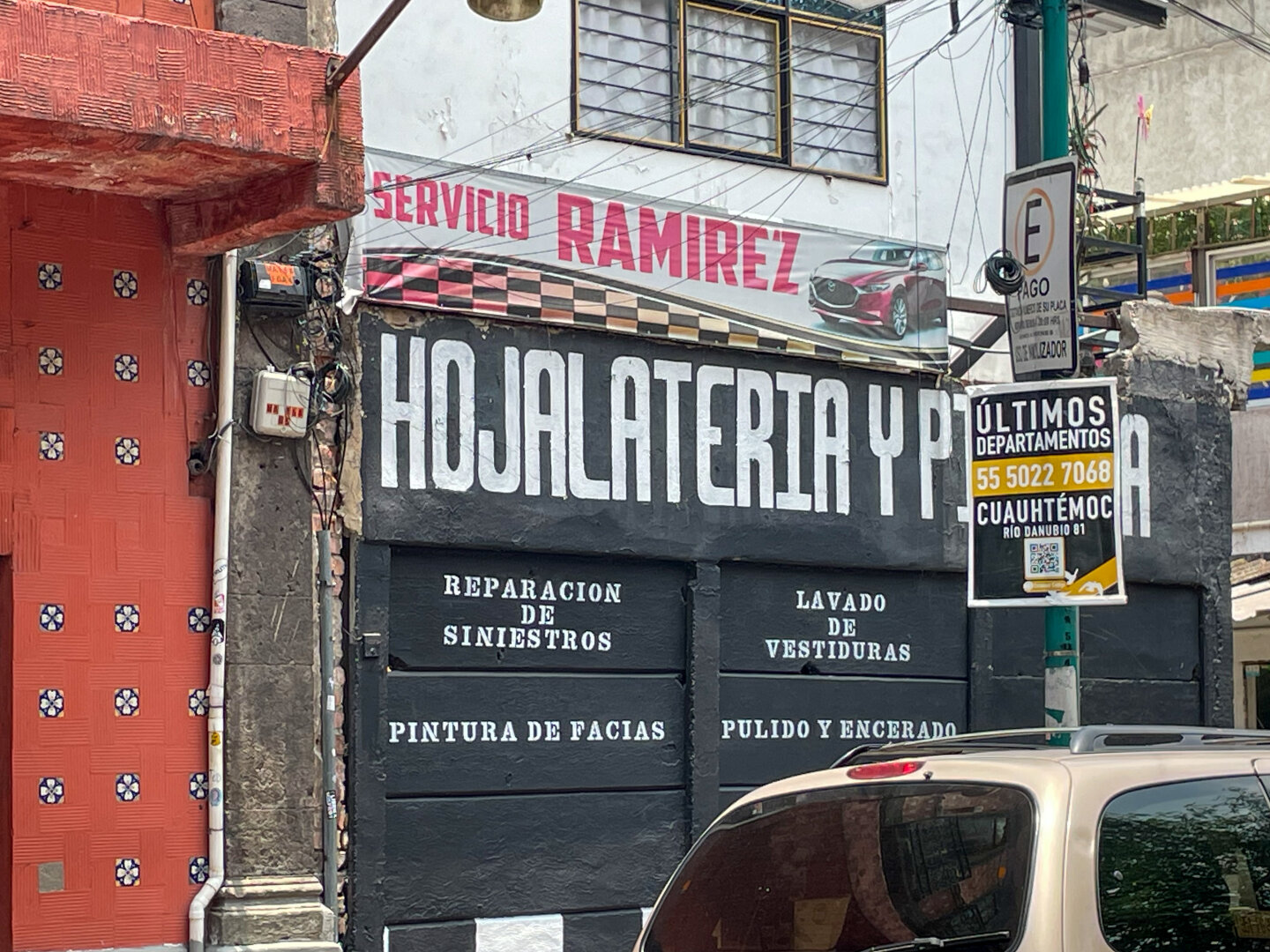
No. 26 in my photo collection of signs of unique Spanish-language business names ending in –ería: HOJALATERÍA
In Spanish, "hoja" means "sheet" and "lata" means "can" (the metal food container) or simply "tin", so "hojalata" is a compound of these two words to indicate tinplate or tin-plated steel, and a "hojalatero/a" is a tinsmith. So, "hojalatería" is a tinsmith's shop or, in contemporary usage, an auto body repair shop, like this one in Mexico City.
June 2023 | Mexico City, Mexico
Use the Collections link under my profile to view all of the –ería photos I've posted so far.
#spanish #language #signs #streetphotography #urbanexploration #urbanwalking #graphicdesign #etymology
No. 26 in my photo collection of signs of unique Spanish-language business names ending in –ería: HOJALATERÍA
In Spanish, "hoja" means "sheet" and "lata" means "can" (the metal food container) or simply "tin", so "hojalata" is a compound of these two words to indicate tinplate or tin-plated steel, and a "hojalatero/a" is a tinsmith. So, "hojalatería" is a tinsmith's shop or, in contemporary usage, an auto body repair shop, like this one in Mexico City.
June 2023 | Mexico City, Mexico
Use the Collections link under my profile to view all of the –ería photos I've posted so far.
#spanish #language #signs #streetphotography #urbanexploration #urbanwalking #graphicdesign #etymology
I don't speak nor understand Spanish but I know a ton of loanwords in Tagalog. This video by #Langfocus is very interesting and I learned several new things. Like the fact that the Tagalog word for peanut 🥜 (“manî”) comes from Taíno and not Spanish or Nahuatl, and that “barkada” (group of friends) comes from the Spanish for “boatload”.
Huh, English speakers changed the spelling of what is now "February" to put that first "r" back in there, even though we don't say it. Thanks, team.