Discussion
Loading...

#Tag

Log in
  • Sign up
  • About
  • Code of conduct
  • Privacy
  • Users
  • Instances
  • About Bonfire
Photography Channel boosted
Dorothea Lange
Dorothea Lange
@DorotheaLange@mastodon.ozioso.online  ·  activity timestamp 25 minutes ago

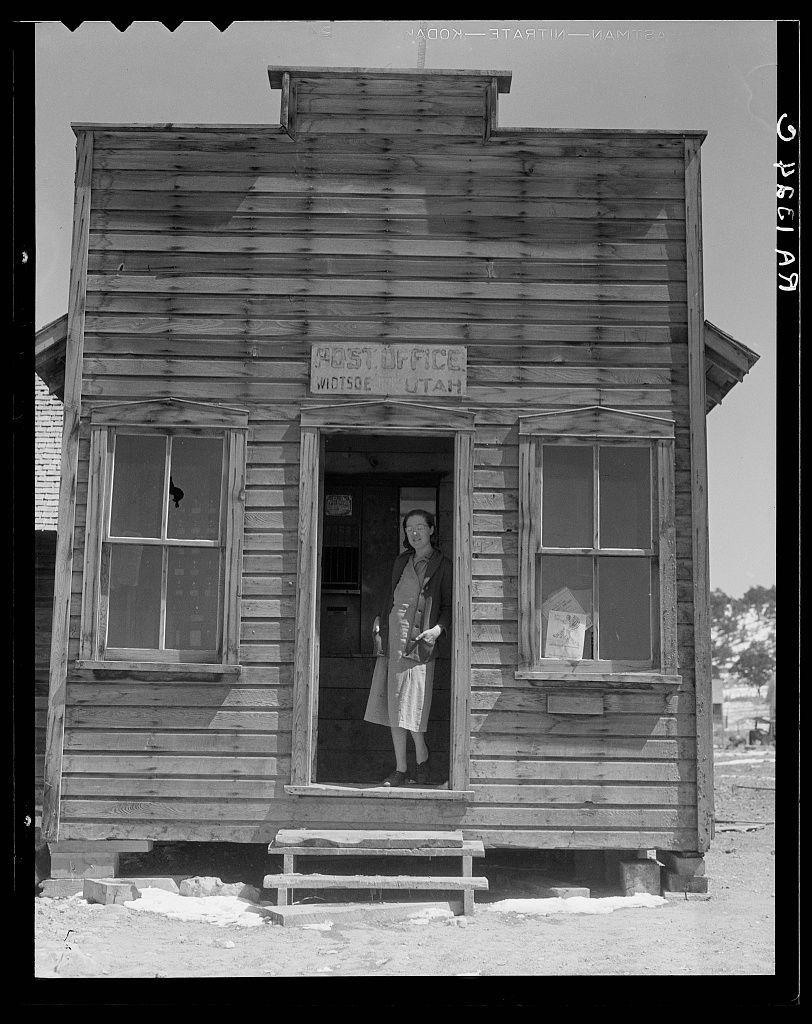
Post office and postmistress, view number two. Widtsoe, Utah

#Widtsoe #America #undefined #photography #DorotheaLange

https://www.loc.gov/pictures/item/2017759434/

The image is a black and white photograph of an old wooden building with the sign "POST OFFICE UTAH WIDTSONE" on its facade. The structure appears to be quite small, possibly serving as both a residence and office for the postmistress mentioned in the title. A woman stands at the door threshold, slightly leaning out onto the porch area of the house. She is dressed modestly with what seems like an apron or work dress over her clothing.

The building shows signs of wear and weathering, indicating age and possible economic hardship. There's a lack of modern amenities such as electricity or running water that could be expected in more contemporary buildings. The ground around the post office appears dry but slightly barren, suggesting either rural conditions or a region experiencing drought at the time this photograph was taken.

The sky is clear with no visible clouds, which might indicate a sunny day and perhaps even hint towards the arid climate typical of Utah's landscape during that period. In front of the building are some steps leading up to what seems like an outside door mat placed on top of small white blocks or bricks for easy access over uneven ground.

The photograph captures not just the physical attributes but also conveys a sense of historical context, possibly illustrating rural life and working conditions in mid-20th-century America.
The image is a black and white photograph of an old wooden building with the sign "POST OFFICE UTAH WIDTSONE" on its facade. The structure appears to be quite small, possibly serving as both a residence and office for the postmistress mentioned in the title. A woman stands at the door threshold, slightly leaning out onto the porch area of the house. She is dressed modestly with what seems like an apron or work dress over her clothing. The building shows signs of wear and weathering, indicating age and possible economic hardship. There's a lack of modern amenities such as electricity or running water that could be expected in more contemporary buildings. The ground around the post office appears dry but slightly barren, suggesting either rural conditions or a region experiencing drought at the time this photograph was taken. The sky is clear with no visible clouds, which might indicate a sunny day and perhaps even hint towards the arid climate typical of Utah's landscape during that period. In front of the building are some steps leading up to what seems like an outside door mat placed on top of small white blocks or bricks for easy access over uneven ground. The photograph captures not just the physical attributes but also conveys a sense of historical context, possibly illustrating rural life and working conditions in mid-20th-century America.
  • Copy link
  • Flag this post
  • Block
Dorothea Lange
Dorothea Lange
@DorotheaLange@mastodon.ozioso.online  ·  activity timestamp 25 minutes ago

Post office and postmistress, view number two. Widtsoe, Utah

#Widtsoe #America #undefined #photography #DorotheaLange

https://www.loc.gov/pictures/item/2017759434/

The image is a black and white photograph of an old wooden building with the sign "POST OFFICE UTAH WIDTSONE" on its facade. The structure appears to be quite small, possibly serving as both a residence and office for the postmistress mentioned in the title. A woman stands at the door threshold, slightly leaning out onto the porch area of the house. She is dressed modestly with what seems like an apron or work dress over her clothing.

The building shows signs of wear and weathering, indicating age and possible economic hardship. There's a lack of modern amenities such as electricity or running water that could be expected in more contemporary buildings. The ground around the post office appears dry but slightly barren, suggesting either rural conditions or a region experiencing drought at the time this photograph was taken.

The sky is clear with no visible clouds, which might indicate a sunny day and perhaps even hint towards the arid climate typical of Utah's landscape during that period. In front of the building are some steps leading up to what seems like an outside door mat placed on top of small white blocks or bricks for easy access over uneven ground.

The photograph captures not just the physical attributes but also conveys a sense of historical context, possibly illustrating rural life and working conditions in mid-20th-century America.
The image is a black and white photograph of an old wooden building with the sign "POST OFFICE UTAH WIDTSONE" on its facade. The structure appears to be quite small, possibly serving as both a residence and office for the postmistress mentioned in the title. A woman stands at the door threshold, slightly leaning out onto the porch area of the house. She is dressed modestly with what seems like an apron or work dress over her clothing. The building shows signs of wear and weathering, indicating age and possible economic hardship. There's a lack of modern amenities such as electricity or running water that could be expected in more contemporary buildings. The ground around the post office appears dry but slightly barren, suggesting either rural conditions or a region experiencing drought at the time this photograph was taken. The sky is clear with no visible clouds, which might indicate a sunny day and perhaps even hint towards the arid climate typical of Utah's landscape during that period. In front of the building are some steps leading up to what seems like an outside door mat placed on top of small white blocks or bricks for easy access over uneven ground. The photograph captures not just the physical attributes but also conveys a sense of historical context, possibly illustrating rural life and working conditions in mid-20th-century America.
  • Copy link
  • Flag this post
  • Block
Photography Channel boosted
Dorothea Lange
Dorothea Lange
@DorotheaLange@mastodon.ozioso.online  ·  activity timestamp 3 hours ago

Widtsoe post office. Utah

#Widtsoe #theAmericanWest #America #undefined #photography #DorotheaLange

https://www.loc.gov/pictures/item/2017759432/

The black and white photograph depicts a rustic, two-story structure with wooden siding, which appears to be an old building possibly located in the American West. The roof is shingled and has visible overhangs on both levels, suggesting it's designed for weather protection common in frontier architecture.

A man stands at what seems like a doorway or entrance of this dwelling, looking off into the distance with his hands behind him. His posture indicates he might be waiting or in thought. There are multiple windows: some rectangular and others triangular due to the sloped roof design.

The building is set on an expansive dirt lot with sparse vegetation, indicative of arid climate conditions typical for rural Western environments. The ground shows patches where grass has grown amidst the soil, hinting at infrequent rainfall or a dry season when this photo was taken.

In front of the main structure, there's a fenced-in area that contains what appears to be a pen with an animal inside; possibly cattle as suggested by its size and shape relative to typical livestock. This suggests agricultural activity on-site.

The building is identified as "Widtsoe post office" in Utah through linked external resources, which could imply historical significance or serve as documentation of rural postal systems' role during that period.

Beyond the immediate vicinity of this structure are m [...]
The black and white photograph depicts a rustic, two-story structure with wooden siding, which appears to be an old building possibly located in the American West. The roof is shingled and has visible overhangs on both levels, suggesting it's designed for weather protection common in frontier architecture. A man stands at what seems like a doorway or entrance of this dwelling, looking off into the distance with his hands behind him. His posture indicates he might be waiting or in thought. There are multiple windows: some rectangular and others triangular due to the sloped roof design. The building is set on an expansive dirt lot with sparse vegetation, indicative of arid climate conditions typical for rural Western environments. The ground shows patches where grass has grown amidst the soil, hinting at infrequent rainfall or a dry season when this photo was taken. In front of the main structure, there's a fenced-in area that contains what appears to be a pen with an animal inside; possibly cattle as suggested by its size and shape relative to typical livestock. This suggests agricultural activity on-site. The building is identified as "Widtsoe post office" in Utah through linked external resources, which could imply historical significance or serve as documentation of rural postal systems' role during that period. Beyond the immediate vicinity of this structure are m [...]
  • Copy link
  • Flag this post
  • Block
Dorothea Lange
Dorothea Lange
@DorotheaLange@mastodon.ozioso.online  ·  activity timestamp 3 hours ago

Widtsoe post office. Utah

#Widtsoe #theAmericanWest #America #undefined #photography #DorotheaLange

https://www.loc.gov/pictures/item/2017759432/

The black and white photograph depicts a rustic, two-story structure with wooden siding, which appears to be an old building possibly located in the American West. The roof is shingled and has visible overhangs on both levels, suggesting it's designed for weather protection common in frontier architecture.

A man stands at what seems like a doorway or entrance of this dwelling, looking off into the distance with his hands behind him. His posture indicates he might be waiting or in thought. There are multiple windows: some rectangular and others triangular due to the sloped roof design.

The building is set on an expansive dirt lot with sparse vegetation, indicative of arid climate conditions typical for rural Western environments. The ground shows patches where grass has grown amidst the soil, hinting at infrequent rainfall or a dry season when this photo was taken.

In front of the main structure, there's a fenced-in area that contains what appears to be a pen with an animal inside; possibly cattle as suggested by its size and shape relative to typical livestock. This suggests agricultural activity on-site.

The building is identified as "Widtsoe post office" in Utah through linked external resources, which could imply historical significance or serve as documentation of rural postal systems' role during that period.

Beyond the immediate vicinity of this structure are m [...]
The black and white photograph depicts a rustic, two-story structure with wooden siding, which appears to be an old building possibly located in the American West. The roof is shingled and has visible overhangs on both levels, suggesting it's designed for weather protection common in frontier architecture. A man stands at what seems like a doorway or entrance of this dwelling, looking off into the distance with his hands behind him. His posture indicates he might be waiting or in thought. There are multiple windows: some rectangular and others triangular due to the sloped roof design. The building is set on an expansive dirt lot with sparse vegetation, indicative of arid climate conditions typical for rural Western environments. The ground shows patches where grass has grown amidst the soil, hinting at infrequent rainfall or a dry season when this photo was taken. In front of the main structure, there's a fenced-in area that contains what appears to be a pen with an animal inside; possibly cattle as suggested by its size and shape relative to typical livestock. This suggests agricultural activity on-site. The building is identified as "Widtsoe post office" in Utah through linked external resources, which could imply historical significance or serve as documentation of rural postal systems' role during that period. Beyond the immediate vicinity of this structure are m [...]
  • Copy link
  • Flag this post
  • Block
Photography Channel boosted
Dorothea Lange
Dorothea Lange
@DorotheaLange@mastodon.ozioso.online  ·  activity timestamp 7 hours ago

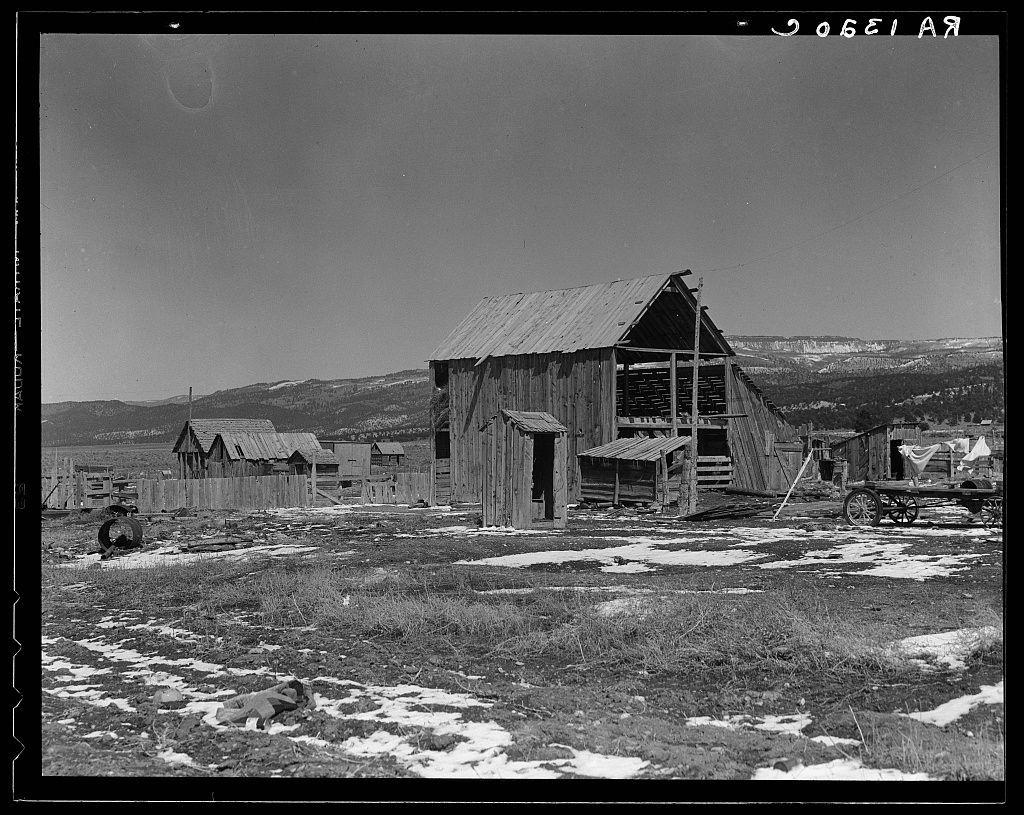
Farm buildings in the purchase area. Widtsoe, Utah

#Widtsoe #undefined #photography #DorotheaLange

https://www.loc.gov/pictures/item/2017759430/

The image depicts a rustic rural scene with several wooden structures that appear to be old barns or farm buildings. The central structure, which has an aged and weathered appearance, features exposed interior beams on its walls and is topped by a corrugated metal roof, showing signs of wear and rust. To the left stands another building resembling a small shed or storage unit with similar construction elements.

Surrounding these structures are fences made from wooden planks and poles, enclosing what seems to be farmland given patches of bare earth and sparse snow on the ground indicating remnants of winter. The landscape extends into rolling hills in the background under an overcast sky, suggesting a remote rural setting possibly during late fall or early spring.

In front of these buildings is a large metal wheel lying horizontally near one structure's base, likely part of farm equipment such as a wagon. Other items and debris are scattered around, adding to the impression that this place sees regular use but also shows signs of neglect over time. The overall atmosphere evokes a sense of rustic simplicity and historical rural life.
The image depicts a rustic rural scene with several wooden structures that appear to be old barns or farm buildings. The central structure, which has an aged and weathered appearance, features exposed interior beams on its walls and is topped by a corrugated metal roof, showing signs of wear and rust. To the left stands another building resembling a small shed or storage unit with similar construction elements. Surrounding these structures are fences made from wooden planks and poles, enclosing what seems to be farmland given patches of bare earth and sparse snow on the ground indicating remnants of winter. The landscape extends into rolling hills in the background under an overcast sky, suggesting a remote rural setting possibly during late fall or early spring. In front of these buildings is a large metal wheel lying horizontally near one structure's base, likely part of farm equipment such as a wagon. Other items and debris are scattered around, adding to the impression that this place sees regular use but also shows signs of neglect over time. The overall atmosphere evokes a sense of rustic simplicity and historical rural life.
  • Copy link
  • Flag this post
  • Block
Dorothea Lange
Dorothea Lange
@DorotheaLange@mastodon.ozioso.online  ·  activity timestamp 7 hours ago

Farm buildings in the purchase area. Widtsoe, Utah

#Widtsoe #undefined #photography #DorotheaLange

https://www.loc.gov/pictures/item/2017759430/

The image depicts a rustic rural scene with several wooden structures that appear to be old barns or farm buildings. The central structure, which has an aged and weathered appearance, features exposed interior beams on its walls and is topped by a corrugated metal roof, showing signs of wear and rust. To the left stands another building resembling a small shed or storage unit with similar construction elements.

Surrounding these structures are fences made from wooden planks and poles, enclosing what seems to be farmland given patches of bare earth and sparse snow on the ground indicating remnants of winter. The landscape extends into rolling hills in the background under an overcast sky, suggesting a remote rural setting possibly during late fall or early spring.

In front of these buildings is a large metal wheel lying horizontally near one structure's base, likely part of farm equipment such as a wagon. Other items and debris are scattered around, adding to the impression that this place sees regular use but also shows signs of neglect over time. The overall atmosphere evokes a sense of rustic simplicity and historical rural life.
The image depicts a rustic rural scene with several wooden structures that appear to be old barns or farm buildings. The central structure, which has an aged and weathered appearance, features exposed interior beams on its walls and is topped by a corrugated metal roof, showing signs of wear and rust. To the left stands another building resembling a small shed or storage unit with similar construction elements. Surrounding these structures are fences made from wooden planks and poles, enclosing what seems to be farmland given patches of bare earth and sparse snow on the ground indicating remnants of winter. The landscape extends into rolling hills in the background under an overcast sky, suggesting a remote rural setting possibly during late fall or early spring. In front of these buildings is a large metal wheel lying horizontally near one structure's base, likely part of farm equipment such as a wagon. Other items and debris are scattered around, adding to the impression that this place sees regular use but also shows signs of neglect over time. The overall atmosphere evokes a sense of rustic simplicity and historical rural life.
  • Copy link
  • Flag this post
  • Block
Photography Channel boosted
Dorothea Lange
Dorothea Lange
@DorotheaLange@mastodon.ozioso.online  ·  activity timestamp 15 hours ago

Widtsoe land use adjustment project. Garfield County, Utah. Excavating new spillway of Tropic Dam

#Widtsoe #GarfieldCounty #TropicDam #undefined #photography #DorotheaLange

https://www.loc.gov/pictures/item/2017762899/

The image depicts a historical black and white photograph showing several individuals working with horses on a rugged terrain, likely engaged in construction or labor-intensive work. The scene appears to be from an earlier time period, suggested by the clothing style of the workers and the absence of modern machinery.

In the foreground, four men are actively involved in handling large rocks while being assisted by two mules that appear yoked together. One man is bending over to lift a rock using his hands, another stands upright with one hand on his hip observing the task, and the other two men sit or kneel amongst the scattered stones.

The middle ground shows more individuals, including four horse-drawn wagons attached to additional horses. These figures are clustered around what appears to be a mound of earth or rocks being transported by the mules. The people seem focused on their tasks, with some working and others possibly taking brief rests as indicated by one individual slouched over.

The background reveals an expansive landscape with undulating terrain leading towards trees in the distance under a cloudy sky. There is no visible water body directly associated with dam construction from this vantage point; however, it implies such work was part of larger land use adjustments mentioned in the context provided.

Additional information about this image can be found [...]
The image depicts a historical black and white photograph showing several individuals working with horses on a rugged terrain, likely engaged in construction or labor-intensive work. The scene appears to be from an earlier time period, suggested by the clothing style of the workers and the absence of modern machinery. In the foreground, four men are actively involved in handling large rocks while being assisted by two mules that appear yoked together. One man is bending over to lift a rock using his hands, another stands upright with one hand on his hip observing the task, and the other two men sit or kneel amongst the scattered stones. The middle ground shows more individuals, including four horse-drawn wagons attached to additional horses. These figures are clustered around what appears to be a mound of earth or rocks being transported by the mules. The people seem focused on their tasks, with some working and others possibly taking brief rests as indicated by one individual slouched over. The background reveals an expansive landscape with undulating terrain leading towards trees in the distance under a cloudy sky. There is no visible water body directly associated with dam construction from this vantage point; however, it implies such work was part of larger land use adjustments mentioned in the context provided. Additional information about this image can be found [...]
  • Copy link
  • Flag this post
  • Block
Dorothea Lange
Dorothea Lange
@DorotheaLange@mastodon.ozioso.online  ·  activity timestamp 15 hours ago

Widtsoe land use adjustment project. Garfield County, Utah. Excavating new spillway of Tropic Dam

#Widtsoe #GarfieldCounty #TropicDam #undefined #photography #DorotheaLange

https://www.loc.gov/pictures/item/2017762899/

The image depicts a historical black and white photograph showing several individuals working with horses on a rugged terrain, likely engaged in construction or labor-intensive work. The scene appears to be from an earlier time period, suggested by the clothing style of the workers and the absence of modern machinery.

In the foreground, four men are actively involved in handling large rocks while being assisted by two mules that appear yoked together. One man is bending over to lift a rock using his hands, another stands upright with one hand on his hip observing the task, and the other two men sit or kneel amongst the scattered stones.

The middle ground shows more individuals, including four horse-drawn wagons attached to additional horses. These figures are clustered around what appears to be a mound of earth or rocks being transported by the mules. The people seem focused on their tasks, with some working and others possibly taking brief rests as indicated by one individual slouched over.

The background reveals an expansive landscape with undulating terrain leading towards trees in the distance under a cloudy sky. There is no visible water body directly associated with dam construction from this vantage point; however, it implies such work was part of larger land use adjustments mentioned in the context provided.

Additional information about this image can be found [...]
The image depicts a historical black and white photograph showing several individuals working with horses on a rugged terrain, likely engaged in construction or labor-intensive work. The scene appears to be from an earlier time period, suggested by the clothing style of the workers and the absence of modern machinery. In the foreground, four men are actively involved in handling large rocks while being assisted by two mules that appear yoked together. One man is bending over to lift a rock using his hands, another stands upright with one hand on his hip observing the task, and the other two men sit or kneel amongst the scattered stones. The middle ground shows more individuals, including four horse-drawn wagons attached to additional horses. These figures are clustered around what appears to be a mound of earth or rocks being transported by the mules. The people seem focused on their tasks, with some working and others possibly taking brief rests as indicated by one individual slouched over. The background reveals an expansive landscape with undulating terrain leading towards trees in the distance under a cloudy sky. There is no visible water body directly associated with dam construction from this vantage point; however, it implies such work was part of larger land use adjustments mentioned in the context provided. Additional information about this image can be found [...]
  • Copy link
  • Flag this post
  • Block
Photography Channel boosted
Dorothea Lange
Dorothea Lange
@DorotheaLange@mastodon.ozioso.online  ·  activity timestamp 3 days ago

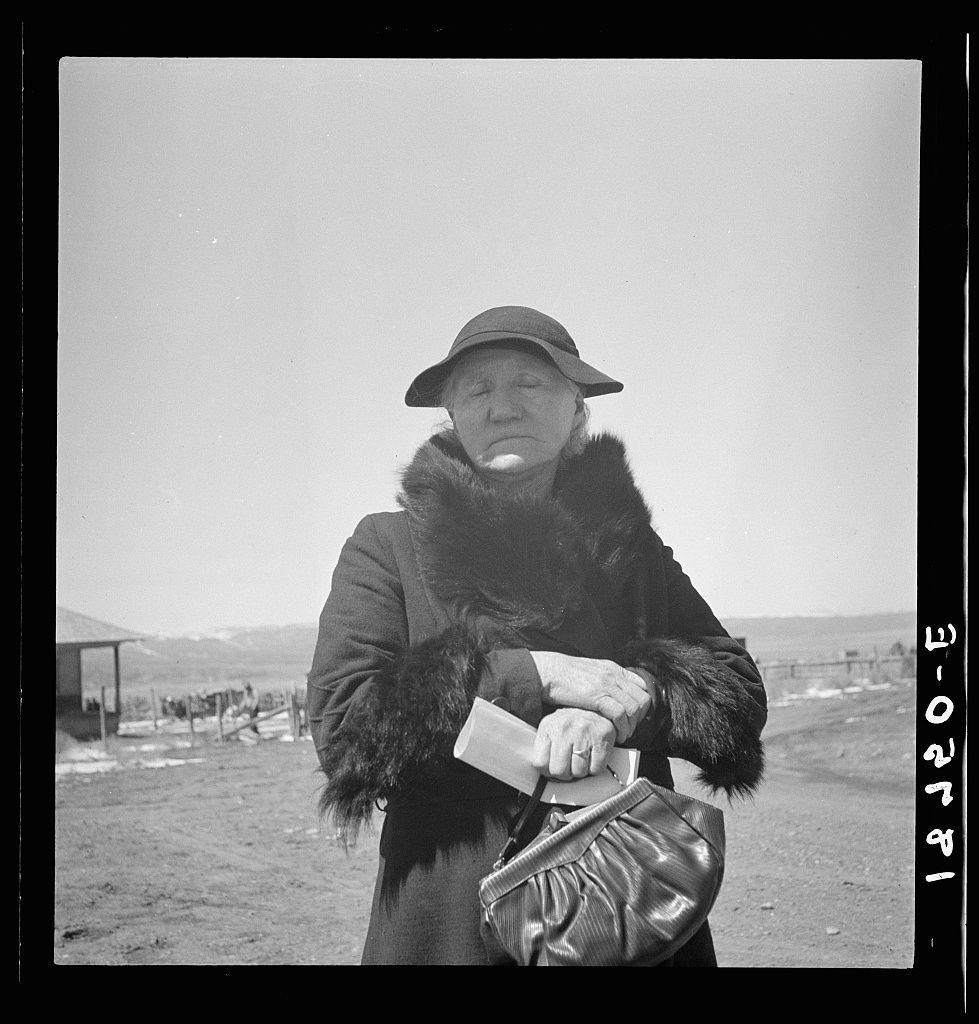
Widtsoe, Utah. Morman i.e. Mormon woman, native of Denmark, receiving her first old age assistance check

#Widtsoe #Morman #Mormon #Denmark #first #DorotheaLange #FranklinDRoosevelts #America #undefined #photography #DorotheaLange

https://www.loc.gov/pictures/item/2017771146/

The image is a black and white photograph depicting an elderly woman standing outdoors. She wears a dark coat adorned with fur trim, including the collar and cuffs, suggesting cold weather attire typical of early to mid-20th century fashion. The woman has her eyes closed or squinting slightly, appears in profile view from behind a barrier such as a gate or fence, which is visible extending into the distance on both sides.
She wears a broad-brimmed hat and carries two items: one small object tucked under her arm that could be money or another item of interest to her, and a shiny leather handbag with noticeable stitching. The setting looks barren; there's an open field behind her with faint outlines suggesting farm structures like sheds in the distance.
The image has visible textual metadata overlays indicating it was taken on April 12th at Widtsoe, Utah by Dorothea Lange for the Farm Security Administration (FSA), a program of the U.S. Department of Agriculture during Franklin D. Roosevelt's New Deal initiative. The photo captures an everyday moment with historical context related to social security and rural life in America during that era.
The image is a black and white photograph depicting an elderly woman standing outdoors. She wears a dark coat adorned with fur trim, including the collar and cuffs, suggesting cold weather attire typical of early to mid-20th century fashion. The woman has her eyes closed or squinting slightly, appears in profile view from behind a barrier such as a gate or fence, which is visible extending into the distance on both sides. She wears a broad-brimmed hat and carries two items: one small object tucked under her arm that could be money or another item of interest to her, and a shiny leather handbag with noticeable stitching. The setting looks barren; there's an open field behind her with faint outlines suggesting farm structures like sheds in the distance. The image has visible textual metadata overlays indicating it was taken on April 12th at Widtsoe, Utah by Dorothea Lange for the Farm Security Administration (FSA), a program of the U.S. Department of Agriculture during Franklin D. Roosevelt's New Deal initiative. The photo captures an everyday moment with historical context related to social security and rural life in America during that era.
  • Copy link
  • Flag this post
  • Block
Dorothea Lange
Dorothea Lange
@DorotheaLange@mastodon.ozioso.online  ·  activity timestamp 3 days ago

Widtsoe, Utah. Morman i.e. Mormon woman, native of Denmark, receiving her first old age assistance check

#Widtsoe #Morman #Mormon #Denmark #first #DorotheaLange #FranklinDRoosevelts #America #undefined #photography #DorotheaLange

https://www.loc.gov/pictures/item/2017771146/

The image is a black and white photograph depicting an elderly woman standing outdoors. She wears a dark coat adorned with fur trim, including the collar and cuffs, suggesting cold weather attire typical of early to mid-20th century fashion. The woman has her eyes closed or squinting slightly, appears in profile view from behind a barrier such as a gate or fence, which is visible extending into the distance on both sides.
She wears a broad-brimmed hat and carries two items: one small object tucked under her arm that could be money or another item of interest to her, and a shiny leather handbag with noticeable stitching. The setting looks barren; there's an open field behind her with faint outlines suggesting farm structures like sheds in the distance.
The image has visible textual metadata overlays indicating it was taken on April 12th at Widtsoe, Utah by Dorothea Lange for the Farm Security Administration (FSA), a program of the U.S. Department of Agriculture during Franklin D. Roosevelt's New Deal initiative. The photo captures an everyday moment with historical context related to social security and rural life in America during that era.
The image is a black and white photograph depicting an elderly woman standing outdoors. She wears a dark coat adorned with fur trim, including the collar and cuffs, suggesting cold weather attire typical of early to mid-20th century fashion. The woman has her eyes closed or squinting slightly, appears in profile view from behind a barrier such as a gate or fence, which is visible extending into the distance on both sides. She wears a broad-brimmed hat and carries two items: one small object tucked under her arm that could be money or another item of interest to her, and a shiny leather handbag with noticeable stitching. The setting looks barren; there's an open field behind her with faint outlines suggesting farm structures like sheds in the distance. The image has visible textual metadata overlays indicating it was taken on April 12th at Widtsoe, Utah by Dorothea Lange for the Farm Security Administration (FSA), a program of the U.S. Department of Agriculture during Franklin D. Roosevelt's New Deal initiative. The photo captures an everyday moment with historical context related to social security and rural life in America during that era.
  • Copy link
  • Flag this post
  • Block
Photography Channel boosted
Dorothea Lange
Dorothea Lange
@DorotheaLange@mastodon.ozioso.online  ·  activity timestamp 3 days ago

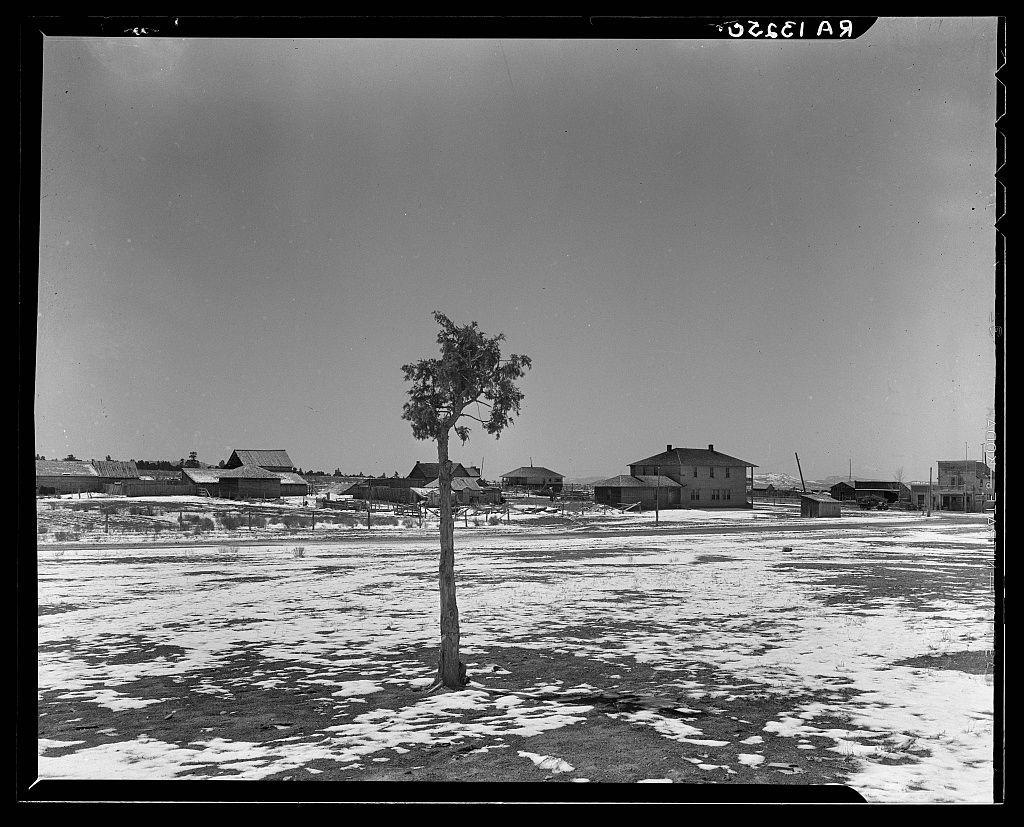
The town of Widtsoe, Utah

#Widtsoe #America #DorotheaLange #undefined #photography #DorotheaLange

https://www.loc.gov/pictures/item/2017759435/

The black and white photograph shows a landscape with sparse snow patches on the ground, indicating early spring or late winter. A lone tree stands prominently in the foreground of an otherwise open area that looks like it could be fields or undeveloped land. In the background is what appears to be a rural community with several farm-like structures such as barns and houses scattered across the scene under a clear sky. The town's name, Widtsoe, Utah, suggests this image might have historical significance related to agricultural life in that region during early 20th century America when Dorothea Lange photographed it for her work documenting rural communities and social issues of the time through the Farm Security Administration (FSA).
  • Copy link
  • Flag this post
  • Block
Dorothea Lange
Dorothea Lange
@DorotheaLange@mastodon.ozioso.online  ·  activity timestamp 3 days ago

The town of Widtsoe, Utah

#Widtsoe #America #DorotheaLange #undefined #photography #DorotheaLange

https://www.loc.gov/pictures/item/2017759435/

The black and white photograph shows a landscape with sparse snow patches on the ground, indicating early spring or late winter. A lone tree stands prominently in the foreground of an otherwise open area that looks like it could be fields or undeveloped land. In the background is what appears to be a rural community with several farm-like structures such as barns and houses scattered across the scene under a clear sky. The town's name, Widtsoe, Utah, suggests this image might have historical significance related to agricultural life in that region during early 20th century America when Dorothea Lange photographed it for her work documenting rural communities and social issues of the time through the Farm Security Administration (FSA).
  • Copy link
  • Flag this post
  • Block
Photography Channel boosted
Dorothea Lange
Dorothea Lange
@DorotheaLange@mastodon.ozioso.online  ·  activity timestamp 3 days ago

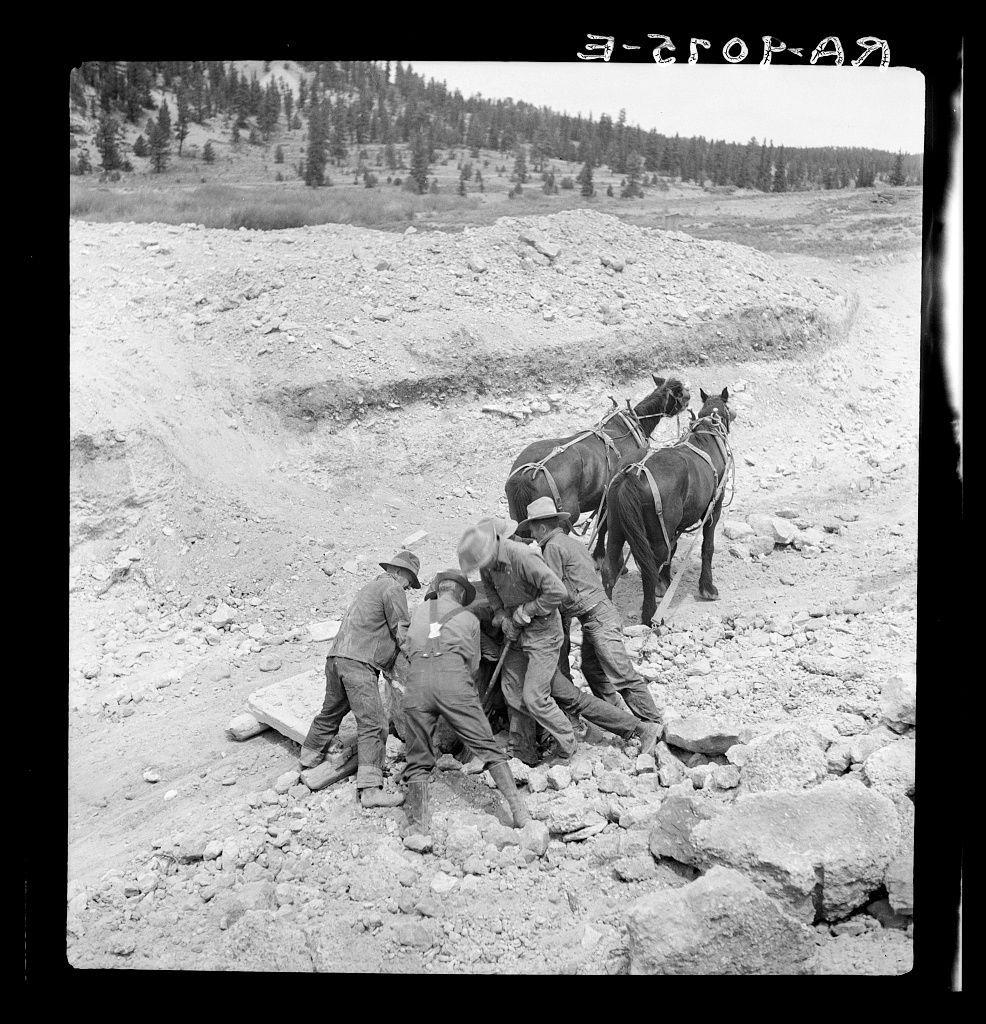
Widtsoe land use adjustment project. Garfield County, Utah. Loading boulder on stone boat, while excavating new spillway of Tropic Dam

#Widtsoe #GarfieldCounty #TropicDam #America #undefined #photography #DorotheaLange
https://www.loc.gov/pictures/item/2017762898/

The image captures a black and white moment from the Widtsoe land use adjustment project in Garfield County, Utah. It shows six workers, likely miners or laborers based on their attire of hats, boots, and work clothes, gathered around two horses hitched to a small cart. The men are actively engaged in loading boulders onto what appears to be a stone boat—a device used for transporting materials across the Tropic Dam spillway during construction. Their posture suggests they might have just heaved or are readying themselves to move another heavy rock, indicating physical labor and teamwork. In the background, we see an expansive landscape of rocky terrain with sparse vegetation leading up to a forested hillside under a clear sky. The photograph's historical context is further supported by its grainy quality and monochrome palette, typical of early 20th-century photography documenting rural development projects in America.
  • Copy link
  • Flag this post
  • Block
Dorothea Lange
Dorothea Lange
@DorotheaLange@mastodon.ozioso.online  ·  activity timestamp 3 days ago

Widtsoe land use adjustment project. Garfield County, Utah. Loading boulder on stone boat, while excavating new spillway of Tropic Dam

#Widtsoe #GarfieldCounty #TropicDam #America #undefined #photography #DorotheaLange

https://www.loc.gov/pictures/item/2017762898/

The image captures a black and white moment from the Widtsoe land use adjustment project in Garfield County, Utah. It shows six workers, likely miners or laborers based on their attire of hats, boots, and work clothes, gathered around two horses hitched to a small cart. The men are actively engaged in loading boulders onto what appears to be a stone boat—a device used for transporting materials across the Tropic Dam spillway during construction. Their posture suggests they might have just heaved or are readying themselves to move another heavy rock, indicating physical labor and teamwork. In the background, we see an expansive landscape of rocky terrain with sparse vegetation leading up to a forested hillside under a clear sky. The photograph's historical context is further supported by its grainy quality and monochrome palette, typical of early 20th-century photography documenting rural development projects in America.
  • Copy link
  • Flag this post
  • Block

Indieweb Studio

This is a relaxed, online social space for the indieweb community, brought to you by indieweb.social.

Please abide by our code of conduct and have a nice time!

Indieweb Studio: About · Code of conduct · Privacy · Users · Instances
Bonfire social · 1.0.2-alpha.7 no JS en
Automatic federation enabled
Log in Create account
  • Explore
  • About
  • Members
  • Code of Conduct