Discussion
Loading...

#Tag

Log in
  • Sign up
  • About
  • Code of conduct
  • Privacy
  • Users
  • Instances
  • About Bonfire
Photography Channel boosted
Dorothea Lange
Dorothea Lange
@DorotheaLange@mastodon.ozioso.online  ·  activity timestamp 13 hours ago

Was Nebraska farmer, now migrant farm worker in the West. Merrill, Klamath County, Oregon. General caption 62-111

#Nebraska #Merrill #KlamathCounty #Oregon #America #DorotheaLange #undefined #photography #DorotheaLange

https://www.loc.gov/pictures/item/2017773375/

The image depicts a black and white photograph of an individual seated outdoors. This person is wearing a wide-brimmed hat, glasses with dark frames, and appears to be holding something in their right hand near the chest area while their left hand holds onto what seems like pants or trousers. The individual's attire includes a jacket with visible buttons on the sleeve cuffs.

In the background of this outdoor setting, there is another person partially visible wearing casual clothing, including overalls. Further back, we see an open landscape that suggests a rural environment, possibly farmland given the caption context provided in reference to Nebraska and Oregon during what seems like historical or migratory times for farmers. In the distance, under a clear sky, are faintly discernible structures or equipment.

The photograph is labeled with text at different points: "1940," which might indicate the year it was taken; "Merrill Klamath County, Oregon" identifying the location; and possibly part of an alphanumeric sequence "(62-111)" that could be a reference to a collection or archive number. The overall impression is one of documenting socio-economic conditions related to rural life during migration periods in America.

It's important to note that the provided caption suggests this photograph relates to Nebraska farmers becoming migrant workers in various parts like Klam [...]
The image depicts a black and white photograph of an individual seated outdoors. This person is wearing a wide-brimmed hat, glasses with dark frames, and appears to be holding something in their right hand near the chest area while their left hand holds onto what seems like pants or trousers. The individual's attire includes a jacket with visible buttons on the sleeve cuffs. In the background of this outdoor setting, there is another person partially visible wearing casual clothing, including overalls. Further back, we see an open landscape that suggests a rural environment, possibly farmland given the caption context provided in reference to Nebraska and Oregon during what seems like historical or migratory times for farmers. In the distance, under a clear sky, are faintly discernible structures or equipment. The photograph is labeled with text at different points: "1940," which might indicate the year it was taken; "Merrill Klamath County, Oregon" identifying the location; and possibly part of an alphanumeric sequence "(62-111)" that could be a reference to a collection or archive number. The overall impression is one of documenting socio-economic conditions related to rural life during migration periods in America. It's important to note that the provided caption suggests this photograph relates to Nebraska farmers becoming migrant workers in various parts like Klam [...]
  • Copy link
  • Flag this post
  • Block
Dorothea Lange
Dorothea Lange
@DorotheaLange@mastodon.ozioso.online  ·  activity timestamp 13 hours ago

Was Nebraska farmer, now migrant farm worker in the West. Merrill, Klamath County, Oregon. General caption 62-111

#Nebraska #Merrill #KlamathCounty #Oregon #America #DorotheaLange #undefined #photography #DorotheaLange

https://www.loc.gov/pictures/item/2017773375/

The image depicts a black and white photograph of an individual seated outdoors. This person is wearing a wide-brimmed hat, glasses with dark frames, and appears to be holding something in their right hand near the chest area while their left hand holds onto what seems like pants or trousers. The individual's attire includes a jacket with visible buttons on the sleeve cuffs.

In the background of this outdoor setting, there is another person partially visible wearing casual clothing, including overalls. Further back, we see an open landscape that suggests a rural environment, possibly farmland given the caption context provided in reference to Nebraska and Oregon during what seems like historical or migratory times for farmers. In the distance, under a clear sky, are faintly discernible structures or equipment.

The photograph is labeled with text at different points: "1940," which might indicate the year it was taken; "Merrill Klamath County, Oregon" identifying the location; and possibly part of an alphanumeric sequence "(62-111)" that could be a reference to a collection or archive number. The overall impression is one of documenting socio-economic conditions related to rural life during migration periods in America.

It's important to note that the provided caption suggests this photograph relates to Nebraska farmers becoming migrant workers in various parts like Klam [...]
The image depicts a black and white photograph of an individual seated outdoors. This person is wearing a wide-brimmed hat, glasses with dark frames, and appears to be holding something in their right hand near the chest area while their left hand holds onto what seems like pants or trousers. The individual's attire includes a jacket with visible buttons on the sleeve cuffs. In the background of this outdoor setting, there is another person partially visible wearing casual clothing, including overalls. Further back, we see an open landscape that suggests a rural environment, possibly farmland given the caption context provided in reference to Nebraska and Oregon during what seems like historical or migratory times for farmers. In the distance, under a clear sky, are faintly discernible structures or equipment. The photograph is labeled with text at different points: "1940," which might indicate the year it was taken; "Merrill Klamath County, Oregon" identifying the location; and possibly part of an alphanumeric sequence "(62-111)" that could be a reference to a collection or archive number. The overall impression is one of documenting socio-economic conditions related to rural life during migration periods in America. It's important to note that the provided caption suggests this photograph relates to Nebraska farmers becoming migrant workers in various parts like Klam [...]
  • Copy link
  • Flag this post
  • Block
Photography Channel boosted
Dorothea Lange
Dorothea Lange
@DorotheaLange@mastodon.ozioso.online  ·  activity timestamp 15 hours ago

Former Nebraska Farmer, now a migrant farm worker. Klamath County, Oregon. See general caption 62-111

#NebraskaFarmer #KlamathCounty #Oregon #second #undefined #photography #DorotheaLange

https://www.loc.gov/pictures/item/2017773374/

The image is a black and white photograph depicting two men sitting outdoors. The primary focus is on the man in the foreground, who appears to be an older gentleman with gray hair, wearing glasses, a hat, and a suit jacket over a collared shirt. He has his right hand extended outward, possibly gesturing or pointing towards something off-camera.

In his left hand, he holds what seems like a cigarette between his fingers. His expression is serious as if engaged in an important conversation or discussion. The man's other visible details include noticeable wrinkles on his face and hands, which may indicate aging.

The second individual is partially visible to the left side of the frame, with only part of their torso and arm shown. This person seems to be wearing a light-colored shirt and appears less engaged in the immediate interaction compared to the main subject.

In terms of setting, it looks like an open landscape or rural area during daylight hours, judging by the brightness and shadows cast on the ground. There are no distinct objects around them except for their clothing and accessories.
The image is a black and white photograph depicting two men sitting outdoors. The primary focus is on the man in the foreground, who appears to be an older gentleman with gray hair, wearing glasses, a hat, and a suit jacket over a collared shirt. He has his right hand extended outward, possibly gesturing or pointing towards something off-camera. In his left hand, he holds what seems like a cigarette between his fingers. His expression is serious as if engaged in an important conversation or discussion. The man's other visible details include noticeable wrinkles on his face and hands, which may indicate aging. The second individual is partially visible to the left side of the frame, with only part of their torso and arm shown. This person seems to be wearing a light-colored shirt and appears less engaged in the immediate interaction compared to the main subject. In terms of setting, it looks like an open landscape or rural area during daylight hours, judging by the brightness and shadows cast on the ground. There are no distinct objects around them except for their clothing and accessories.
  • Copy link
  • Flag this post
  • Block
Dorothea Lange
Dorothea Lange
@DorotheaLange@mastodon.ozioso.online  ·  activity timestamp 15 hours ago

Former Nebraska Farmer, now a migrant farm worker. Klamath County, Oregon. See general caption 62-111

#NebraskaFarmer #KlamathCounty #Oregon #second #undefined #photography #DorotheaLange

https://www.loc.gov/pictures/item/2017773374/

The image is a black and white photograph depicting two men sitting outdoors. The primary focus is on the man in the foreground, who appears to be an older gentleman with gray hair, wearing glasses, a hat, and a suit jacket over a collared shirt. He has his right hand extended outward, possibly gesturing or pointing towards something off-camera.

In his left hand, he holds what seems like a cigarette between his fingers. His expression is serious as if engaged in an important conversation or discussion. The man's other visible details include noticeable wrinkles on his face and hands, which may indicate aging.

The second individual is partially visible to the left side of the frame, with only part of their torso and arm shown. This person seems to be wearing a light-colored shirt and appears less engaged in the immediate interaction compared to the main subject.

In terms of setting, it looks like an open landscape or rural area during daylight hours, judging by the brightness and shadows cast on the ground. There are no distinct objects around them except for their clothing and accessories.
The image is a black and white photograph depicting two men sitting outdoors. The primary focus is on the man in the foreground, who appears to be an older gentleman with gray hair, wearing glasses, a hat, and a suit jacket over a collared shirt. He has his right hand extended outward, possibly gesturing or pointing towards something off-camera. In his left hand, he holds what seems like a cigarette between his fingers. His expression is serious as if engaged in an important conversation or discussion. The man's other visible details include noticeable wrinkles on his face and hands, which may indicate aging. The second individual is partially visible to the left side of the frame, with only part of their torso and arm shown. This person seems to be wearing a light-colored shirt and appears less engaged in the immediate interaction compared to the main subject. In terms of setting, it looks like an open landscape or rural area during daylight hours, judging by the brightness and shadows cast on the ground. There are no distinct objects around them except for their clothing and accessories.
  • Copy link
  • Flag this post
  • Block
Photography Channel boosted
Dorothea Lange
Dorothea Lange
@DorotheaLange@mastodon.ozioso.online  ·  activity timestamp 17 hours ago

Mill pond. Klamath River beyond. Log rafts and log chute to the mill. Keno, Klamath County, Oregon. General caption number 61

#KlamathRiver #KlamathCounty #Oregon #DorotheaLange #undefined #photography #DorotheaLange

https://www.loc.gov/pictures/item/2017773352/

The image depicts a monochromatic scene centered around the logging industry. It features numerous logs scattered across what appears to be a river or large body of water, indicative of a log drive operation where floating wood is transported downstream from tree-cutting sites upstream. The logs vary in size and are either stacked neatly on land or partially submerged in the water.

A worker can be seen standing among the logs, likely involved in managing or inspecting them as part of their job responsibilities within this industry setting. In contrast to the workers' activity, another individual is observed working with a large piece of equipment that appears designed for handling and moving timber.

The landscape includes hills or mountains faintly visible on the horizon under an overcast sky, suggesting a remote location typical for logging operations in Oregon's Klamath County. The general atmosphere exudes laboriousness amidst the industrial setting, capturing the essence of historical forestry practices as photographed by Dorothea Lange and documented within her General caption number 61 collection at Mill pond on the Klamath River beyond.

The image provides a glimpse into a past era where manual handling was prevalent in logging operations before mechanization took over. It serves as a visual testament to human endeavor, teamwork, and resilience against nature's f [...]
The image depicts a monochromatic scene centered around the logging industry. It features numerous logs scattered across what appears to be a river or large body of water, indicative of a log drive operation where floating wood is transported downstream from tree-cutting sites upstream. The logs vary in size and are either stacked neatly on land or partially submerged in the water. A worker can be seen standing among the logs, likely involved in managing or inspecting them as part of their job responsibilities within this industry setting. In contrast to the workers' activity, another individual is observed working with a large piece of equipment that appears designed for handling and moving timber. The landscape includes hills or mountains faintly visible on the horizon under an overcast sky, suggesting a remote location typical for logging operations in Oregon's Klamath County. The general atmosphere exudes laboriousness amidst the industrial setting, capturing the essence of historical forestry practices as photographed by Dorothea Lange and documented within her General caption number 61 collection at Mill pond on the Klamath River beyond. The image provides a glimpse into a past era where manual handling was prevalent in logging operations before mechanization took over. It serves as a visual testament to human endeavor, teamwork, and resilience against nature's f [...]
  • Copy link
  • Flag this post
  • Block
Dorothea Lange
Dorothea Lange
@DorotheaLange@mastodon.ozioso.online  ·  activity timestamp 17 hours ago

Mill pond. Klamath River beyond. Log rafts and log chute to the mill. Keno, Klamath County, Oregon. General caption number 61

#KlamathRiver #KlamathCounty #Oregon #DorotheaLange #undefined #photography #DorotheaLange

https://www.loc.gov/pictures/item/2017773352/

The image depicts a monochromatic scene centered around the logging industry. It features numerous logs scattered across what appears to be a river or large body of water, indicative of a log drive operation where floating wood is transported downstream from tree-cutting sites upstream. The logs vary in size and are either stacked neatly on land or partially submerged in the water.

A worker can be seen standing among the logs, likely involved in managing or inspecting them as part of their job responsibilities within this industry setting. In contrast to the workers' activity, another individual is observed working with a large piece of equipment that appears designed for handling and moving timber.

The landscape includes hills or mountains faintly visible on the horizon under an overcast sky, suggesting a remote location typical for logging operations in Oregon's Klamath County. The general atmosphere exudes laboriousness amidst the industrial setting, capturing the essence of historical forestry practices as photographed by Dorothea Lange and documented within her General caption number 61 collection at Mill pond on the Klamath River beyond.

The image provides a glimpse into a past era where manual handling was prevalent in logging operations before mechanization took over. It serves as a visual testament to human endeavor, teamwork, and resilience against nature's f [...]
The image depicts a monochromatic scene centered around the logging industry. It features numerous logs scattered across what appears to be a river or large body of water, indicative of a log drive operation where floating wood is transported downstream from tree-cutting sites upstream. The logs vary in size and are either stacked neatly on land or partially submerged in the water. A worker can be seen standing among the logs, likely involved in managing or inspecting them as part of their job responsibilities within this industry setting. In contrast to the workers' activity, another individual is observed working with a large piece of equipment that appears designed for handling and moving timber. The landscape includes hills or mountains faintly visible on the horizon under an overcast sky, suggesting a remote location typical for logging operations in Oregon's Klamath County. The general atmosphere exudes laboriousness amidst the industrial setting, capturing the essence of historical forestry practices as photographed by Dorothea Lange and documented within her General caption number 61 collection at Mill pond on the Klamath River beyond. The image provides a glimpse into a past era where manual handling was prevalent in logging operations before mechanization took over. It serves as a visual testament to human endeavor, teamwork, and resilience against nature's f [...]
  • Copy link
  • Flag this post
  • Block
Photography Channel boosted
Dorothea Lange
Dorothea Lange
@DorotheaLange@mastodon.ozioso.online  ·  activity timestamp 19 hours ago

Sawn lumber leaving the mill by truck. Keno, Klamath County, Oregon. General caption number 61

#KlamathCounty #Oregon #WorldWarII #undefined #photography #DorotheaLange

https://www.loc.gov/pictures/item/2017773351/

The image is a black and white photograph depicting an individual seated in the cab of a vintage truck. The person, who appears to be a man wearing a military-style jacket with patches on his sleeve and what looks like a cap or hat, seems to be taking a break from work as he leans out slightly through the open door window. His expression is serious, perhaps indicative of contemplation or fatigue.

Behind him in the truck bed are stacks of lumber, suggesting that this vehicle could be used for transporting building materials such as timber or plywood. The truck itself shows signs of wear and tear; its paintwork appears faded and there's visible rust on some parts of it.

The setting seems to be an industrial area with a clear sky above. In the background, structures like poles are faintly discernible but not in sharp detail due to perspective issues. There is also text at the top right corner which reads "Sawn lumber leaving the mill by truck" along with what appears to be some handwritten annotations.

The overall composition of this photograph evokes a sense of mid-20th-century industrial life, possibly during or after World War II when such scenes were common due to post-war reconstruction needs.
The image is a black and white photograph depicting an individual seated in the cab of a vintage truck. The person, who appears to be a man wearing a military-style jacket with patches on his sleeve and what looks like a cap or hat, seems to be taking a break from work as he leans out slightly through the open door window. His expression is serious, perhaps indicative of contemplation or fatigue. Behind him in the truck bed are stacks of lumber, suggesting that this vehicle could be used for transporting building materials such as timber or plywood. The truck itself shows signs of wear and tear; its paintwork appears faded and there's visible rust on some parts of it. The setting seems to be an industrial area with a clear sky above. In the background, structures like poles are faintly discernible but not in sharp detail due to perspective issues. There is also text at the top right corner which reads "Sawn lumber leaving the mill by truck" along with what appears to be some handwritten annotations. The overall composition of this photograph evokes a sense of mid-20th-century industrial life, possibly during or after World War II when such scenes were common due to post-war reconstruction needs.
  • Copy link
  • Flag this post
  • Block
Dorothea Lange
Dorothea Lange
@DorotheaLange@mastodon.ozioso.online  ·  activity timestamp 19 hours ago

Sawn lumber leaving the mill by truck. Keno, Klamath County, Oregon. General caption number 61

#KlamathCounty #Oregon #WorldWarII #undefined #photography #DorotheaLange

https://www.loc.gov/pictures/item/2017773351/

The image is a black and white photograph depicting an individual seated in the cab of a vintage truck. The person, who appears to be a man wearing a military-style jacket with patches on his sleeve and what looks like a cap or hat, seems to be taking a break from work as he leans out slightly through the open door window. His expression is serious, perhaps indicative of contemplation or fatigue.

Behind him in the truck bed are stacks of lumber, suggesting that this vehicle could be used for transporting building materials such as timber or plywood. The truck itself shows signs of wear and tear; its paintwork appears faded and there's visible rust on some parts of it.

The setting seems to be an industrial area with a clear sky above. In the background, structures like poles are faintly discernible but not in sharp detail due to perspective issues. There is also text at the top right corner which reads "Sawn lumber leaving the mill by truck" along with what appears to be some handwritten annotations.

The overall composition of this photograph evokes a sense of mid-20th-century industrial life, possibly during or after World War II when such scenes were common due to post-war reconstruction needs.
The image is a black and white photograph depicting an individual seated in the cab of a vintage truck. The person, who appears to be a man wearing a military-style jacket with patches on his sleeve and what looks like a cap or hat, seems to be taking a break from work as he leans out slightly through the open door window. His expression is serious, perhaps indicative of contemplation or fatigue. Behind him in the truck bed are stacks of lumber, suggesting that this vehicle could be used for transporting building materials such as timber or plywood. The truck itself shows signs of wear and tear; its paintwork appears faded and there's visible rust on some parts of it. The setting seems to be an industrial area with a clear sky above. In the background, structures like poles are faintly discernible but not in sharp detail due to perspective issues. There is also text at the top right corner which reads "Sawn lumber leaving the mill by truck" along with what appears to be some handwritten annotations. The overall composition of this photograph evokes a sense of mid-20th-century industrial life, possibly during or after World War II when such scenes were common due to post-war reconstruction needs.
  • Copy link
  • Flag this post
  • Block
Photography Channel boosted
Dorothea Lange
Dorothea Lange
@DorotheaLange@mastodon.ozioso.online  ·  activity timestamp 21 hours ago

"Pond monkey" channels log raft. Keno, Klamath County, Oregon. General caption number 61

#KlamathCounty #Oregon #Japanese #undefined #photography #DorotheaLange

https://www.loc.gov/pictures/item/2017773350/

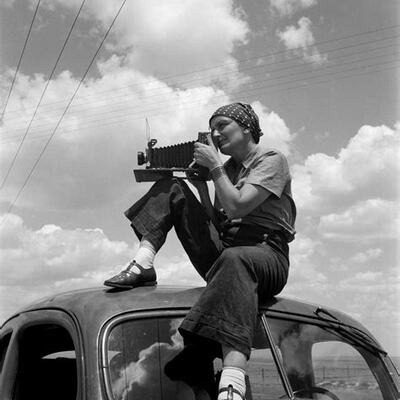
A black and white photograph depicts a man standing on logs in shallow water, holding what appears to be a long tool or weapon. He is wearing casual attire including trousers, shoes, socks, gloves, a shirt with rolled-up sleeves, and a cap. In the background are trees and more floating tree trunks suggesting this could be near a river or lake. The image includes text at the top right corner indicating "1930" in Japanese characters, which might relate to its date of creation. There is also additional descriptive text provided: "Pond monkey" channels log raft. Keno, Klamath County, Oregon." and General caption number 61 https://images.loener.nl/DorotheaLange/full/6495/6495b829ba25398d90c4ffc7.jpg The overall scene is indicative of a historical or rural setting where manual labor involving water bodies, such as rafting, may have been common.
  • Copy link
  • Flag this post
  • Block
Dorothea Lange
Dorothea Lange
@DorotheaLange@mastodon.ozioso.online  ·  activity timestamp 21 hours ago

"Pond monkey" channels log raft. Keno, Klamath County, Oregon. General caption number 61

#KlamathCounty #Oregon #Japanese #undefined #photography #DorotheaLange

https://www.loc.gov/pictures/item/2017773350/

A black and white photograph depicts a man standing on logs in shallow water, holding what appears to be a long tool or weapon. He is wearing casual attire including trousers, shoes, socks, gloves, a shirt with rolled-up sleeves, and a cap. In the background are trees and more floating tree trunks suggesting this could be near a river or lake. The image includes text at the top right corner indicating "1930" in Japanese characters, which might relate to its date of creation. There is also additional descriptive text provided: "Pond monkey" channels log raft. Keno, Klamath County, Oregon." and General caption number 61 https://images.loener.nl/DorotheaLange/full/6495/6495b829ba25398d90c4ffc7.jpg The overall scene is indicative of a historical or rural setting where manual labor involving water bodies, such as rafting, may have been common.
  • Copy link
  • Flag this post
  • Block
Photography Channel boosted
Dorothea Lange
Dorothea Lange
@DorotheaLange@mastodon.ozioso.online  ·  activity timestamp 23 hours ago

"Pond monkey" carrying cable from mill shed to pond. Keno, Klamath County, Oregon

#KlamathCounty #Oregon #America #DorotheaLanges #American #undefined #photography #DorotheaLange

https://www.loc.gov/pictures/item/2017773346/

The image is a black and white photograph depicting an outdoor scene focused on the laborious task of handling cable at what appears to be a mill or logging site. In the foreground, there's a person wearing overalls, gloves, and protective headgear with ear protection, working atop makeshift planks laid across a gully-like terrain filled with water. This individual is holding cables, suggesting they are either laying them out for use in operations or recovering them from where they were previously used.

Behind the worker, there's an incline leading up to a wooden structure that looks like a mill shed, featuring large doors and visible beams supporting its roof. Smoke rises near this building, indicating ongoing mechanical activity inside. The terrain is rugged with loose rocks and earth, indicative of heavy usage or construction work in progress. In the background, more logs are piled beside each other along what appears to be another incline leading away from the shed.

Text on the left side reads "2014-1936" which could indicate a date range relevant to the photograph's context but is not directly related to visual content within this image. The overall setting suggests an industrial logging environment during early 20th-century America, with workers engaged in manual labor typical of such industries at that time.

The caption "Pond monkey" carrying cable from mill she [...]
The image is a black and white photograph depicting an outdoor scene focused on the laborious task of handling cable at what appears to be a mill or logging site. In the foreground, there's a person wearing overalls, gloves, and protective headgear with ear protection, working atop makeshift planks laid across a gully-like terrain filled with water. This individual is holding cables, suggesting they are either laying them out for use in operations or recovering them from where they were previously used. Behind the worker, there's an incline leading up to a wooden structure that looks like a mill shed, featuring large doors and visible beams supporting its roof. Smoke rises near this building, indicating ongoing mechanical activity inside. The terrain is rugged with loose rocks and earth, indicative of heavy usage or construction work in progress. In the background, more logs are piled beside each other along what appears to be another incline leading away from the shed. Text on the left side reads "2014-1936" which could indicate a date range relevant to the photograph's context but is not directly related to visual content within this image. The overall setting suggests an industrial logging environment during early 20th-century America, with workers engaged in manual labor typical of such industries at that time. The caption "Pond monkey" carrying cable from mill she [...]
  • Copy link
  • Flag this post
  • Block
Dorothea Lange
Dorothea Lange
@DorotheaLange@mastodon.ozioso.online  ·  activity timestamp 23 hours ago

"Pond monkey" carrying cable from mill shed to pond. Keno, Klamath County, Oregon

#KlamathCounty #Oregon #America #DorotheaLanges #American #undefined #photography #DorotheaLange

https://www.loc.gov/pictures/item/2017773346/

The image is a black and white photograph depicting an outdoor scene focused on the laborious task of handling cable at what appears to be a mill or logging site. In the foreground, there's a person wearing overalls, gloves, and protective headgear with ear protection, working atop makeshift planks laid across a gully-like terrain filled with water. This individual is holding cables, suggesting they are either laying them out for use in operations or recovering them from where they were previously used.

Behind the worker, there's an incline leading up to a wooden structure that looks like a mill shed, featuring large doors and visible beams supporting its roof. Smoke rises near this building, indicating ongoing mechanical activity inside. The terrain is rugged with loose rocks and earth, indicative of heavy usage or construction work in progress. In the background, more logs are piled beside each other along what appears to be another incline leading away from the shed.

Text on the left side reads "2014-1936" which could indicate a date range relevant to the photograph's context but is not directly related to visual content within this image. The overall setting suggests an industrial logging environment during early 20th-century America, with workers engaged in manual labor typical of such industries at that time.

The caption "Pond monkey" carrying cable from mill she [...]
The image is a black and white photograph depicting an outdoor scene focused on the laborious task of handling cable at what appears to be a mill or logging site. In the foreground, there's a person wearing overalls, gloves, and protective headgear with ear protection, working atop makeshift planks laid across a gully-like terrain filled with water. This individual is holding cables, suggesting they are either laying them out for use in operations or recovering them from where they were previously used. Behind the worker, there's an incline leading up to a wooden structure that looks like a mill shed, featuring large doors and visible beams supporting its roof. Smoke rises near this building, indicating ongoing mechanical activity inside. The terrain is rugged with loose rocks and earth, indicative of heavy usage or construction work in progress. In the background, more logs are piled beside each other along what appears to be another incline leading away from the shed. Text on the left side reads "2014-1936" which could indicate a date range relevant to the photograph's context but is not directly related to visual content within this image. The overall setting suggests an industrial logging environment during early 20th-century America, with workers engaged in manual labor typical of such industries at that time. The caption "Pond monkey" carrying cable from mill she [...]
  • Copy link
  • Flag this post
  • Block
Photography Channel boosted
Dorothea Lange
Dorothea Lange
@DorotheaLange@mastodon.ozioso.online  ·  activity timestamp yesterday

"Threshing," midsummer noon. Five miles west of Malin. Klamath County, Oregon

#Threshing #Fivemiles #Malin #KlamathCounty #Oregon #undefined #photography #DorotheaLange

https://www.loc.gov/pictures/item/2017773327/

The image is a black and white photograph depicting an agricultural scene. It shows two horses hitched to wooden carts filled with bundles of wheat or cereal crops, likely after being threshed. The foreground features the wagon loaded high with crop stalks, indicating it has been fully harvested. In the background, another horse-drawn cart can be seen at a distance, suggesting ongoing harvesting activity in an expansive field under clear skies. There are no visible people within this particular frame; however, their absence is implied by the presence of working animals and agricultural equipment. The landscape appears dry with sparse vegetation, typical of farmlands during harvest season. This photograph captures rural life centered around crop farming practices likely from a past era due to its black-and-white nature and style of agricultural machinery depicted.
  • Copy link
  • Flag this post
  • Block
Dorothea Lange
Dorothea Lange
@DorotheaLange@mastodon.ozioso.online  ·  activity timestamp yesterday

"Threshing," midsummer noon. Five miles west of Malin. Klamath County, Oregon

#Threshing #Fivemiles #Malin #KlamathCounty #Oregon #undefined #photography #DorotheaLange

https://www.loc.gov/pictures/item/2017773327/

The image is a black and white photograph depicting an agricultural scene. It shows two horses hitched to wooden carts filled with bundles of wheat or cereal crops, likely after being threshed. The foreground features the wagon loaded high with crop stalks, indicating it has been fully harvested. In the background, another horse-drawn cart can be seen at a distance, suggesting ongoing harvesting activity in an expansive field under clear skies. There are no visible people within this particular frame; however, their absence is implied by the presence of working animals and agricultural equipment. The landscape appears dry with sparse vegetation, typical of farmlands during harvest season. This photograph captures rural life centered around crop farming practices likely from a past era due to its black-and-white nature and style of agricultural machinery depicted.
  • Copy link
  • Flag this post
  • Block
Photography Channel boosted
Dorothea Lange
Dorothea Lange
@DorotheaLange@mastodon.ozioso.online  ·  activity timestamp yesterday

"Threshing," midsummer noon. Five miles west of Malin. Klamath County, Oregon

#Threshing #Fivemiles #Malin #KlamathCounty #Oregon #fivemiles #DorotheaLange #American #undefined #photography #DorotheaLange

https://www.loc.gov/pictures/item/2017773324/

The image is a black and white photograph depicting agricultural laborers working in an open field. In the foreground, there's tall grass or crop remnants that have been harvested. The main focus of the photo shows two large wooden horse-drawn carts filled with bundles of hay. A person wearing a hat stands on top of one cart, managing the piles of hay while another individual operates machinery to separate and load the hay onto these carts.

The machine is mounted on wheels and extends over the field using long arms that collect and stack up the crop residues into large heaps. The structure appears sturdy with metal beams supporting its framework. 

In the background, a hillside or small cliff can be seen rising above the open sky, which has some clouds but remains mostly clear indicating it could possibly be midday due to the brightness in the photo.

The image is labeled "Threshing," along with coordinates for location and context suggesting this scene took place five miles west of Malin, Klamath County, Oregon. The date appears to indicate that Dorothea Lange captured or processed this photograph on a specific day during her travels documenting various aspects of American life in the early 20th century.

This historical snapshot shows rural labor practices and reflects agricultural activity from an earlier era when mechanized farming equipment was less prevalent than t [...]
The image is a black and white photograph depicting agricultural laborers working in an open field. In the foreground, there's tall grass or crop remnants that have been harvested. The main focus of the photo shows two large wooden horse-drawn carts filled with bundles of hay. A person wearing a hat stands on top of one cart, managing the piles of hay while another individual operates machinery to separate and load the hay onto these carts. The machine is mounted on wheels and extends over the field using long arms that collect and stack up the crop residues into large heaps. The structure appears sturdy with metal beams supporting its framework. In the background, a hillside or small cliff can be seen rising above the open sky, which has some clouds but remains mostly clear indicating it could possibly be midday due to the brightness in the photo. The image is labeled "Threshing," along with coordinates for location and context suggesting this scene took place five miles west of Malin, Klamath County, Oregon. The date appears to indicate that Dorothea Lange captured or processed this photograph on a specific day during her travels documenting various aspects of American life in the early 20th century. This historical snapshot shows rural labor practices and reflects agricultural activity from an earlier era when mechanized farming equipment was less prevalent than t [...]
  • Copy link
  • Flag this post
  • Block
Dorothea Lange
Dorothea Lange
@DorotheaLange@mastodon.ozioso.online  ·  activity timestamp yesterday

"Threshing," midsummer noon. Five miles west of Malin. Klamath County, Oregon

#Threshing #Fivemiles #Malin #KlamathCounty #Oregon #fivemiles #DorotheaLange #American #undefined #photography #DorotheaLange

https://www.loc.gov/pictures/item/2017773324/

The image is a black and white photograph depicting agricultural laborers working in an open field. In the foreground, there's tall grass or crop remnants that have been harvested. The main focus of the photo shows two large wooden horse-drawn carts filled with bundles of hay. A person wearing a hat stands on top of one cart, managing the piles of hay while another individual operates machinery to separate and load the hay onto these carts.

The machine is mounted on wheels and extends over the field using long arms that collect and stack up the crop residues into large heaps. The structure appears sturdy with metal beams supporting its framework. 

In the background, a hillside or small cliff can be seen rising above the open sky, which has some clouds but remains mostly clear indicating it could possibly be midday due to the brightness in the photo.

The image is labeled "Threshing," along with coordinates for location and context suggesting this scene took place five miles west of Malin, Klamath County, Oregon. The date appears to indicate that Dorothea Lange captured or processed this photograph on a specific day during her travels documenting various aspects of American life in the early 20th century.

This historical snapshot shows rural labor practices and reflects agricultural activity from an earlier era when mechanized farming equipment was less prevalent than t [...]
The image is a black and white photograph depicting agricultural laborers working in an open field. In the foreground, there's tall grass or crop remnants that have been harvested. The main focus of the photo shows two large wooden horse-drawn carts filled with bundles of hay. A person wearing a hat stands on top of one cart, managing the piles of hay while another individual operates machinery to separate and load the hay onto these carts. The machine is mounted on wheels and extends over the field using long arms that collect and stack up the crop residues into large heaps. The structure appears sturdy with metal beams supporting its framework. In the background, a hillside or small cliff can be seen rising above the open sky, which has some clouds but remains mostly clear indicating it could possibly be midday due to the brightness in the photo. The image is labeled "Threshing," along with coordinates for location and context suggesting this scene took place five miles west of Malin, Klamath County, Oregon. The date appears to indicate that Dorothea Lange captured or processed this photograph on a specific day during her travels documenting various aspects of American life in the early 20th century. This historical snapshot shows rural labor practices and reflects agricultural activity from an earlier era when mechanized farming equipment was less prevalent than t [...]
  • Copy link
  • Flag this post
  • Block
Photography Channel boosted
Dorothea Lange
Dorothea Lange
@DorotheaLange@mastodon.ozioso.online  ·  activity timestamp yesterday

Shacktown in Altamont district. Note tent. Near Klamath Falls, Klamath County, Oregon

#Shacktown #Altamont #KlamathFalls #KlamathCounty #Oregon #NorthAmerica #DorotheaLange #Altamontdistrict #undefined #photography #DorotheaLange

https://www.loc.gov/pictures/item/2017773323/

The image depicts a rural setting with modest housing and an old car on a dirt road. There are three small, wooden structures that appear to be homes or sheds, situated in the background against a backdrop of rolling hills without much vegetation. The primary building is constructed from wood panels, has a gabled roof, and features a chimney indicating it may have been used for heating or cooking purposes. An older model automobile with rounded fenders and exposed engine parts suggests an era that could be mid-20th century.

In the foreground on the left side of the road sits another vintage car facing away from us, possibly stuck in mud given its position off the paved path. There is a wooden fence or gate partially visible to the right of this structure which seems poorly maintained and may serve as an entry point for farm animals or equipment rather than humans.

The landscape around these structures looks dry with sparse grasses growing through patches of soil, indicative of arid conditions typical in certain regions across North America. No people are seen in the scene, hinting at a quiet, possibly isolated community living far from urban centers. The image carries an air of simplicity and self-sufficiency often associated with rural life.

The photograph is monochromatic, which along with its style suggests it might be taken by Dorothea Lange during her work for the [...]
The image depicts a rural setting with modest housing and an old car on a dirt road. There are three small, wooden structures that appear to be homes or sheds, situated in the background against a backdrop of rolling hills without much vegetation. The primary building is constructed from wood panels, has a gabled roof, and features a chimney indicating it may have been used for heating or cooking purposes. An older model automobile with rounded fenders and exposed engine parts suggests an era that could be mid-20th century. In the foreground on the left side of the road sits another vintage car facing away from us, possibly stuck in mud given its position off the paved path. There is a wooden fence or gate partially visible to the right of this structure which seems poorly maintained and may serve as an entry point for farm animals or equipment rather than humans. The landscape around these structures looks dry with sparse grasses growing through patches of soil, indicative of arid conditions typical in certain regions across North America. No people are seen in the scene, hinting at a quiet, possibly isolated community living far from urban centers. The image carries an air of simplicity and self-sufficiency often associated with rural life. The photograph is monochromatic, which along with its style suggests it might be taken by Dorothea Lange during her work for the [...]
  • Copy link
  • Flag this post
  • Block
Dorothea Lange
Dorothea Lange
@DorotheaLange@mastodon.ozioso.online  ·  activity timestamp yesterday

Shacktown in Altamont district. Note tent. Near Klamath Falls, Klamath County, Oregon

#Shacktown #Altamont #KlamathFalls #KlamathCounty #Oregon #NorthAmerica #DorotheaLange #Altamontdistrict #undefined #photography #DorotheaLange

https://www.loc.gov/pictures/item/2017773323/

The image depicts a rural setting with modest housing and an old car on a dirt road. There are three small, wooden structures that appear to be homes or sheds, situated in the background against a backdrop of rolling hills without much vegetation. The primary building is constructed from wood panels, has a gabled roof, and features a chimney indicating it may have been used for heating or cooking purposes. An older model automobile with rounded fenders and exposed engine parts suggests an era that could be mid-20th century.

In the foreground on the left side of the road sits another vintage car facing away from us, possibly stuck in mud given its position off the paved path. There is a wooden fence or gate partially visible to the right of this structure which seems poorly maintained and may serve as an entry point for farm animals or equipment rather than humans.

The landscape around these structures looks dry with sparse grasses growing through patches of soil, indicative of arid conditions typical in certain regions across North America. No people are seen in the scene, hinting at a quiet, possibly isolated community living far from urban centers. The image carries an air of simplicity and self-sufficiency often associated with rural life.

The photograph is monochromatic, which along with its style suggests it might be taken by Dorothea Lange during her work for the [...]
The image depicts a rural setting with modest housing and an old car on a dirt road. There are three small, wooden structures that appear to be homes or sheds, situated in the background against a backdrop of rolling hills without much vegetation. The primary building is constructed from wood panels, has a gabled roof, and features a chimney indicating it may have been used for heating or cooking purposes. An older model automobile with rounded fenders and exposed engine parts suggests an era that could be mid-20th century. In the foreground on the left side of the road sits another vintage car facing away from us, possibly stuck in mud given its position off the paved path. There is a wooden fence or gate partially visible to the right of this structure which seems poorly maintained and may serve as an entry point for farm animals or equipment rather than humans. The landscape around these structures looks dry with sparse grasses growing through patches of soil, indicative of arid conditions typical in certain regions across North America. No people are seen in the scene, hinting at a quiet, possibly isolated community living far from urban centers. The image carries an air of simplicity and self-sufficiency often associated with rural life. The photograph is monochromatic, which along with its style suggests it might be taken by Dorothea Lange during her work for the [...]
  • Copy link
  • Flag this post
  • Block
Photography Channel boosted
Dorothea Lange
Dorothea Lange
@DorotheaLange@mastodon.ozioso.online  ·  activity timestamp yesterday

Family living in tent while building the house around them. Near Klamath Falls, Klamath county, Oregon. See general caption number 47

#KlamathFalls #Klamathcounty #Oregon #undefined #photography #DorotheaLange

https://www.loc.gov/pictures/item/2017773321/

The image is a black and white photograph showing an outdoor scene where individuals appear to be living in temporary shelters while constructing or rebuilding their home. A large, wooden-framed structure with canvas walls serves as the primary shelter, suggesting that it may still require finishing work before becoming fully habitable. The frame extends around multiple sides of what looks like a tent-like enclosure.

Beside this makeshift dwelling is an older model car parked on uneven ground covered in grass and patches of dirt. In front of the wooden-framed structure stands another smaller building with visible siding, possibly part of the ongoing construction or a temporary workspace for those living there.

The background reveals more rural scenery with scattered trees and distant hills under overcast skies, indicating an open field setting far from urban areas. The general atmosphere is one of simplicity and modesty, emphasizing self-sufficiency during what appears to be a period of transition in the family's circumstances.
The image is a black and white photograph showing an outdoor scene where individuals appear to be living in temporary shelters while constructing or rebuilding their home. A large, wooden-framed structure with canvas walls serves as the primary shelter, suggesting that it may still require finishing work before becoming fully habitable. The frame extends around multiple sides of what looks like a tent-like enclosure. Beside this makeshift dwelling is an older model car parked on uneven ground covered in grass and patches of dirt. In front of the wooden-framed structure stands another smaller building with visible siding, possibly part of the ongoing construction or a temporary workspace for those living there. The background reveals more rural scenery with scattered trees and distant hills under overcast skies, indicating an open field setting far from urban areas. The general atmosphere is one of simplicity and modesty, emphasizing self-sufficiency during what appears to be a period of transition in the family's circumstances.
  • Copy link
  • Flag this post
  • Block
Dorothea Lange
Dorothea Lange
@DorotheaLange@mastodon.ozioso.online  ·  activity timestamp yesterday

Family living in tent while building the house around them. Near Klamath Falls, Klamath county, Oregon. See general caption number 47

#KlamathFalls #Klamathcounty #Oregon #undefined #photography #DorotheaLange

https://www.loc.gov/pictures/item/2017773321/

The image is a black and white photograph showing an outdoor scene where individuals appear to be living in temporary shelters while constructing or rebuilding their home. A large, wooden-framed structure with canvas walls serves as the primary shelter, suggesting that it may still require finishing work before becoming fully habitable. The frame extends around multiple sides of what looks like a tent-like enclosure.

Beside this makeshift dwelling is an older model car parked on uneven ground covered in grass and patches of dirt. In front of the wooden-framed structure stands another smaller building with visible siding, possibly part of the ongoing construction or a temporary workspace for those living there.

The background reveals more rural scenery with scattered trees and distant hills under overcast skies, indicating an open field setting far from urban areas. The general atmosphere is one of simplicity and modesty, emphasizing self-sufficiency during what appears to be a period of transition in the family's circumstances.
The image is a black and white photograph showing an outdoor scene where individuals appear to be living in temporary shelters while constructing or rebuilding their home. A large, wooden-framed structure with canvas walls serves as the primary shelter, suggesting that it may still require finishing work before becoming fully habitable. The frame extends around multiple sides of what looks like a tent-like enclosure. Beside this makeshift dwelling is an older model car parked on uneven ground covered in grass and patches of dirt. In front of the wooden-framed structure stands another smaller building with visible siding, possibly part of the ongoing construction or a temporary workspace for those living there. The background reveals more rural scenery with scattered trees and distant hills under overcast skies, indicating an open field setting far from urban areas. The general atmosphere is one of simplicity and modesty, emphasizing self-sufficiency during what appears to be a period of transition in the family's circumstances.
  • Copy link
  • Flag this post
  • Block

Indieweb Studio

This is a relaxed, online social space for the indieweb community, brought to you by indieweb.social.

Please abide by our code of conduct and have a nice time!

Indieweb Studio: About · Code of conduct · Privacy · Users · Instances
Bonfire social · 1.0.2-alpha.34 no JS en
Automatic federation enabled
Log in Create account
Instance logo
  • Explore
  • About
  • Members
  • Code of Conduct