Discussion
Loading...

#Tag

Log in
  • Sign up
  • About
  • Code of conduct
  • Privacy
  • Users
  • Instances
  • About Bonfire
Photography Channel boosted
Lewis Hine
Lewis Hine
@LewisHine@mastodon.ozioso.online  ·  activity timestamp 4 days ago

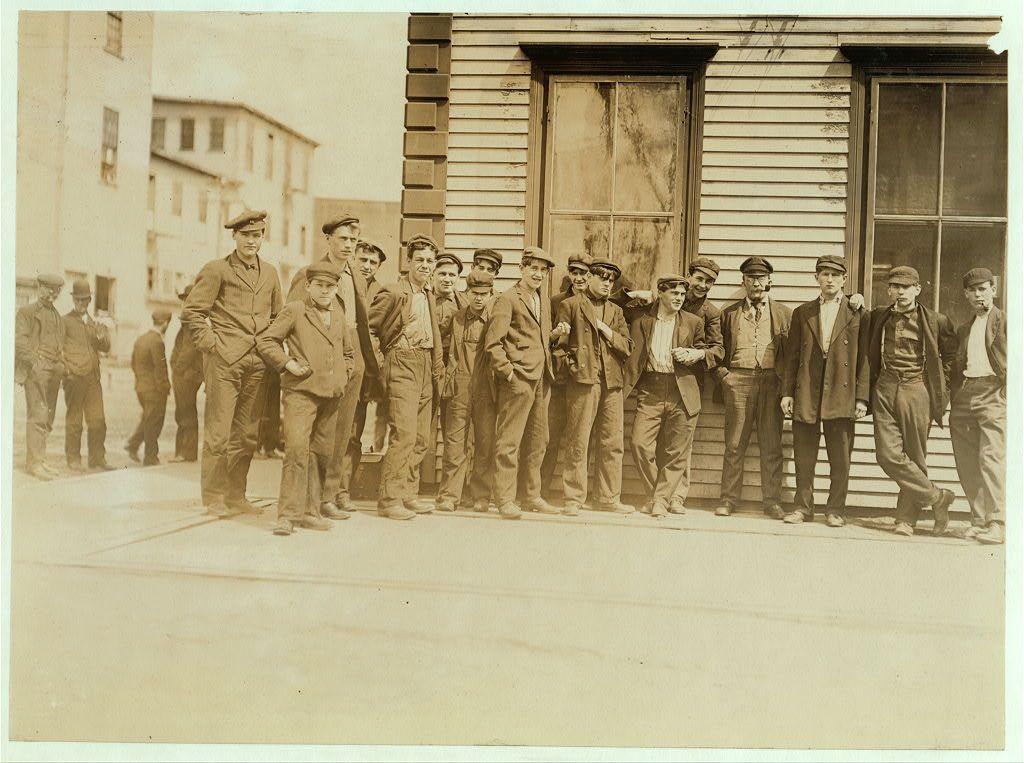
Noon hour. Goodall Worsted Co., Sanford, Me. These are not the youngest. Young girls too. Location: Sanford, Maine.

#GoodallWorstedCo #Sanford #Maine #LewisHines #Photography #LewisHine #ChildLabour #ChildLabor

https://www.loc.gov/pictures/item/2018675108/

This sepia-toned historical photograph depicts a group of approximately twenty young men and boys, possibly workers or laborers, standing in front of what appears to be an industrial building. They are dressed in work attire, including hats, jackets, trousers, and sturdy footwear typical for manual labor during the early 20th century. Some individuals wear sunglasses, while others have their hands in pockets or folded at their sides.
The setting is outdoors with a clear sky above; behind them stand several multi-story buildings suggesting an urban environment. The group seems organized as they pose for the camera, some standing closer to the front and others slightly back, creating a tiered effect that showcases more individuals within each row.
Their ages range from what looks like young adolescents in their teens or twenties up through older men who may be late forties or fifties. Their expressions are mostly neutral with faint smiles, conveying a sense of camaraderie among the group members.
This photograph carries historical significance as part of Lewis Hine's work documenting labor conditions during that era, specifically at Goodall Worsted Co., Sanford, Maine. It is titled "Noon hour" and reflects on workers' breaks or gatherings during their employment in such industries.

This sepia-toned historical photograph depicts a group of approximately twenty young men and boys, possibly workers or laborers, standing in front of what appears to be an industrial building. They are dressed in work attire, including hats, jackets, trousers, and sturdy footwear typical for manual labor during the early 20th century. Some individuals wear sunglasses, while others have their hands in pockets or folded at their sides. The setting is outdoors with a clear sky above; behind them stand several multi-story buildings suggesting an urban environment. The group seems organized as they pose for the camera, some standing closer to the front and others slightly back, creating a tiered effect that showcases more individuals within each row. Their ages range from what looks like young adolescents in their teens or twenties up through older men who may be late forties or fifties. Their expressions are mostly neutral with faint smiles, conveying a sense of camaraderie among the group members. This photograph carries historical significance as part of Lewis Hine's work documenting labor conditions during that era, specifically at Goodall Worsted Co., Sanford, Maine. It is titled "Noon hour" and reflects on workers' breaks or gatherings during their employment in such industries.
  • Copy link
  • Flag this post
  • Block
Photography Channel boosted
Lewis Hine
Lewis Hine
@LewisHine@mastodon.ozioso.online  ·  activity timestamp 3 days ago

Young boy polishing marble in Vermont Marble Co., Centre Rutland, Vt. Most of these are illiterate. Location: Centre Rutland, Vermont.

#VermontMarbleCo #CentreRutland #Vermont #second #America #LewisHine #American #CentreRutland #LewisHines #Photography #LewisHine #ChildLabour #ChildLabor

https://www.loc.gov/pictures/item/2018675433/

The image depicts a sepia-toned photograph of two young boys working in what appears to be an industrial setting. The boy on the left, wearing suspenders and a hat, is engaged with some kind of tool or equipment that he's holding between his hands while standing over a workbench filled with various items such as blocks of marble or stone, tools, and possibly scraps from their work.

The second young boy, in the background, seems to be handling larger pieces of wood or timber. He appears focused on moving these materials around within what looks like a workshop environment, characterized by wooden beams overhead which suggest an old-fashioned construction typical for such facilities during that era.

Both boys are dressed in working clothes indicative of manual labor: one has suspenders over his shirt and trousers rolled up to the knee level while the other wears simple work shirts. The lighting is natural but somewhat diffused through what seems like a window, casting soft shadows on their figures which adds depth to this candid snapshot from history.

This image carries with it an air of authenticity that speaks volumes about labor conditions possibly in early 20th-century America. It's part of the extensive works by Lewis Hine who documented various aspects of American society including child labor during his work as a photojournalist for The National Child Labor Commit [...]
The image depicts a sepia-toned photograph of two young boys working in what appears to be an industrial setting. The boy on the left, wearing suspenders and a hat, is engaged with some kind of tool or equipment that he's holding between his hands while standing over a workbench filled with various items such as blocks of marble or stone, tools, and possibly scraps from their work. The second young boy, in the background, seems to be handling larger pieces of wood or timber. He appears focused on moving these materials around within what looks like a workshop environment, characterized by wooden beams overhead which suggest an old-fashioned construction typical for such facilities during that era. Both boys are dressed in working clothes indicative of manual labor: one has suspenders over his shirt and trousers rolled up to the knee level while the other wears simple work shirts. The lighting is natural but somewhat diffused through what seems like a window, casting soft shadows on their figures which adds depth to this candid snapshot from history. This image carries with it an air of authenticity that speaks volumes about labor conditions possibly in early 20th-century America. It's part of the extensive works by Lewis Hine who documented various aspects of American society including child labor during his work as a photojournalist for The National Child Labor Commit [...]
  • Copy link
  • Flag this post
  • Block
Lewis Hine
Lewis Hine
@LewisHine@mastodon.ozioso.online  ·  activity timestamp 3 days ago

Young boy polishing marble in Vermont Marble Co., Centre Rutland, Vt. Most of these are illiterate. Location: Centre Rutland, Vermont.

#VermontMarbleCo #CentreRutland #Vermont #second #America #LewisHine #American #CentreRutland #LewisHines #Photography #LewisHine #ChildLabour #ChildLabor

https://www.loc.gov/pictures/item/2018675433/

The image depicts a sepia-toned photograph of two young boys working in what appears to be an industrial setting. The boy on the left, wearing suspenders and a hat, is engaged with some kind of tool or equipment that he's holding between his hands while standing over a workbench filled with various items such as blocks of marble or stone, tools, and possibly scraps from their work.

The second young boy, in the background, seems to be handling larger pieces of wood or timber. He appears focused on moving these materials around within what looks like a workshop environment, characterized by wooden beams overhead which suggest an old-fashioned construction typical for such facilities during that era.

Both boys are dressed in working clothes indicative of manual labor: one has suspenders over his shirt and trousers rolled up to the knee level while the other wears simple work shirts. The lighting is natural but somewhat diffused through what seems like a window, casting soft shadows on their figures which adds depth to this candid snapshot from history.

This image carries with it an air of authenticity that speaks volumes about labor conditions possibly in early 20th-century America. It's part of the extensive works by Lewis Hine who documented various aspects of American society including child labor during his work as a photojournalist for The National Child Labor Commit [...]
The image depicts a sepia-toned photograph of two young boys working in what appears to be an industrial setting. The boy on the left, wearing suspenders and a hat, is engaged with some kind of tool or equipment that he's holding between his hands while standing over a workbench filled with various items such as blocks of marble or stone, tools, and possibly scraps from their work. The second young boy, in the background, seems to be handling larger pieces of wood or timber. He appears focused on moving these materials around within what looks like a workshop environment, characterized by wooden beams overhead which suggest an old-fashioned construction typical for such facilities during that era. Both boys are dressed in working clothes indicative of manual labor: one has suspenders over his shirt and trousers rolled up to the knee level while the other wears simple work shirts. The lighting is natural but somewhat diffused through what seems like a window, casting soft shadows on their figures which adds depth to this candid snapshot from history. This image carries with it an air of authenticity that speaks volumes about labor conditions possibly in early 20th-century America. It's part of the extensive works by Lewis Hine who documented various aspects of American society including child labor during his work as a photojournalist for The National Child Labor Commit [...]
  • Copy link
  • Flag this post
  • Block
Photography Channel boosted
Lewis Hine
Lewis Hine
@LewisHine@mastodon.ozioso.online  ·  activity timestamp 3 days ago

Young boys working in Vermont Marble Co., Proctor, Vt. Very illiterate. Location: Proctor, Vermont.

#VermontMarbleCo #Proctor #Vermont #second #American #LewisHines #Photography #LewisHine #ChildLabour #ChildLabor

https://www.loc.gov/pictures/item/2018675418/

The image depicts a historical scene with two individuals who appear to be working in an industrial or construction environment. The photograph is sepia-toned, suggesting it may have been taken during the late 19th or early 20th century.

In the foreground, there are wooden planks placed on what looks like railroad tracks laid out over a ground with scattered rocks and debris, indicating that this area might be under construction or maintenance. One of the individuals is wearing work attire consisting of trousers, a shirt, and boots, which includes suspenders holding up his pants and possibly an apron or overshirt.

The person on the left stands confidently with one foot raised, dressed in similar work clothes but also sporting a hat that shields him from above. The individual appears to be gesturing towards something outside the frame of the image.

There is another figure further back who seems less focused, perhaps distracted by their surroundings. This second worker wears what looks like overalls and boots typical for manual labor at the time period suggested by this photograph.

In the background, there's an industrial setting with a large structure that could be part of a factory or warehouse complex. The hazy sky suggests it might have been taken on a day with poor visibility due to fog or dust in the air. Overall, the scene conveys hard work and laborious conditio [...]
The image depicts a historical scene with two individuals who appear to be working in an industrial or construction environment. The photograph is sepia-toned, suggesting it may have been taken during the late 19th or early 20th century. In the foreground, there are wooden planks placed on what looks like railroad tracks laid out over a ground with scattered rocks and debris, indicating that this area might be under construction or maintenance. One of the individuals is wearing work attire consisting of trousers, a shirt, and boots, which includes suspenders holding up his pants and possibly an apron or overshirt. The person on the left stands confidently with one foot raised, dressed in similar work clothes but also sporting a hat that shields him from above. The individual appears to be gesturing towards something outside the frame of the image. There is another figure further back who seems less focused, perhaps distracted by their surroundings. This second worker wears what looks like overalls and boots typical for manual labor at the time period suggested by this photograph. In the background, there's an industrial setting with a large structure that could be part of a factory or warehouse complex. The hazy sky suggests it might have been taken on a day with poor visibility due to fog or dust in the air. Overall, the scene conveys hard work and laborious conditio [...]
  • Copy link
  • Flag this post
  • Block
Lewis Hine
Lewis Hine
@LewisHine@mastodon.ozioso.online  ·  activity timestamp 3 days ago

Young boys working in Vermont Marble Co., Proctor, Vt. Very illiterate. Location: Proctor, Vermont.

#VermontMarbleCo #Proctor #Vermont #second #American #LewisHines #Photography #LewisHine #ChildLabour #ChildLabor

https://www.loc.gov/pictures/item/2018675418/

The image depicts a historical scene with two individuals who appear to be working in an industrial or construction environment. The photograph is sepia-toned, suggesting it may have been taken during the late 19th or early 20th century.

In the foreground, there are wooden planks placed on what looks like railroad tracks laid out over a ground with scattered rocks and debris, indicating that this area might be under construction or maintenance. One of the individuals is wearing work attire consisting of trousers, a shirt, and boots, which includes suspenders holding up his pants and possibly an apron or overshirt.

The person on the left stands confidently with one foot raised, dressed in similar work clothes but also sporting a hat that shields him from above. The individual appears to be gesturing towards something outside the frame of the image.

There is another figure further back who seems less focused, perhaps distracted by their surroundings. This second worker wears what looks like overalls and boots typical for manual labor at the time period suggested by this photograph.

In the background, there's an industrial setting with a large structure that could be part of a factory or warehouse complex. The hazy sky suggests it might have been taken on a day with poor visibility due to fog or dust in the air. Overall, the scene conveys hard work and laborious conditio [...]
The image depicts a historical scene with two individuals who appear to be working in an industrial or construction environment. The photograph is sepia-toned, suggesting it may have been taken during the late 19th or early 20th century. In the foreground, there are wooden planks placed on what looks like railroad tracks laid out over a ground with scattered rocks and debris, indicating that this area might be under construction or maintenance. One of the individuals is wearing work attire consisting of trousers, a shirt, and boots, which includes suspenders holding up his pants and possibly an apron or overshirt. The person on the left stands confidently with one foot raised, dressed in similar work clothes but also sporting a hat that shields him from above. The individual appears to be gesturing towards something outside the frame of the image. There is another figure further back who seems less focused, perhaps distracted by their surroundings. This second worker wears what looks like overalls and boots typical for manual labor at the time period suggested by this photograph. In the background, there's an industrial setting with a large structure that could be part of a factory or warehouse complex. The hazy sky suggests it might have been taken on a day with poor visibility due to fog or dust in the air. Overall, the scene conveys hard work and laborious conditio [...]
  • Copy link
  • Flag this post
  • Block
Lewis Hine
Lewis Hine
@LewisHine@mastodon.ozioso.online  ·  activity timestamp 4 days ago

Noon hour. Goodall Worsted Co., Sanford, Me. These are not the youngest. Young girls too. Location: Sanford, Maine.

#GoodallWorstedCo #Sanford #Maine #LewisHines #Photography #LewisHine #ChildLabour #ChildLabor

https://www.loc.gov/pictures/item/2018675108/

This sepia-toned historical photograph depicts a group of approximately twenty young men and boys, possibly workers or laborers, standing in front of what appears to be an industrial building. They are dressed in work attire, including hats, jackets, trousers, and sturdy footwear typical for manual labor during the early 20th century. Some individuals wear sunglasses, while others have their hands in pockets or folded at their sides.
The setting is outdoors with a clear sky above; behind them stand several multi-story buildings suggesting an urban environment. The group seems organized as they pose for the camera, some standing closer to the front and others slightly back, creating a tiered effect that showcases more individuals within each row.
Their ages range from what looks like young adolescents in their teens or twenties up through older men who may be late forties or fifties. Their expressions are mostly neutral with faint smiles, conveying a sense of camaraderie among the group members.
This photograph carries historical significance as part of Lewis Hine's work documenting labor conditions during that era, specifically at Goodall Worsted Co., Sanford, Maine. It is titled "Noon hour" and reflects on workers' breaks or gatherings during their employment in such industries.
This sepia-toned historical photograph depicts a group of approximately twenty young men and boys, possibly workers or laborers, standing in front of what appears to be an industrial building. They are dressed in work attire, including hats, jackets, trousers, and sturdy footwear typical for manual labor during the early 20th century. Some individuals wear sunglasses, while others have their hands in pockets or folded at their sides. The setting is outdoors with a clear sky above; behind them stand several multi-story buildings suggesting an urban environment. The group seems organized as they pose for the camera, some standing closer to the front and others slightly back, creating a tiered effect that showcases more individuals within each row. Their ages range from what looks like young adolescents in their teens or twenties up through older men who may be late forties or fifties. Their expressions are mostly neutral with faint smiles, conveying a sense of camaraderie among the group members. This photograph carries historical significance as part of Lewis Hine's work documenting labor conditions during that era, specifically at Goodall Worsted Co., Sanford, Maine. It is titled "Noon hour" and reflects on workers' breaks or gatherings during their employment in such industries.
  • Copy link
  • Flag this post
  • Block
Photography Channel boosted
Lewis Hine
Lewis Hine
@LewisHine@mastodon.ozioso.online  ·  activity timestamp 4 days ago

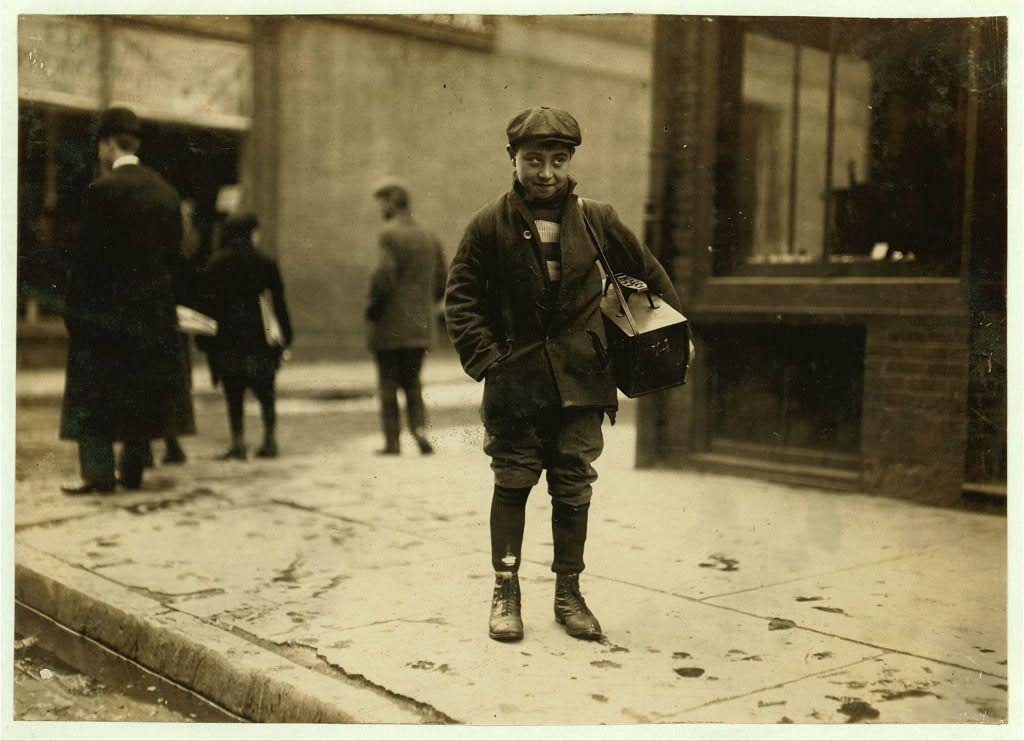
One of the boot-blacks. Location: New Haven, Connecticut.

#NewHaven #Connecticut #LewisHines #Photography #LewisHine #ChildLabour #ChildLabor

https://www.loc.gov/pictures/item/2018675086/

The image depicts a young man standing on an urban sidewalk during what appears to be the early 1900s, based on his attire and style of photography. He is dressed in work clothes with layers indicating colder weather; he wears trousers rolled up near knee-high boots, suggesting practicality for physical labor or outdoor tasks. His outfit includes a cap that was common at the time among workers to protect from elements like wind or snow. In one hand, he carries what looks like a bucket or container possibly used in his job as described by "One of the boot-blacks." The setting shows other individuals walking on the street and storefronts with large windows, indicative of a commercial area. This photograph is part of Lewis Hine's collection located at One of the boot-blacks., illustrating everyday life during that era through portraits like this one from New Haven, Connecticut.
  • Copy link
  • Flag this post
  • Block
Lewis Hine
Lewis Hine
@LewisHine@mastodon.ozioso.online  ·  activity timestamp 4 days ago

One of the boot-blacks. Location: New Haven, Connecticut.

#NewHaven #Connecticut #LewisHines #Photography #LewisHine #ChildLabour #ChildLabor

https://www.loc.gov/pictures/item/2018675086/

The image depicts a young man standing on an urban sidewalk during what appears to be the early 1900s, based on his attire and style of photography. He is dressed in work clothes with layers indicating colder weather; he wears trousers rolled up near knee-high boots, suggesting practicality for physical labor or outdoor tasks. His outfit includes a cap that was common at the time among workers to protect from elements like wind or snow. In one hand, he carries what looks like a bucket or container possibly used in his job as described by "One of the boot-blacks." The setting shows other individuals walking on the street and storefronts with large windows, indicative of a commercial area. This photograph is part of Lewis Hine's collection located at One of the boot-blacks., illustrating everyday life during that era through portraits like this one from New Haven, Connecticut.
  • Copy link
  • Flag this post
  • Block

Indieweb Studio

This is a relaxed, online social space for the indieweb community, brought to you by indieweb.social.

Please abide by our code of conduct and have a nice time!

Indieweb Studio: About · Code of conduct · Privacy · Users · Instances
Bonfire social · 1.0.2-alpha.7 no JS en
Automatic federation enabled
Log in Create account
  • Explore
  • About
  • Members
  • Code of Conduct